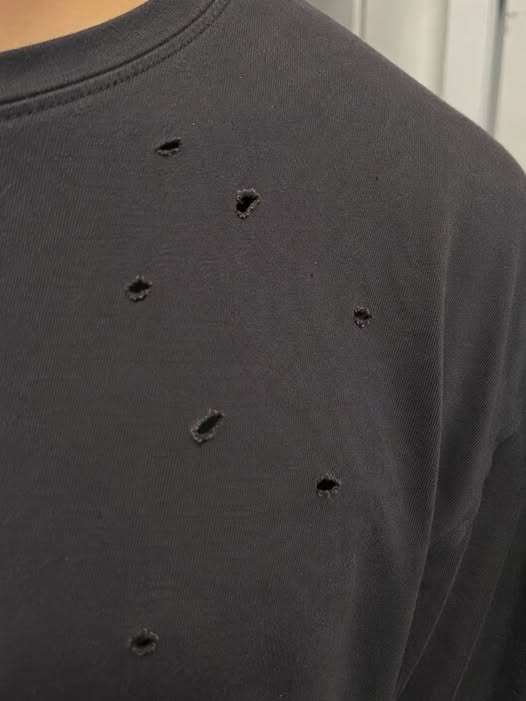
Finding mysterious holes in your clothes? Learn what may be causing them, from washing machines and moths to rough surfaces, and discover simple ways to prevent new holes.
Few things are more frustrating than pulling your favorite shirt out of the laundry and discovering a tiny hole that wasn’t there before. Sometimes the damage looks random, while other times several small holes appear in the same area.
Before blaming the washing machine—or the person who did the laundry—there are several possible causes worth checking.
1. Moths and Other Fabric Pests
If you notice small holes in wool, cashmere, silk, or other natural fibers, insects may be responsible.
Clothes moth larvae can feed on animal-based fibers and may leave irregular holes behind. They tend to prefer dark, undisturbed places such as closets, drawers, storage boxes, and areas under furniture.
Prevention:
Clean clothes before storing them, keep wardrobes dry and well ventilated, and regularly inspect stored garments.
2. Washing Machine Damage
Your washing machine can occasionally contribute to fabric damage.
A damaged drum, loose component, or rough edge inside the machine may catch delicate clothing. Zippers, hooks, and other metal fasteners can also snag softer fabrics.
Try this: Turn delicate garments inside out and place them in a mesh laundry bag before washing.
3. Overloading the Washer
Stuffing too many clothes into the washing machine can increase friction between garments and prevent them from moving freely.
Heavy jeans, buttons, zippers, and other rough materials can rub against lightweight shirts.
Tip: Avoid overloading the machine and separate delicate clothing from heavier garments.
4. Rough Surfaces Around the House
Sometimes the culprit isn’t the laundry at all.
A rough countertop, splintered chair, damaged table edge, belt buckle, handbag strap, or even a rough surface on a desk can repeatedly rub against the same area of your clothing.
This is especially common when holes appear around the stomach, waist, or lower front of shirts.
Take note of where the holes appear. Their location can provide an important clue.
5. Zippers, Buttons, and Hooks
Open zippers and sharp hooks can catch fabric during washing or wearing.
Before putting clothes into the washer, close zippers and fasten hooks. Turn garments with decorative hardware inside out when possible.
6. Heat Can Weaken Fabric
Excessive heat from dryers or irons can weaken certain fabrics over time.
Always check the garment’s care label and use the recommended temperature. Delicate fabrics may be better air-dried.
7. Fabric Wear and Tear
Sometimes there isn’t one dramatic cause. Repeated washing, friction, stretching, and everyday use gradually weaken fibers.
A thin fabric may eventually develop a tiny hole simply because it has reached the end of its useful life.
How I Prevent Mysterious Holes
A few simple habits can make a noticeable difference:
- Check pockets before washing.
- Close zippers and hooks.
- Turn delicate clothing inside out.
- Use mesh laundry bags for fragile garments.
- Don’t overload the washer.
- Separate heavy fabrics from lightweight clothing.
- Inspect the washer drum for rough or damaged areas.
- Check your closet for moth activity if holes keep appearing.
- Avoid excessive dryer heat.
- Inspect rough furniture and surfaces that repeatedly contact your clothes.
The Location of the Hole Can Tell You a Lot
If tiny holes repeatedly appear in the same place, pay attention to the pattern.
Several holes in stored wool clothing: consider clothes moths.
Small holes near the front waist: friction from counters, desks, or belts may be involved.
Random damage after washing: inspect zippers, hooks, the washer drum, and the laundry process.
Gradual thinning followed by holes: normal wear and fabric weakening may be responsible.
Final Thought
Mysterious holes in clothing aren’t always caused by insects. Friction, laundry equipment, rough surfaces, fasteners, heat, and normal wear can all damage fabric.
Instead of simply throwing the damaged garment away, look for a pattern. Where the hole appears, what the fabric is made from, and when you first notice the damage can help reveal the real culprit.