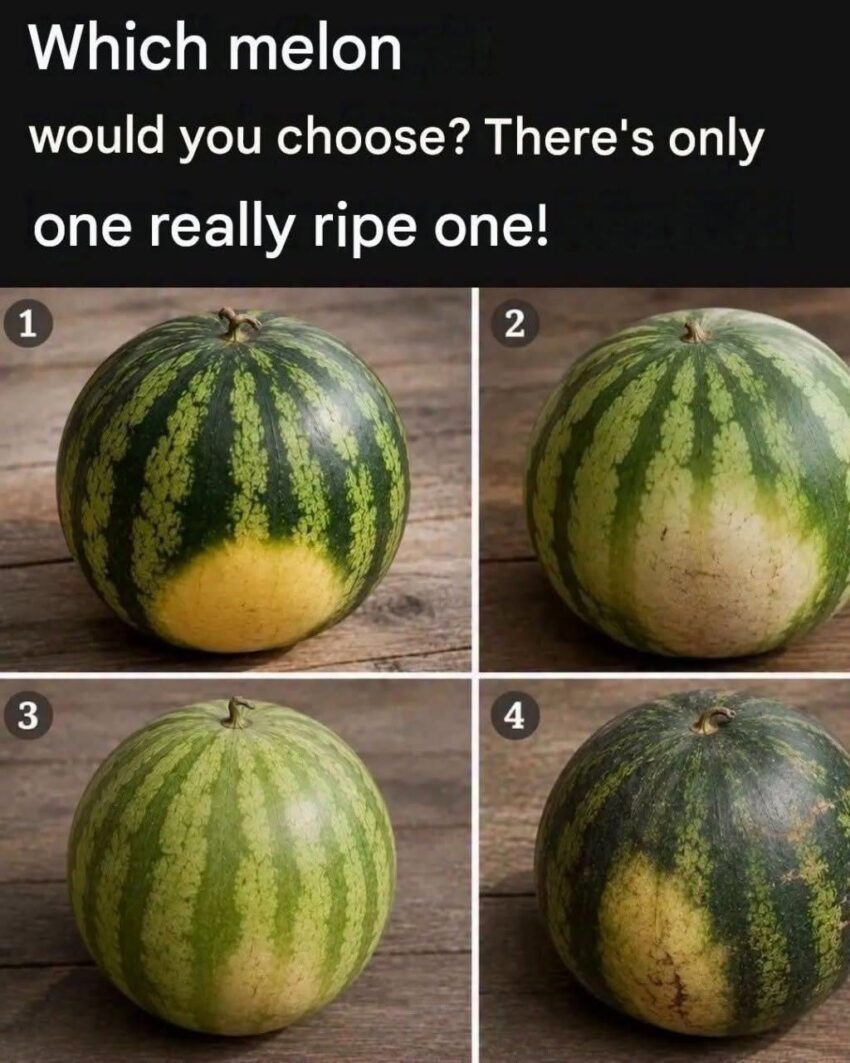
Which melon would you choose? Learn how to spot a ripe, sweet and juicy melon by checking its color, weight, aroma, texture and other simple signs.
Walk into a grocery store or farmers’ market and you’ll often see several melons sitting side by side. They may look almost identical from the outside, yet one can be sweet, juicy and perfectly ripe while another is bland, underripe or already past its best.
So, which melon would you choose?
The answer isn’t always about picking the biggest or prettiest one. A few simple clues can help you make a much better choice.
Don’t Judge a Melon Only by Its Appearance
A melon with a perfectly smooth exterior isn’t necessarily the sweetest one.
Depending on the variety, small marks, slight changes in color, or an uneven surface can be completely normal. Instead of focusing on appearance alone, look at several characteristics together.
The goal is to find a melon that feels appropriately heavy, has the right color for its variety, smells pleasantly fragrant when applicable, and doesn’t show obvious signs of damage or spoilage.
Check the Weight
One of the simplest tricks is to pick up the melon.
Compare two melons that appear to be about the same size. The one that feels heavier for its size may contain more moisture and can be a promising choice.
This isn’t a guarantee of sweetness, but it is a useful clue when choosing between similar melons.
Look at the Color
Color can tell you a lot about ripeness, although the ideal color depends on the type of melon.
An underripe melon may have a greener or less developed color than expected. A ripe melon often develops the characteristic color associated with its variety.
Avoid relying on one visual clue alone. Combine color with weight, aroma and firmness.
Give It a Gentle Smell
For melons that develop a noticeable aroma as they ripen, the stem or blossom end can provide useful information.
A ripe melon may have a pleasant, sweet fragrance.
If there is no aroma at all, it may not yet be fully ripe. On the other hand, a strong fermented, sour or unpleasant smell can indicate that the fruit is becoming overripe or spoiled.
Pay Attention to the Texture
A melon shouldn’t usually feel rock-hard if you’re looking for one that is ready to eat.
Depending on the variety, gentle pressure may reveal a small amount of give. However, it shouldn’t feel extremely soft, mushy or wet.
Large soft spots, leaking areas or damaged sections are warning signs.
Don’t Ignore the Stem Area
The stem end can sometimes provide another clue.
For certain melons, a naturally detached or clean-looking stem area can indicate that the fruit reached an appropriate stage of maturity before being harvested.
However, this varies by melon variety, so it shouldn’t be treated as a universal rule.
Check for Bruises and Damage
Before putting a melon in your shopping cart, inspect it carefully.
Avoid fruit with:
- Deep cracks
- Large bruises
- Leaking liquid
- Mold
- Extremely soft spots
- Unusual discoloration
- A strong unpleasant odor
Small superficial marks aren’t necessarily a problem, but significant damage can shorten the fruit’s storage life.
What Makes a Melon Taste Sweet?
Sweetness is influenced by the melon variety, growing conditions, maturity at harvest and storage.
A perfectly ripe melon can be wonderfully sweet and juicy, while an underripe one may taste firm and bland.
That’s why choosing the right fruit at the store can make such a noticeable difference.
Which Melon Would I Choose?
If I had several similar melons in front of me, I wouldn’t automatically choose the largest or most attractive one.
I’d look for a melon that:
Feels heavy for its size.
Has an appropriate mature color.
Has a pleasant aroma when the variety is expected to be fragrant.
Feels firm with only the appropriate amount of gentle give.
Has no major bruises, mold, cracks or leaking areas.
That combination gives you a much better chance of taking home a delicious melon.
One Important Reminder
Different types of melons ripen differently.
A technique that works well for one variety may not work exactly the same way for another. Some melons continue to soften and develop aroma after harvest, while others change very little once picked.
So rather than looking for one “magic” test, use several clues together.
The Real Winner Isn’t Always the Prettiest One
The next time you stand in front of a pile of melons, don’t simply grab the first one that catches your eye.
Pick it up.
Feel its weight.
Look closely at the skin.
Check for damage.
Notice the aroma if appropriate.
That extra few seconds could be the difference between bringing home a disappointing melon and finding one that is sweet, juicy and perfectly satisfying.
Sometimes the best melon isn’t the biggest.
It isn’t necessarily the prettiest.
It’s the one that gives you the right clues when you know what to look for.