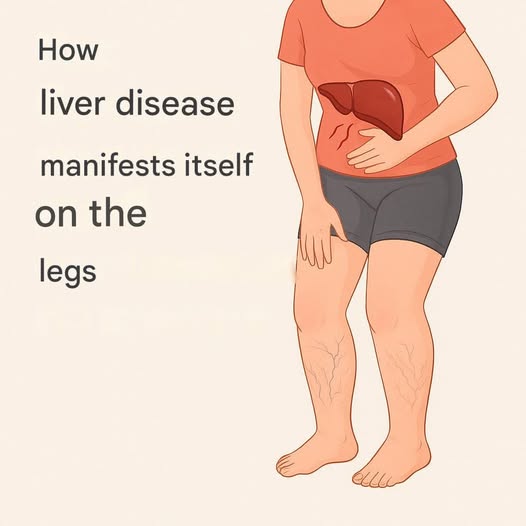
Swollen legs, itching, muscle cramps, and other leg changes can sometimes occur with liver disease. Learn five possible warning signs and when medical evaluation is important.
Your legs can sometimes provide clues that something is happening elsewhere in your body. While leg symptoms are not specific to liver disease, certain changes can occur when the liver is significantly affected.
The important point is not to assume that every swollen, itchy, or painful leg means you have a liver problem. Many other conditions can cause the same symptoms.
Here are five signs worth knowing.
1. Swelling in the Legs and Ankles
Persistent swelling of the ankles, feet, or lower legs—known as edema—can occur in advanced liver disease.
When the liver is severely damaged, reduced production of proteins such as albumin can contribute to fluid moving out of blood vessels and into surrounding tissues. Liver disease can also contribute to fluid accumulation in the abdomen.
However, swollen legs are much more commonly associated with other issues, including heart, kidney, vein, medication, and circulation problems.
2. Persistent Itching
Some people with liver or bile-duct disorders experience significant itching, sometimes without an obvious rash.
This can occur when substances associated with bile build up in the bloodstream. The itching may affect different parts of the body and can sometimes be particularly bothersome at night.
Persistent unexplained itching deserves medical attention rather than being automatically blamed on dry skin.
3. Frequent Muscle Cramps or Weakness
People with advanced liver disease may experience muscle loss, weakness, or cramps.
These symptoms are not unique to liver disease, however. Dehydration, electrolyte abnormalities, medications, circulation problems, nutritional deficiencies, and several other conditions can also cause leg cramps.
If cramps become frequent, severe, or are accompanied by significant weakness, talk with a healthcare professional.
4. Easy Bruising or Unusual Skin Changes
Liver disease can interfere with the body’s ability to produce certain proteins involved in blood clotting. As a result, some people with advanced liver disease may bruise or bleed more easily.
You may notice unexplained bruises on the legs or other parts of the body.
Sudden or unexplained bruising should not automatically be attributed to the liver, though. Medications—including blood thinners and some pain relievers—can also increase bruising.
5. Changes in Skin Color Along With Leg Symptoms
A yellowish color of the skin or the whites of the eyes, known as jaundice, can occur when bilirubin builds up in the body.
Jaundice isn’t a problem specifically with the legs, but if yellowing appears alongside swelling, itching, dark urine, unusual fatigue, abdominal swelling, or other symptoms, it warrants prompt medical evaluation.
When Should You See a Doctor?
Leg symptoms alone cannot diagnose liver disease. Doctors may need to review your medical history, medications, examine you, and perform blood tests or imaging to determine what’s causing the problem.
Seek medical attention for new or persistent leg swelling, unexplained bruising, severe itching, yellow skin or eyes, abdominal swelling, dark urine, or significant weakness.
And if one leg suddenly becomes swollen, painful, warm, or red, particularly if you also develop chest pain or difficulty breathing, seek urgent medical care because a blood clot can cause these symptoms.
The Bottom Line
Your legs aren’t literally “screaming” that your liver is failing—but changes in the legs can occasionally occur alongside liver disease.
The safest approach is to look at the whole pattern of symptoms rather than trying to diagnose liver problems from one sign. Early medical evaluation can help identify the real cause and, when necessary, begin treatment sooner.