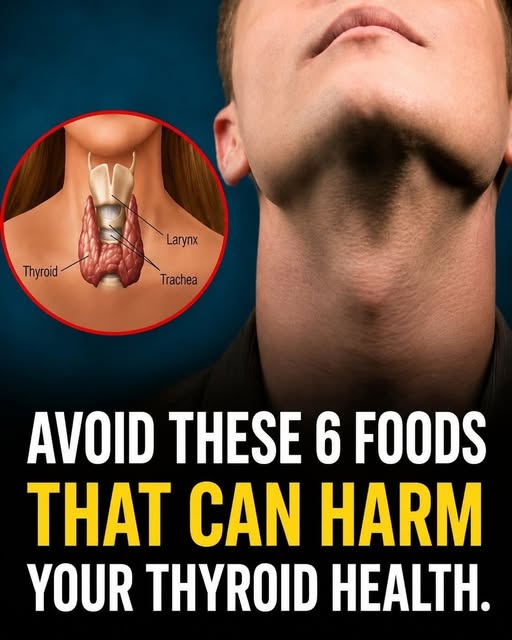
Worried about thyroid health? Discover six foods that may interfere with thyroid function, especially for people with thyroid disorders, plus practical tips for building a thyroid-friendly diet.
Your thyroid may be a small gland, but it plays a surprisingly important role in your overall health.
Located at the front of your neck, the thyroid produces hormones that help regulate metabolism, body temperature, heart rate, energy use, and many other processes throughout the body. When thyroid hormone production becomes too low or too high, you may notice changes in energy, weight, mood, digestion, heart rate, or body temperature.
Because food affects the body’s nutritional environment, many people wonder whether certain foods can make thyroid problems worse.
The truth is more nuanced than viral headlines often suggest. There isn’t a universal list of six foods that every person with a thyroid condition must completely eliminate. However, some foods and eating patterns deserve special attention—particularly if you have hypothyroidism, an autoimmune thyroid condition, or take thyroid medication.
Here are six categories worth understanding.
1. Highly Processed Foods
Highly processed foods are often loaded with refined carbohydrates, added sugars, sodium, unhealthy fats, and calories while providing relatively little nutritional value.
Examples include:
- Packaged snack cakes
- Sugary cereals
- Chips
- Fast-food meals
- Processed pastries
- Sweetened drinks
- Many packaged desserts
These foods don’t directly “shut down” your thyroid, but eating a diet dominated by highly processed foods can make it harder to maintain a balanced, nutritious eating pattern.
For people managing thyroid disease, focusing on vegetables, fruits, whole grains, legumes, nuts, seeds, and appropriate protein sources generally provides more useful nutrients than relying heavily on ultra-processed foods.
A better approach
You don’t necessarily need to ban every processed food.
Instead, make minimally processed foods the foundation of your meals and treat highly processed foods as occasional choices.
2. Large Amounts of Soy
Soy is one of the foods that receives a great deal of attention in thyroid discussions.
Soy foods include:
- Tofu
- Tempeh
- Soy milk
- Edamame
- Soy-based protein products
Soy contains compounds called isoflavones, and there has been concern about whether soy can interfere with thyroid hormone production or thyroid medication.
For most people with adequate iodine intake, moderate amounts of soy foods aren’t automatically a problem. However, soy can interfere with the absorption of levothyroxine when consumed too close to the medication.
This is why timing can matter.
If you take thyroid replacement medication, follow your healthcare professional’s instructions about when to take it and when to eat soy-containing foods.
The key message
You don’t necessarily need to eliminate tofu or soy from your diet simply because you have a thyroid condition.
Medication timing and overall dietary balance are often more important than completely avoiding soy.
3. Cruciferous Vegetables—But Don’t Panic
This category often causes unnecessary fear.
Cruciferous vegetables include:
- Broccoli
- Cauliflower
- Cabbage
- Brussels sprouts
- Kale
- Bok choy
- Turnip greens
These vegetables contain naturally occurring compounds known as goitrogens, which can interfere with thyroid hormone synthesis under certain circumstances.
But here’s the important part:
Eating normal amounts of cooked cruciferous vegetables is generally not something most people with thyroid disease need to fear.
Problems are more likely to be a concern with extremely high consumption, particularly when iodine intake is inadequate.
Cooking also reduces the goitrogenic activity of these vegetables.
So should you stop eating broccoli?
Usually, no.
For most people, broccoli and other cruciferous vegetables can be part of a healthy diet.
Rather than eliminating nutritious vegetables based on frightening headlines, focus on reasonable portions and an overall balanced diet.
4. Foods and Supplements Containing Excessive Iodine
Iodine is essential for thyroid hormone production.
But more isn’t always better.
Both too little iodine and too much iodine can cause problems in susceptible individuals.
Very high iodine exposure can come from certain supplements, seaweed products, and some medications.
This is particularly important for people with autoimmune thyroid conditions, who may react differently to excessive iodine intake.
Be careful with “thyroid support” supplements
Many products marketed for thyroid health contain iodine, kelp, or other concentrated ingredients.
Taking these products without medical guidance isn’t necessarily beneficial and may sometimes provide far more iodine than you need.
If you’re already taking thyroid medication, don’t add an iodine supplement simply because a product claims to “support thyroid function.”
Discuss it with your healthcare professional first.
5. Sugary Drinks and Excessive Added Sugar
Soda, sweetened energy drinks, sweet tea, flavored coffees, and other sugary beverages can provide a large amount of added sugar without much nutritional value.
They aren’t a specific “thyroid toxin,” but excessive added sugar can contribute to unwanted weight gain and make it harder to maintain overall metabolic health.
This can be especially frustrating for people with hypothyroidism who are already dealing with changes in metabolism and body weight.
Instead of relying on sugary beverages, try:
- Water
- Unsweetened tea
- Sparkling water
- Plain coffee
- Water flavored with lemon or herbs
You don’t have to eliminate every dessert forever.
The bigger goal is to reduce the amount of added sugar that regularly comes from beverages and highly processed foods.
6. Certain Foods and Supplements Taken Too Close to Thyroid Medication
This may be one of the most important points on the entire list.
If you take levothyroxine, the timing of food, supplements, and other medications can affect how much of the medicine your body absorbs.
Calcium and iron supplements, for example, can interfere with levothyroxine absorption when taken too close to the medication.
Some foods and drinks may also affect absorption.
This doesn’t mean these foods are inherently bad for your thyroid.
It means timing matters.
Follow the instructions provided with your medication and your healthcare professional’s recommendations rather than changing your diet randomly.
If your thyroid blood tests suddenly change despite taking your medication consistently, tell your healthcare professional about any new supplements, dietary changes, or medication changes.
What About Gluten?
Gluten is frequently blamed for thyroid problems online, particularly Hashimoto’s thyroiditis.
However, avoiding gluten isn’t automatically necessary for everyone with a thyroid disorder.
People with celiac disease need to avoid gluten because it triggers an immune response that damages the small intestine.
If you have both celiac disease and autoimmune thyroid disease, a gluten-free diet may be medically necessary for celiac disease.
But if you don’t have celiac disease or another medically diagnosed reason to avoid gluten, there’s not enough evidence to say that everyone with Hashimoto’s must completely eliminate gluten.
If you’re considering a gluten-free diet, discuss the decision with a healthcare professional—especially before undergoing testing for celiac disease, because eliminating gluten beforehand can affect test results.
What Should You Eat for Better Thyroid Nutrition?
Instead of focusing only on what to remove, consider what you can add.
A balanced diet can provide many nutrients involved in normal thyroid function.
Protein-rich foods
Choose appropriate portions of:
- Eggs
- Fish
- Chicken
- Beans
- Lentils
- Yogurt
- Nuts and seeds
Fruits and vegetables
Aim for a variety of colorful produce.
Different fruits and vegetables provide vitamin C, antioxidants, fiber, potassium, and other nutrients.
Whole grains
Foods such as oats, brown rice, and whole-grain breads can provide fiber and other nutrients.
Selenium-containing foods
Selenium is involved in thyroid hormone metabolism.
Sources include certain seafood, eggs, meats, legumes, and nuts.
However, more selenium isn’t necessarily better. Some supplements contain excessive amounts, so avoid high-dose supplementation without professional guidance.
Zinc-containing foods
Zinc is another nutrient involved in normal thyroid function.
It can be obtained from foods such as meat, seafood, dairy products, beans, nuts, and seeds.
The Biggest Thyroid Diet Mistake
One of the biggest mistakes is believing that a single food is responsible for thyroid disease.
Thyroid disorders can have many causes, including autoimmune disease, iodine imbalance, certain medications, thyroid surgery, radiation exposure, and other medical factors.
No particular food can replace appropriate medical treatment when someone has an established thyroid disorder.
Likewise, suddenly removing large numbers of foods can make your diet unnecessarily restrictive.
Don’t Stop Your Thyroid Medication Because of Food Advice Online
This is extremely important.
If you take prescribed thyroid medication, don’t stop or change the dose because of a social-media post, viral article, or “thyroid detox” program.
Thyroid hormone levels should be monitored with appropriate testing, and medication adjustments should be made with a qualified healthcare professional.
Food can be part of good thyroid care, but it isn’t a substitute for medical treatment.
A Simple Thyroid-Friendly Day of Eating
Here’s an example of a balanced day:
Breakfast
Eggs with whole-grain toast and fruit.
Lunch
Grilled chicken or beans with a large salad, vegetables, and a whole grain.
Snack
Plain yogurt with berries and a small portion of nuts.
Dinner
Fish, chicken, lentils, or another protein source with cooked vegetables and brown rice or potatoes.
Drinks
Water, unsweetened tea, or another low-sugar beverage.
This type of eating pattern is generally more useful than obsessing over a single “forbidden” ingredient.
When Should You Talk to a Doctor?
If you have symptoms that could indicate a thyroid problem, don’t try to diagnose yourself through food lists.
Speak with a healthcare professional if you experience persistent:
- Fatigue
- Unexplained weight changes
- Sensitivity to cold or heat
- Changes in heart rate
- Constipation or diarrhea
- Hair changes
- Menstrual changes
- Neck swelling
- Difficulty concentrating
- Significant changes in mood
These symptoms can have many causes, so appropriate evaluation is important.
Final Thoughts
The idea that your thyroid is “begging you to stop eating” six specific foods makes a dramatic headline, but thyroid nutrition is more complicated than a simple forbidden-food list.
Some foods and nutrients deserve attention—especially excessive iodine, medication-food interactions, highly processed foods, and very large amounts of certain goitrogenic foods in particular circumstances.
But that doesn’t mean you need to fear broccoli, completely eliminate soy, or follow an extreme “thyroid detox.”
The better strategy is to build a balanced diet, get essential nutrients from food, avoid unnecessary high-dose supplements, pay attention to thyroid medication timing, and work with a healthcare professional if you have an actual thyroid disorder.
Your thyroid doesn’t need a miracle diet.
It needs appropriate medical care, adequate nutrition, and consistency.