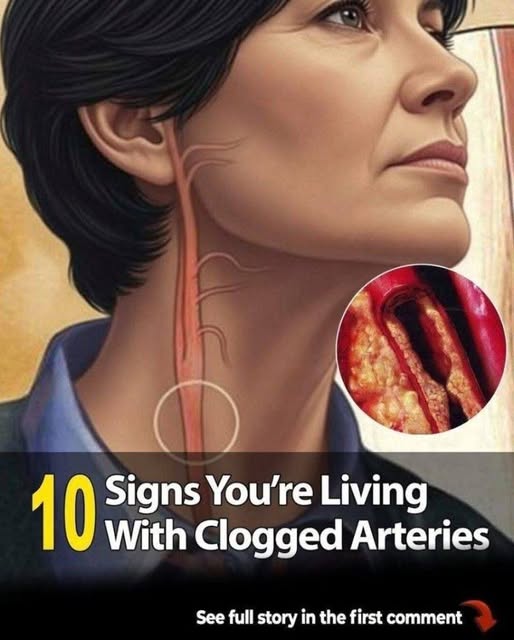
Learn 10 warning signs that may be associated with narrowed or blocked arteries, including chest discomfort, shortness of breath, leg pain, and unusual fatigue—and when symptoms require urgent medical attention.
10 Indicators of Blocked Arteries You Shouldn’t Ignore
Arteries carry oxygen-rich blood throughout the body. When fatty deposits called plaque build up inside an artery, the vessel can become narrowed. This process, known as atherosclerosis, may develop gradually and sometimes causes no symptoms until blood flow is significantly reduced.
The warning signs depend on which arteries are affected. Here are 10 symptoms worth knowing.
1. Chest Pressure or Discomfort
One of the most important warning signs of reduced blood flow to the heart is pressure, squeezing, heaviness, or discomfort in the chest.
It may occur during physical activity or emotional stress and improve with rest. This can be a sign of angina and deserves medical evaluation.
If chest discomfort is severe, persistent, or accompanied by other symptoms, treat it as an emergency.
2. Shortness of Breath
Feeling unusually short of breath—especially during activities that normally wouldn’t leave you winded—can have many causes.
Heart-related problems that reduce the heart’s ability to receive or pump blood can contribute to breathlessness.
Don’t automatically assume it’s simply a lack of fitness.
3. Pain or Cramping in the Legs While Walking
Blocked arteries don’t only affect the heart.
When arteries supplying the legs become narrowed, reduced blood flow can cause aching, cramping, or tiredness in the calf, thigh, or buttocks during walking.
A classic feature is that the discomfort improves after resting and returns when walking again. This is known as intermittent claudication and can occur with peripheral artery disease.
4. Cold Feet or Hands
Reduced circulation can sometimes cause an extremity to feel unusually cold compared with the other side.
However, cold hands and feet are extremely common and can have many harmless causes. Persistent or significant changes should be discussed with a healthcare professional, particularly if accompanied by pain or skin changes.
5. Numbness or Weakness in a Limb
Reduced blood flow can sometimes cause unusual sensations in an affected area.
But sudden numbness or weakness—especially on one side of the body—is not something to wait on. It can be a sign of a stroke.
6. Slow-Healing Wounds on the Feet or Legs
Poor arterial circulation can make it harder for wounds on the lower legs and feet to heal.
A small cut or sore that repeatedly fails to improve, particularly in someone with risk factors for vascular disease, should be evaluated.
7. Changes in Skin Color
Poor circulation can sometimes cause the skin of an affected limb or foot to appear unusually pale, bluish, or darker than normal.
A sudden color change, especially when accompanied by severe pain or coldness, requires urgent medical attention.
8. Unusual Fatigue
Fatigue is a very nonspecific symptom, but persistent or unexplained tiredness can sometimes accompany cardiovascular disease.
It’s important not to assume that fatigue automatically means you have blocked arteries. Sleep problems, anemia, infections, medications, thyroid disorders, and many other conditions can cause it.
9. Dizziness or Fainting
Feeling dizzy or actually fainting can have numerous causes, including dehydration, low blood pressure, abnormal heart rhythms, and cardiovascular problems.
Repeated episodes or fainting associated with chest discomfort, shortness of breath, or palpitations should be medically evaluated.
10. Erectile Dysfunction
In some men, erectile dysfunction can be associated with vascular disease because healthy erections require adequate blood flow.
It isn’t proof that arteries are blocked, but persistent erectile dysfunction can sometimes be an early reason to discuss cardiovascular risk factors with a healthcare professional.
When Is It an Emergency?
Don’t wait for a doctor’s appointment if you experience possible symptoms of a heart attack or stroke.
Call your local emergency service immediately for symptoms such as:
- Severe or persistent chest pressure or pain
- Difficulty breathing
- Fainting or severe weakness
- Sudden facial drooping
- Sudden weakness or numbness on one side
- Sudden difficulty speaking or understanding speech
- Sudden severe vision problems
Remember the FAST stroke warning signs: Face drooping, Arm weakness, Speech difficulty, Time to seek emergency help.
Can You Have Blocked Arteries Without Symptoms?
Yes.
Atherosclerosis can develop silently for years. That’s why managing cardiovascular risk factors is important even when you feel perfectly healthy.
Important risk factors include high blood pressure, high cholesterol, diabetes, smoking, physical inactivity, excess weight, and family history.
Regular medical checkups can help identify these risks before they lead to serious complications.
The Bottom Line
There isn’t one symptom that can confirm “blocked arteries.” Many of the signs above can be caused by other conditions, and some people with significant artery disease have few or no symptoms.
The key is to take persistent or unusual symptoms seriously rather than trying to diagnose yourself from a symptom list. A healthcare professional can determine whether testing is appropriate and help assess your overall cardiovascular risk.