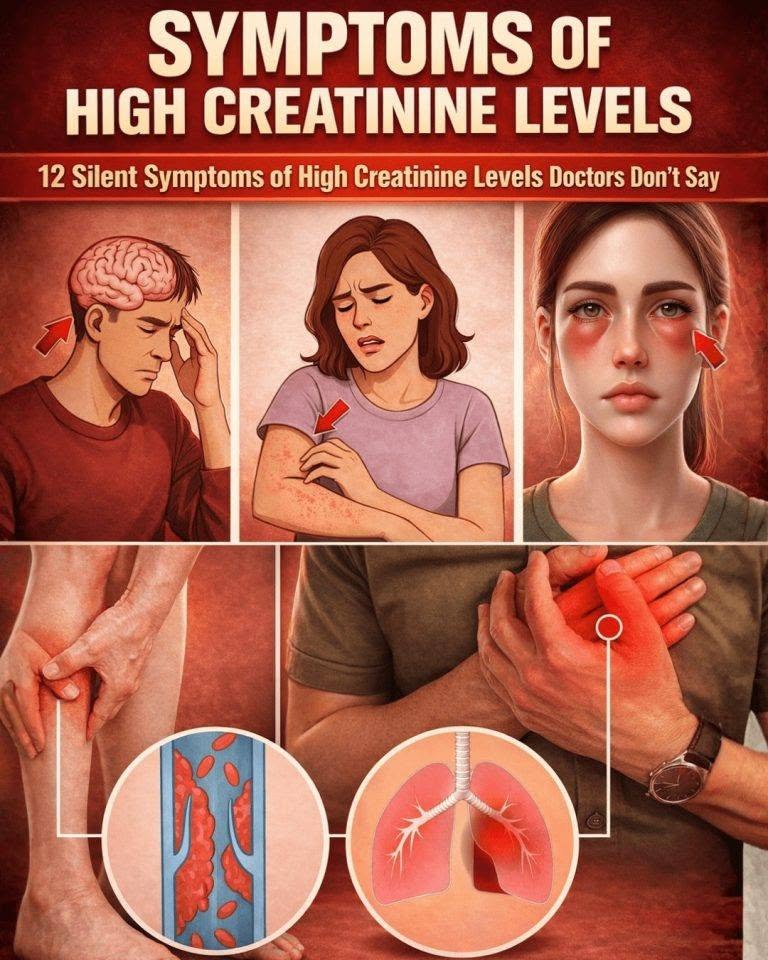
Learn 12 possible warning signs associated with reduced kidney function, why creatinine levels can rise, and when kidney blood and urine tests may be important.
Your kidneys work quietly every day, filtering waste products from your blood and helping regulate fluids, electrolytes, and other important functions.
One substance doctors commonly check when evaluating kidney function is creatinine.
Creatinine is a waste product produced naturally by muscles. Healthy kidneys normally filter it from the blood and remove it through urine. When kidney filtration decreases, creatinine can build up in the bloodstream.
But there is an important point many people misunderstand: a high creatinine level does not necessarily cause a specific set of symptoms. Instead, symptoms may develop because kidney function has declined or because of the condition causing the kidney problem.
Here are some signs that deserve attention.
1. Unusual Tiredness
Feeling unusually tired or weak can occur with reduced kidney function.
However, fatigue is extremely common and can have many other causes, including anemia, poor sleep, stress, infections, thyroid problems, and nutritional deficiencies.
Persistent unexplained fatigue should therefore be evaluated rather than automatically blamed on the kidneys.
2. Swelling Around the Feet or Ankles
When the kidneys aren’t handling fluid properly, excess fluid can accumulate in the body.
This may lead to swelling, particularly around the feet, ankles, or lower legs.
New or persistent swelling deserves medical evaluation, especially when accompanied by shortness of breath or changes in urination.
3. Changes in Urination
Kidney problems can sometimes cause noticeable changes in urination.
You may notice:
- Urinating more or less often
- Increased nighttime urination
- Foamy or unusually bubbly urine
- Blood in the urine
- Changes in urine appearance
Foamy urine can sometimes be related to protein in the urine, although occasional bubbles are not necessarily a sign of kidney disease.
4. Puffiness Around the Eyes
Some people with kidney disease develop puffiness around the eyes, particularly when protein is being lost through the urine.
This symptom is not specific to kidney disease, however. Allergies, lack of sleep, and other conditions can also cause swelling around the eyes.
5. Nausea or Loss of Appetite
As kidney function becomes significantly impaired, waste products can accumulate in the blood.
This may contribute to symptoms such as nausea, reduced appetite, or an unpleasant taste in the mouth.
These symptoms generally aren’t a reliable way to detect an early creatinine increase on their own.
6. Muscle Cramps
Electrolyte and fluid disturbances associated with kidney disease can sometimes contribute to muscle cramps.
But cramps can also result from dehydration, exercise, certain medications, or other medical conditions.
Frequent or severe cramps should be discussed with a healthcare professional.
7. Difficulty Concentrating
Some people with significant kidney dysfunction report difficulty concentrating, mental fogginess, or problems staying alert.
These symptoms are more concerning when they occur alongside other signs of reduced kidney function.
8. Dry or Itchy Skin
Persistent itching can occur in advanced kidney disease, partly because waste products and mineral imbalances can affect the skin and nervous system.
Dry skin itself is extremely common, so itching alone does not mean your creatinine is high.
9. Shortness of Breath
Breathlessness can occur when excess fluid accumulates in the body, including around the lungs.
Kidney disease can also contribute indirectly to anemia, which may cause fatigue and shortness of breath.
Sudden or severe breathing difficulty requires urgent medical attention.
10. High Blood Pressure
The relationship between kidney disease and blood pressure goes both ways.
High blood pressure can damage the kidneys over time, while impaired kidney function can make blood pressure more difficult to control.
For this reason, regularly monitoring blood pressure can be an important part of protecting kidney health.
11. Persistent Nausea or Vomiting
More advanced kidney dysfunction can cause nausea and vomiting because waste products accumulate in the bloodstream.
Persistent vomiting can also cause dehydration, which itself may temporarily raise creatinine.
That is why the underlying cause needs to be identified rather than assuming that an elevated creatinine automatically means chronic kidney disease.
12. No Symptoms at All
This may be the most important sign—or rather, the absence of one.
Early kidney disease can have few or no obvious symptoms.
Someone can have reduced kidney function while feeling completely normal.
That is why blood and urine testing can be much more useful than trying to identify kidney disease based on symptoms alone.
What Does a High Creatinine Level Mean?
A high creatinine result does not automatically mean permanent kidney damage.
Creatinine can be affected by several factors, including:
- Kidney function
- Muscle mass
- Dehydration
- Certain medications
- Recent intense exercise
- High meat intake around the time of testing
- Certain medical conditions
Doctors usually interpret creatinine alongside other information, particularly eGFR, which estimates how well the kidneys are filtering blood.
Urine tests, including testing for albumin, can provide additional information about kidney health.
When Should You Get Checked?
Talk with a healthcare professional if you have persistent changes in urination, unexplained swelling, blood in the urine, ongoing fatigue, difficult-to-control blood pressure, or other symptoms that concern you.
Kidney testing may be particularly important if you have conditions that increase kidney-disease risk, such as diabetes or high blood pressure, or if you have a family history of kidney disease.
When to Seek Urgent Medical Care
Seek urgent medical attention if you develop severe shortness of breath, chest pain, confusion, very little or no urine, severe swelling, or sudden major changes in your health.
These symptoms should not be treated at home simply by trying to lower creatinine.
How Can You Protect Your Kidneys?
There is no single food or drink that can “flush out” the kidneys or instantly lower creatinine.
Instead, focus on the basics:
- Keep blood pressure under control.
- Manage blood sugar if you have diabetes.
- Stay appropriately hydrated unless your doctor has prescribed fluid restriction.
- Avoid unnecessary use of medications that can harm the kidneys.
- Follow your healthcare professional’s advice about protein, salt, and other dietary needs.
- Maintain a healthy weight.
- Don’t smoke.
- Get recommended blood and urine tests if you are at increased risk.
The Bottom Line
High creatinine is a laboratory finding, not a diagnosis by itself.
Some people with kidney problems develop swelling, urinary changes, fatigue, nausea, itching, or other symptoms, while others may feel completely normal—especially during the early stages.
If you’re concerned about your kidneys, don’t rely on symptoms alone. A simple blood test for creatinine and eGFR, together with appropriate urine testing, can provide much more useful information about kidney function.
Early detection gives you a better opportunity to identify the cause and take steps to protect kidney health.