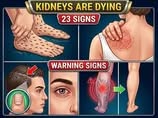
Your kidneys work continuously to remove waste and excess fluid from your blood, help regulate blood pressure, and support several other important functions. The tricky part is that early chronic kidney disease often causes few or no noticeable symptoms.
That means you shouldn’t wait for obvious pain or dramatic symptoms before thinking about kidney health.
Here are 23 changes that can occur with kidney disease—although many can also have completely different causes.
1. Swelling Around Your Ankles or Feet
When the kidneys have difficulty removing excess salt and fluid, fluid can accumulate in the body. Swelling may appear in the feet, ankles, legs, hands, or sometimes the face.
2. Puffy Eyes
Persistent puffiness around the eyes can sometimes occur when excess fluid builds up or when protein is leaking into the urine.
3. Foamy Urine
Urine that repeatedly looks unusually foamy can sometimes indicate excess protein in the urine. Protein leakage is one reason urine testing is important when kidney disease is suspected.
4. Changes in How Often You Urinate
A noticeable change in urination frequency can occur with kidney problems, although urinary infections, medications, diabetes, and other conditions can cause similar changes.
5. Waking Frequently to Urinate
Regularly getting up at night to urinate may have several causes. In some people, frequent nighttime urination can be associated with chronic kidney disease.
6. Unusual Tiredness
Advanced kidney disease can contribute to fatigue. Kidney problems can also be associated with anemia, which may further contribute to feeling weak or exhausted.
7. Trouble Concentrating
As kidney disease becomes more advanced, some people experience difficulty concentrating or changes in mental alertness.
8. Poor Appetite
A reduced appetite can occur with more advanced kidney disease.
9. Nausea
Nausea can occur when kidney disease becomes advanced, but it is also extremely common with many unrelated conditions.
10. Vomiting
Persistent vomiting should never automatically be blamed on the kidneys. If it occurs alongside other concerning symptoms, medical evaluation is appropriate.
11. Muscle Cramps
Muscle cramps can occur in advanced kidney disease, potentially alongside changes in the body’s fluid and mineral balance.
12. Itchy Skin
Persistent itching can occur in people with advanced kidney disease.
13. Dry or Darkened Skin
Changes in skin appearance can occur with advanced kidney disease, although there are many other possible explanations.
14. Unexplained Weight Loss
Unintentional weight loss can occur with advanced kidney disease, particularly when appetite decreases.
15. Shortness of Breath
Shortness of breath can occur when kidney disease becomes advanced, particularly when excess fluid accumulates. However, breathing difficulties can be caused by many potentially serious heart and lung conditions.
16. Chest Discomfort
Chest pain can occur in advanced kidney disease, but chest pain should never simply be assumed to be a kidney symptom. New or severe chest pain requires urgent medical attention.
17. Numbness or Tingling
Numbness can occur in advanced kidney disease, although diabetes, nerve problems, vitamin deficiencies, and other conditions are also common causes.
18. High Blood Pressure
High blood pressure is both a risk factor for kidney disease and something kidney disease can contribute to. Keeping blood pressure under control is therefore important for kidney health.
19. Blood in the Urine
Blood in the urine can have numerous causes, including urinary infections, kidney stones, and other urinary-tract problems. It should be evaluated by a healthcare professional.
20. Persistent Changes in Urine
Changes in urine color, appearance, amount, or frequency can sometimes signal a problem, but they aren’t specific to kidney disease.
21. Increased Fatigue With No Clear Explanation
Feeling persistently exhausted without an obvious reason deserves attention, particularly when it occurs together with swelling, changes in urination, or other symptoms.
22. Muscle Weakness
Kidney disease can affect the body’s fluid and mineral balance, and advanced disease may be associated with weakness and other muscle-related symptoms.
23. No Symptoms at All
This may be the most important point.
Early chronic kidney disease often has no noticeable symptoms. Many people discover they have kidney disease only after blood and urine testing.
So How Do You Know If Your Kidneys Are Healthy?
Symptoms alone aren’t enough.
Doctors commonly use blood and urine tests to evaluate kidney function. Blood testing can measure creatinine and estimate the glomerular filtration rate (eGFR), while urine testing can look for albumin or other evidence of kidney problems.
People with diabetes, high blood pressure, cardiovascular disease, or a family history of kidney disease may have a higher risk and should discuss appropriate screening with their healthcare professional.
The Bottom Line
Don’t panic if you recognize one or more of these symptoms. None of them, by itself, proves that your kidneys are failing. Many have much more common explanations.
But persistent or unexplained changes—especially swelling, foamy urine, significant changes in urination, severe fatigue, or shortness of breath—are worth discussing with a healthcare professional.
And remember: when it comes to kidney disease, testing can detect problems before symptoms become obvious.