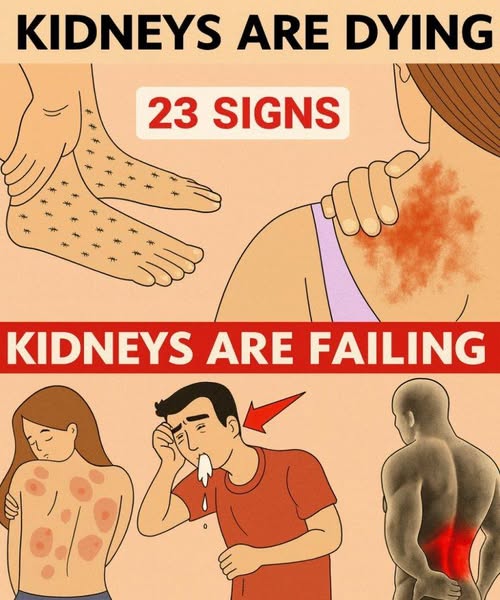
From foamy urine and swollen ankles to persistent itching, fatigue, cramps, and changes in urination, learn 23 possible warning signs of kidney problems and when testing is important.
Your kidneys work around the clock to filter waste and excess fluid from your blood, help regulate minerals and blood pressure, and support red blood cell production. The tricky part is that early kidney disease often causes few or no noticeable symptoms. By the time symptoms become obvious, kidney disease may already be more advanced.
That is why unusual changes—especially changes involving your urine, swelling, energy levels, appetite, or skin—shouldn’t automatically be dismissed as normal aging.
Here are 23 possible signs worth knowing.
1. Foamy or Frothy Urine
Occasional bubbles in urine can happen for harmless reasons. But urine that repeatedly looks unusually foamy or bubbly may indicate protein leaking into the urine.
Persistent foamy urine deserves a urine test, particularly if you also have diabetes or high blood pressure.
2. Blood in Your Urine
Pink, red, brown, or cola-colored urine can sometimes indicate blood.
Blood in the urine can have many causes—including urinary infections and kidney stones—but it should not simply be ignored. A healthcare professional can determine where it is coming from.
3. Needing to Urinate More Often
A noticeable increase in urination, particularly at night, can sometimes occur with kidney problems.
However, frequent urination can also result from diabetes, urinary infections, medications, or prostate problems, so this symptom alone does not diagnose kidney disease.
4. Urinating Less Than Usual
A significant reduction in urine output can occur when kidney function falls, although dehydration, urinary blockage, and other conditions can also cause it.
A sudden major decrease in urine should be evaluated promptly.
5. Puffy Eyes in the Morning
Persistent puffiness around the eyes can occur when the body retains fluid or when protein is being lost through the urine.
It isn’t specific to kidney disease, but recurring unexplained puffiness is worth discussing with a healthcare professional.
6. Swollen Ankles or Feet
Kidney problems can cause the body to retain excess salt and fluid, producing edema around the feet, ankles, and legs.
Swelling can also result from heart, liver, vein, or medication-related problems, so the cause needs to be determined rather than assumed.
7. Rings or Shoes Suddenly Feel Tight
A less obvious sign of fluid retention is noticing that rings, socks, or shoes suddenly feel tighter than usual.
If this happens repeatedly along with ankle or facial swelling, mention it to your healthcare professional.
8. Constant Fatigue
Feeling unusually exhausted—even after adequate sleep—can occur with advanced kidney disease.
Reduced kidney function can contribute to anemia and buildup of waste products, both of which can leave someone feeling weak or drained.
9. Trouble Concentrating
Some people with more advanced kidney disease experience difficulty concentrating, mental sluggishness, or problems thinking clearly.
Don’t assume that persistent concentration problems are simply part of getting older; there are many possible causes that deserve evaluation.
10. Trouble Sleeping
Sleep problems can occur in people with kidney disease. Itching, restless legs, nighttime urination, and other complications can all interfere with sleep.
11. Persistent Itchy Skin
Unexplained, persistent itching—particularly when it affects large areas of the body—can occur with advanced kidney disease.
Kidney problems can disrupt the body’s mineral balance and allow waste products to accumulate.
12. Very Dry or Flaky Skin
Dry skin isn’t automatically a kidney symptom. Weather, dehydration, eczema, medications, and many other conditions can cause it.
But persistent dry, itchy skin together with other kidney-related symptoms should be checked.
13. Muscle Cramps
Repeated cramps, particularly in the legs or feet, can occur when kidney disease contributes to fluid or electrolyte disturbances.
Cramps are extremely common for many other reasons, so they shouldn’t be considered proof of kidney disease.
14. Nausea
As kidney function becomes significantly impaired, waste products can accumulate in the blood and contribute to nausea.
Persistent nausea has many other possible causes, so kidney testing may be appropriate when it occurs alongside other warning signs.
15. Loss of Appetite
A reduced appetite can occur in advanced kidney disease.
If you consistently don’t feel like eating—especially when accompanied by nausea, fatigue, or unexplained weight loss—talk with a healthcare professional.
16. Unexplained Weight Loss
Losing weight without intentionally changing your diet or activity level can have many causes.
Advanced kidney disease is one possible cause, particularly when weight loss occurs alongside poor appetite, nausea, or weakness.
17. An Unusual Taste in Your Mouth
Some people with significantly reduced kidney function report changes in taste or an unpleasant taste in the mouth.
Waste buildup can affect taste and appetite in advanced disease.
18. Breath That Smells Unusual
Advanced kidney disease can sometimes cause breath to develop an ammonia-like or urine-like odor.
This is not a common explanation for ordinary bad breath, so other causes should also be considered.
19. Numbness or Tingling
More advanced kidney disease can be associated with nerve-related symptoms such as numbness or tingling.
These sensations have many possible causes—including diabetes and vitamin deficiencies—so medical evaluation is important if they persist.
20. Shortness of Breath
Kidney disease can contribute to shortness of breath through complications such as fluid buildup or anemia.
Because breathing difficulty can also signal heart or lung problems, new or severe shortness of breath should never be assumed to be a kidney symptom.
21. Swelling in the Hands or Face
Fluid retention isn’t always limited to the feet. In kidney disease, swelling may also appear in the hands, face, or other areas.
22. Changes in Blood Pressure
Kidneys and blood pressure are closely connected. High blood pressure can damage the kidneys, while kidney disease can also contribute to high blood pressure.
Importantly, high blood pressure often causes no obvious symptoms, so measuring it is much more reliable than waiting for warning signs.
23. Feeling Unusually Weak or Unwell
A general combination of weakness, fatigue, poor appetite, nausea, swelling, itching, or changes in urination can occur as kidney disease becomes more advanced.
One symptom by itself usually isn’t enough to identify the cause. The pattern of symptoms and appropriate testing are much more informative.
The Most Important Thing: Don’t Wait for Symptoms
One of the biggest misconceptions about kidney disease is that you will definitely feel something when your kidneys begin to lose function.
In reality, early chronic kidney disease often has no symptoms at all. Testing may be the only way to discover it early.
Two commonly used tests are:
Blood Test: eGFR
An estimated glomerular filtration rate (eGFR) uses a blood test to estimate how well your kidneys are filtering waste.
Urine Test: uACR
A urine albumin-to-creatinine ratio (uACR) looks for albumin, a protein that can leak into the urine when kidney filters are damaged.
These tests can detect kidney problems even before obvious symptoms develop.
Who Should Pay Particular Attention?
Kidney screening is especially important for people with risk factors such as:
- Diabetes
- High blood pressure
- Heart disease
- A family history of kidney failure
- Obesity
- Older age
Diabetes and high blood pressure are among the major causes of chronic kidney disease in adults.
When to Seek Urgent Medical Care
Don’t wait for a routine appointment if you develop severe symptoms such as:
- Very little or no urine
- Severe shortness of breath
- Chest pain
- Severe swelling
- Confusion or extreme drowsiness
- Blood in the urine accompanied by severe symptoms
- Severe pain in the side or back with fever or vomiting
These symptoms can have causes other than kidney disease and may require urgent assessment.
Final Takeaway
The kidneys can be remarkably quiet when problems first begin. Foamy urine, blood in the urine, swelling, persistent itching, unusual fatigue, changes in urination, nausea, cramps, and unexplained changes in appetite or weight are among the signs that may deserve medical attention.
But remember: having one of these symptoms does not mean you have kidney disease. Many have numerous other explanations.
If symptoms persist—or if you have diabetes, high blood pressure, heart disease, or a family history of kidney failure—talk with a healthcare professional about simple blood and urine tests. Finding kidney disease early gives you a better opportunity to slow its progression and protect kidney function.