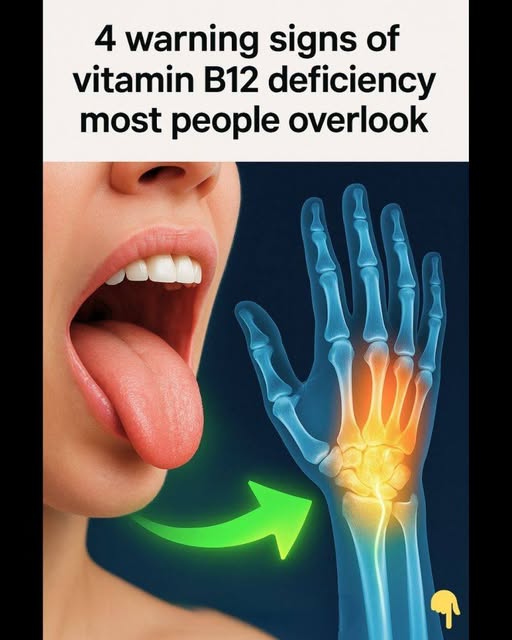
Vitamin B12 is an essential nutrient that helps keep your nerves and blood cells healthy and supports normal DNA production. Because the body can store B12 for a long time, a deficiency may develop gradually and sometimes go unnoticed until symptoms become more obvious.
Some symptoms can be mistaken for stress, tiredness, aging, or other health problems. However, certain changes—especially neurological symptoms—deserve attention.
Here are four important symptoms of vitamin B12 deficiency that you shouldn’t ignore.
1. Numbness, Tingling, or “Pins and Needles”
One of the most noticeable symptoms can be unusual sensations in the hands or feet.
You may experience:
- Tingling or prickling
- Numbness
- Burning sensations
- Reduced sensitivity to touch
- A feeling like tiny electric shocks
- Symptoms that seem to travel along the arms or legs
This happens because vitamin B12 is important for maintaining healthy nerve function. Prolonged deficiency can affect the peripheral nerves.
If unexplained numbness or tingling keeps returning, it is worth discussing with a healthcare professional rather than assuming it is simply poor circulation.
2. Unusual Weakness and Extreme Fatigue
Feeling tired after a busy day is normal. But persistent fatigue, weakness, or a lack of energy can sometimes be associated with vitamin B12 deficiency.
B12 is involved in the production of healthy red blood cells. Severe deficiency can contribute to megaloblastic anemia, which may leave you feeling unusually exhausted or weak.
You might notice:
- Low energy throughout the day
- Muscle weakness
- Shortness of breath with activity
- Dizziness or lightheadedness
- Feeling tired despite getting enough sleep
Fatigue has many possible causes, however, so it should not automatically be blamed on B12 deficiency.
3. Balance Problems or Difficulty Walking
A more concerning symptom is a change in balance or coordination.
Some people with significant B12 deficiency may develop:
- Unsteady walking
- Difficulty maintaining balance
- Muscle weakness
- Poor coordination
- A feeling that their feet are not sensing the ground normally
These symptoms can occur because B12 deficiency may affect the nervous system.
New or worsening problems with walking or balance should be medically evaluated promptly, particularly if they appear suddenly or are accompanied by weakness, facial drooping, speech difficulty, or severe dizziness.
4. Memory, Concentration, or Mood Changes
Vitamin B12 deficiency can also affect the nervous system and may be associated with cognitive or psychological symptoms.
Possible changes include:
- Difficulty concentrating
- Forgetfulness
- Confusion
- Feeling mentally “foggy”
- Irritability
- Low mood
These symptoms are not specific to B12 deficiency. Stress, lack of sleep, medications, thyroid problems, depression, and many other conditions can cause similar changes.
That is why testing is important rather than relying on symptoms alone.
Who Is More Likely to Develop Vitamin B12 Deficiency?
The risk can be higher in people who:
- Eat little or no animal-derived food
- Have conditions affecting B12 absorption
- Have undergone certain stomach or intestinal surgeries
- Take certain medications that can interfere with B12 absorption
- Have digestive disorders affecting nutrient absorption
- Are older adults
People can also develop deficiency for reasons unrelated to diet.
How Is Vitamin B12 Deficiency Diagnosed?
Symptoms alone cannot confirm a B12 deficiency. A healthcare professional may order blood tests, commonly including a complete blood count (CBC) and vitamin B12 level. Depending on the situation, additional tests such as methylmalonic acid may help clarify whether a deficiency is present.
Treatment depends on the underlying cause. Some people need dietary changes or oral supplements, while others may require B12 injections or treatment of an absorption problem.
Don’t Ignore Persistent Nerve Symptoms
Occasional tiredness or a brief tingling sensation does not necessarily mean you are deficient in vitamin B12. But persistent or progressive numbness, weakness, balance problems, or cognitive changes deserve medical attention.
Early diagnosis matters because prolonged vitamin B12 deficiency can cause neurological problems, and some nerve damage may become difficult to reverse if treatment is delayed.
Final Takeaway
The four symptoms to pay particular attention to are:
- Numbness or tingling
- Persistent weakness or unusual fatigue
- Balance or walking difficulties
- Memory, concentration, or mood changes
If you are experiencing several of these symptoms, speak with a healthcare professional about whether vitamin B12 testing is appropriate for you. Avoid taking high-dose supplements solely on the basis of symptoms, because the underlying cause of the symptoms may be something else.