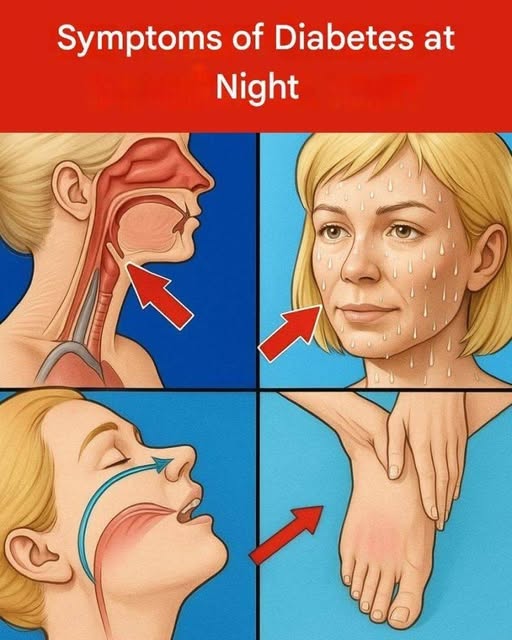
Frequent nighttime urination, unusual thirst, sweating, hunger, and restless sleep can sometimes be linked to blood sugar problems. Learn five nighttime symptoms of diabetes and when to get tested.
Diabetes does not always announce itself with obvious symptoms during the day. For some people, changes in blood sugar can become more noticeable at night, when the body is resting and there are fewer distractions.
Some nighttime symptoms are caused by high blood sugar, while others—particularly in people taking insulin or certain diabetes medicines—can occur when blood sugar drops too low.
Having one of these symptoms does not automatically mean you have diabetes. However, if several occur repeatedly, it is worth discussing them with a healthcare professional and getting your blood glucose checked.
1. Waking Up Frequently to Urinate
One of the classic symptoms associated with diabetes is frequent urination.
When blood glucose becomes too high, the kidneys may try to remove some of the excess glucose through urine. This draws additional water into the urine, which can make a person urinate more frequently.
You may notice:
- Waking up several times to use the bathroom
- Producing larger amounts of urine
- Suddenly needing to urinate much more often than usual
Nighttime urination can also have many other causes, including drinking a lot of fluids before bed, certain medications, urinary problems, pregnancy, or prostate problems.
Persistent changes should therefore be evaluated rather than automatically attributed to diabetes.
2. Unusual Thirst During the Night
Frequent urination can lead to increased fluid loss.
As a result, a person with significantly elevated blood sugar may experience excessive thirst, including waking during the night needing water.
You might notice:
- A very dry mouth
- Strong thirst despite drinking water
- Keeping water beside the bed
- Repeatedly waking because your mouth feels extremely dry
If excessive thirst and frequent urination occur together, checking blood glucose is a sensible next step.
3. Night Sweats or Shaking
Night sweating can sometimes occur when blood sugar falls too low.
This is particularly important for people who take insulin or certain glucose-lowering medications.
Possible symptoms of low blood sugar include:
- Sweating
- Shaking
- Fast heartbeat
- Hunger
- Dizziness
- Irritability
- Confusion
- Weakness
Someone may wake up with their pajamas or bedsheets unusually damp without understanding why.
However, night sweats have many other possible causes, including infections, hormonal changes, medications, anxiety, and other medical conditions.
If you have diabetes and repeatedly wake up sweating or shaking, discuss it with your healthcare professional. Your medication, meal timing, exercise, and overnight glucose levels may need review.
4. Feeling Extremely Hungry at Night
Persistent hunger can sometimes accompany poorly controlled diabetes.
When glucose cannot effectively move from the bloodstream into cells for energy, the body may continue sending hunger signals even though food has already been consumed.
Some people may experience:
- Strong hunger shortly after dinner
- Waking up hungry
- Cravings late at night
- Feeling unsatisfied after eating
Nighttime hunger alone does not indicate diabetes. Eating habits, inadequate daytime calories, stress, poor sleep, and several other factors can produce the same symptom.
But persistent excessive hunger combined with thirst, frequent urination, fatigue, or unexplained weight changes deserves attention.
5. Restless or Poor-Quality Sleep
Blood sugar problems can interfere with sleep in several ways.
Frequent urination may repeatedly wake you. Low blood sugar can cause sweating, shaking, or a racing heartbeat. High or fluctuating glucose levels may also leave some people feeling uncomfortable during the night.
Poor sleep itself can then make blood sugar management more difficult.
If you regularly wake up tired despite getting enough time in bed, don’t assume diabetes is necessarily responsible. Sleep apnea, stress, medications, pain, hormonal changes, and other conditions can also affect sleep.
Other Diabetes Symptoms to Watch For
Nighttime symptoms become more meaningful when they occur alongside other common diabetes symptoms.
These can include:
- Increased thirst
- Frequent urination
- Increased hunger
- Unexplained weight loss
- Persistent fatigue
- Blurred vision
- Slow-healing cuts
- Frequent infections
- Tingling or numbness in the hands or feet
- Dry or itchy skin
Some people with type 2 diabetes have few noticeable symptoms, which is why blood glucose testing is important for people at increased risk.
When Should You Get Your Blood Sugar Checked?
If you repeatedly experience several of these symptoms, especially excessive thirst and urination, consider speaking with a healthcare professional.
Diabetes can be assessed using blood tests such as:
- Fasting blood glucose
- HbA1c
- Oral glucose tolerance testing, when appropriate
A home glucose meter can provide useful information, but a single home reading cannot by itself establish a diagnosis.
Don’t Ignore Symptoms of Very Low Blood Sugar
For people taking insulin or medications that can cause hypoglycemia, nighttime symptoms deserve particular attention.
Very low blood glucose can cause confusion, seizures, loss of consciousness, and can become an emergency.
If someone with diabetes becomes severely confused, has a seizure, loses consciousness, or cannot safely swallow, emergency medical help is needed.
The Bottom Line
Waking up frequently to urinate, excessive nighttime thirst, unexplained sweating or shaking, unusual hunger, and disrupted sleep can sometimes occur alongside blood sugar problems.
But these symptoms have many possible causes, so they should not be used to diagnose diabetes on their own.
If the symptoms keep happening—particularly if several occur together—the most useful step is simple: get your blood glucose and HbA1c checked and discuss the results with a healthcare professional.
Early detection can make it much easier to manage blood sugar and reduce the risk of long-term complications.