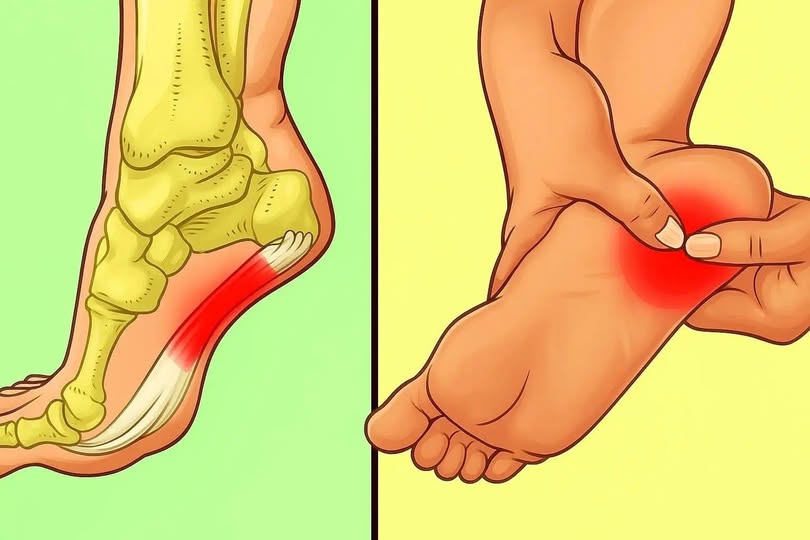
Heel pain can make even simple activities—walking around the house, standing at work, or getting out of bed in the morning—feel uncomfortable. One common cause is plantar fasciitis, a condition involving irritation and pain around the thick band of tissue that runs along the bottom of the foot.
The good news is that gentle stretching and strengthening exercises can often be an important part of managing symptoms.
Here are 7 simple exercises you can try at home.
1. Calf Stretch Against a Wall
A tight calf can increase tension through the ankle and bottom of the foot.
How to do it:
- Stand facing a wall and place both hands against it.
- Step one foot backward.
- Keep the back heel on the floor.
- Gently bend your front knee while keeping the back leg relatively straight.
- Hold for about 20–30 seconds.
- Switch sides.
Repeat 2–3 times per side.
You should feel a gentle stretch in the calf—not sharp pain in the heel.
2. Plantar Fascia Stretch
This stretch can be particularly useful before taking your first steps in the morning.
How to do it:
- Sit on a chair.
- Place the painful foot across the opposite knee.
- Gently pull your toes back toward your shin.
- Use your other hand to massage or gently stretch the bottom of the foot.
- Hold for around 10–30 seconds.
Repeat several times, especially before standing after prolonged sitting or sleeping.
3. Towel Stretch
A towel can help you stretch the calf and underside of your foot without putting much weight on the heel.
How to do it:
- Sit on the floor with your leg extended.
- Place a towel around the ball of your foot.
- Hold both ends of the towel.
- Gently pull the towel toward you.
- Keep your knee straight but relaxed.
- Hold for approximately 20–30 seconds.
Repeat 2–3 times.
4. Rolling Massage
Rolling the bottom of your foot over a small ball or similarly shaped object can provide gentle massage and may help loosen the area.
Try this:
- Sit comfortably.
- Place a small firm ball under your foot.
- Slowly roll your foot over it.
- Continue for about 1–2 minutes.
- Use gentle pressure rather than forcing through pain.
A chilled bottle can also be used by some people for a combination of gentle rolling and cooling.
5. Toe Curls With a Towel
Strengthening the small muscles of the foot can help improve foot function.
How to do it:
- Place a small towel flat on the floor.
- Put your affected foot on top of it.
- Keeping your heel on the floor, use your toes to scrunch the towel toward you.
- Relax your toes and repeat.
Try 8–15 repetitions.
Stop if the exercise causes significant pain.
6. Heel Raises
Heel raises strengthen the calf and muscles involved in supporting the foot.
How to do it:
- Stand behind a sturdy chair or near a wall for balance.
- Keep your feet about hip-width apart.
- Slowly lift your heels so you’re standing on your toes.
- Pause briefly.
- Slowly lower your heels.
Start with a comfortable number of repetitions and gradually increase as your foot becomes stronger.
If regular heel raises are uncomfortable, begin with both feet rather than performing them on one leg.
7. Seated Foot and Ankle Strengthening
Gentle ankle movements can help maintain mobility while gradually strengthening the surrounding muscles.
Sit comfortably and slowly:
- Point your toes forward.
- Pull your toes toward you.
- Move your foot gently from side to side.
- Make small controlled ankle circles.
Perform these movements slowly rather than forcing the range of motion.
How Often Should You Do These Exercises?
Consistency is generally more useful than doing a large number of exercises once in a while.
A simple routine might include:
Morning:
Plantar fascia stretch + calf stretch
During the day:
Gentle foot rolling + ankle mobility
Several times per week:
Toe curls + heel raises
Increase activity gradually according to how your symptoms respond.
Don’t Ignore Your Footwear
Exercises are only one part of managing heel pain.
Shoes that provide comfortable support and cushioning may make everyday walking easier. Avoid spending long periods barefoot on hard surfaces if that noticeably aggravates your symptoms.
If a particular activity repeatedly increases your heel pain, temporarily reduce the intensity and return gradually.
When Should You See a Doctor?
Not every case of heel pain is plantar fasciitis. Persistent or severe heel pain can have other causes.
Consider getting medical advice if:
- Your pain is severe or worsening.
- You cannot walk normally.
- Your heel is significantly swollen or red.
- You developed pain after an injury.
- You have numbness or significant weakness.
- Symptoms aren’t improving with reasonable self-care.
- Heel pain continues for several weeks.
A healthcare professional or physical therapist can assess the cause of your pain and recommend an individualized exercise program.
The Bottom Line
Plantar fasciitis can be frustrating, but gentle stretching, gradual strengthening, appropriate footwear, and sensible activity modification can all play a role in managing symptoms.
The key is consistency without forcing through pain. Start gently, progress gradually, and seek professional advice if your heel pain persists or is severe.
Meta Description: Discover 7 gentle exercises that may help reduce heel pain and manage plantar fasciitis, including calf stretches, towel stretches, heel raises, and foot-strengthening exercises.