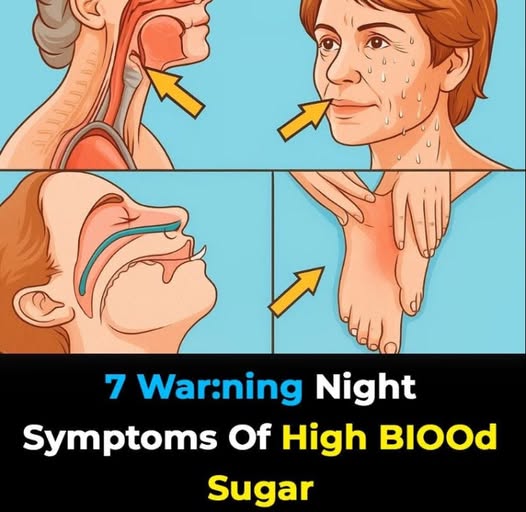
Discover 7 nighttime symptoms that may be associated with high blood sugar, including frequent urination, excessive thirst, night sweats, restless sleep, and unusual fatigue. Learn when these symptoms may warrant checking your blood glucose and speaking with a healthcare professional.
7 Warning Night Symptoms of High Blood Sugar You Should Know
High blood sugar, or hyperglycemia, can sometimes cause symptoms that become particularly noticeable at night. However, these symptoms are not specific to high blood sugar and can have many other causes.
If several of these symptoms occur repeatedly—especially if you have diabetes or are at risk for diabetes—it may be worth checking your blood glucose and discussing the pattern with a healthcare professional.
1. Waking Up Frequently to Urinate
One of the classic symptoms associated with high blood sugar is frequent urination.
When blood glucose becomes very high, the kidneys may try to remove excess glucose through urine. This can increase urine production and cause you to wake up multiple times during the night.
If nighttime urination is new or persistent, don’t automatically assume it’s your blood sugar. Urinary problems, medications, excessive evening fluids, and other conditions can also contribute.
2. Excessive Thirst at Night
Frequent urination can contribute to fluid loss, which may make you unusually thirsty.
You might wake up with:
- A very dry mouth
- An intense desire to drink water
- A dry or sticky feeling in your mouth
Persistent excessive thirst should be evaluated, particularly when accompanied by frequent urination.
3. Nighttime Dry Mouth
Waking up with an unusually dry mouth can occur when you’re dehydrated.
High blood sugar can contribute to increased urination and fluid loss, but dry mouth can also result from mouth breathing, certain medications, dehydration, or a dry sleeping environment.
If it happens regularly along with increased thirst and urination, consider discussing it with a healthcare professional.
4. Restless or Poor-Quality Sleep
Blood glucose fluctuations may interfere with comfortable sleep for some people.
You might experience:
- Repeated awakenings
- Difficulty staying asleep
- Feeling unusually restless
- Waking up feeling unrefreshed
Poor sleep itself can also affect blood glucose regulation, creating a frustrating cycle.
5. Night Sweats
Night sweating has many possible causes, and it isn’t a reliable sign of high blood sugar by itself.
For people taking insulin or certain diabetes medications, however, sweating during sleep can sometimes be associated with low blood sugar (hypoglycemia) rather than high blood sugar.
That’s why checking your glucose when symptoms occur can be much more informative than assuming the cause.
6. Headache or Feeling Unwell Overnight
Significant changes in blood glucose can sometimes be accompanied by headache, weakness, or a general feeling of being unwell.
If these symptoms repeatedly occur overnight or first thing in the morning, recording your glucose levels and discussing the pattern with your healthcare provider can help determine what’s happening.
7. Waking Up Extremely Tired
Persistent fatigue can occur when blood glucose remains elevated because the body isn’t using glucose normally for energy.
You may sleep for what seems like enough hours but still wake up exhausted.
However, fatigue is extremely common and can also result from sleep apnea, stress, anemia, medications, poor sleep, and many other conditions.
When Should You Check Your Blood Sugar?
If you repeatedly experience nighttime thirst, frequent urination, unexplained fatigue, or other concerning symptoms, consider checking your blood glucose if you have access to an appropriate glucose meter or continuous glucose monitor.
If you don’t have diabetes but repeatedly experience symptoms of high blood sugar, talk with a healthcare professional rather than trying to diagnose yourself from symptoms alone.
Seek Urgent Medical Care for Severe Symptoms
Very high blood sugar can become dangerous. Urgent medical attention is particularly important if high glucose is accompanied by vomiting, severe abdominal pain, rapid or difficult breathing, confusion, extreme weakness, or unusual drowsiness.
Final Takeaway
Nighttime symptoms can sometimes provide clues that your blood sugar isn’t well controlled, but symptoms alone cannot confirm high blood sugar. The most useful step is to measure glucose when appropriate and have persistent or unexplained symptoms evaluated.
If you already have diabetes, follow the blood-glucose monitoring and medication plan provided by your healthcare team.