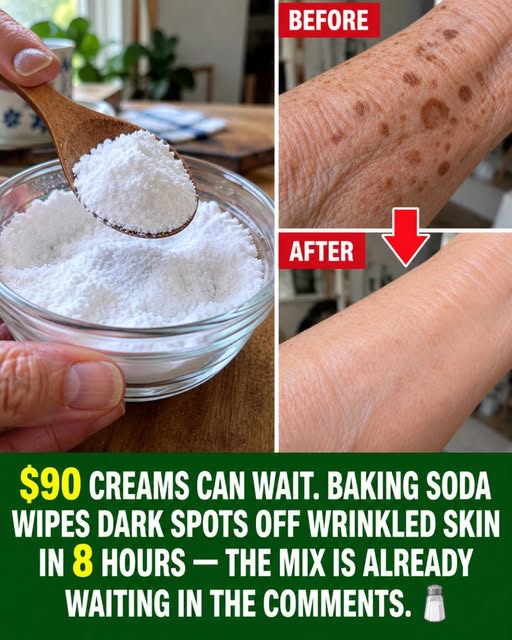
Can baking soda really remove dark spots and wrinkles overnight? Learn what baking soda can and cannot do for your skin, the risks of using it on your face, and safer alternatives for a more even-looking complexion.
There is always another viral beauty trick promising smoother, brighter, younger-looking skin using something already sitting in your kitchen. Baking soda is one of the most popular examples.
You may have seen claims that leaving baking soda on the skin for several hours can make dark spots disappear, smooth wrinkles, or produce results that expensive creams cannot. The idea sounds tempting—especially when a simple household ingredient costs only a fraction of a skincare product.
But there is an important difference between making skin temporarily feel smoother and actually treating wrinkles or hyperpigmentation.
Why Do People Use Baking Soda on Their Skin?
Baking soda, also known as sodium bicarbonate, has a fine texture and is mildly abrasive. When mixed with water, it creates a paste that some people use as a homemade exfoliant.
Exfoliation can remove some dead cells from the surface of the skin. This may temporarily make the skin feel softer or look a little brighter.
That temporary effect is probably one reason baking soda has developed a reputation as a quick beauty treatment.
However, removing surface dead skin does not mean that baking soda is removing the underlying pigment responsible for a dark spot or reversing the structural changes that cause wrinkles.
Can Baking Soda Remove Dark Spots in 8 Hours?
There is no reliable evidence that applying baking soda to your skin for eight hours will erase dark spots.
Dark spots can develop for many reasons, including sun exposure, acne or other inflammation, hormonal changes, and normal aging. The pigment is not simply dirt sitting on the surface that can be wiped away.
Trying to aggressively scrub or chemically alter the skin may actually make the situation worse. Irritation and inflammation can sometimes trigger or worsen post-inflammatory hyperpigmentation, particularly in people whose skin is prone to pigmentation.
So if a dark spot suddenly appears lighter after using a DIY treatment, that doesn’t necessarily mean the underlying pigmentation has been eliminated.
What About Wrinkles?
Wrinkles are also much more complicated than surface dryness.
As we age, the skin gradually loses collagen and elastin, while factors such as repeated sun exposure contribute to visible lines and loss of firmness.
Baking soda cannot rebuild collagen or reverse these deeper changes.
A homemade baking soda mask might temporarily make the skin feel smoother because of exfoliation or removal of surface oils, but that is very different from actually treating wrinkles.
Why Leaving Baking Soda on Overnight May Be a Bad Idea
One of the biggest problems with viral DIY skincare recipes is that an ingredient being safe for household use doesn’t automatically mean it is appropriate for prolonged contact with facial skin.
The skin has a naturally acidic environment that helps support its protective barrier. Baking soda is alkaline, and frequent or prolonged exposure may disturb that barrier.
Possible reactions include:
- Dryness and tightness
- Burning or stinging
- Redness
- Irritation
- Increased sensitivity
- Flaking or peeling
- Worsening of existing skin problems
And if irritation leads to inflammation, pigmentation can sometimes become more noticeable rather than less noticeable.
Why Expensive Creams Aren’t Automatically Better Either
This doesn’t mean that every expensive anti-aging cream is effective.
The price of a skincare product does not determine whether it works. Some inexpensive products contain well-studied ingredients, while some luxury products rely heavily on branding and packaging.
What matters more is which ingredients are present, whether they have evidence behind them, and whether the product is appropriate for your skin.
For pigmentation and signs of aging, ingredients such as sunscreen, retinoids, vitamin C, niacinamide, and certain exfoliating acids may have much better evidence than kitchen remedies. The right choice depends on the individual’s skin and the cause of the pigmentation.
The Most Important Step: Sun Protection
If you’re concerned about dark spots or wrinkles, protecting your skin from the sun is one of the most useful habits you can develop.
UV exposure can contribute to premature skin aging and can make existing pigmentation darker.
A broad-spectrum sunscreen used consistently can help protect the skin and prevent pigmentation from becoming more pronounced.
This is also one reason that treating dark spots without addressing sun exposure often produces disappointing results.
What Can You Do Instead?
Rather than leaving baking soda on your face overnight, consider a simpler and gentler routine.
Morning:
- Use a gentle cleanser if needed.
- Apply a moisturizer appropriate for your skin type.
- Finish with broad-spectrum sunscreen.
Evening:
- Gently cleanse your skin.
- Use a suitable skincare treatment if needed.
- Apply moisturizer to support the skin barrier.
If pigmentation is persistent, changing, or difficult to identify, a dermatologist can help determine the cause and recommend appropriate treatment.
The Bottom Line
Baking soda may be inexpensive and convenient, but there is no good evidence that it can wipe away dark spots or wrinkles in eight hours.
In fact, leaving baking soda on the skin for prolonged periods may cause irritation and damage the skin barrier.
Sometimes the best skincare isn’t the most dramatic treatment. Consistent sun protection, gentle skincare, patience, and evidence-based ingredients are generally a much safer approach than aggressive overnight DIY remedies.
And remember: a viral beauty hack can make a great headline, but your skin deserves more than a promise.
If you enjoy practical beauty tips, natural-living ideas, and delicious recipes, leave a “Thank you” in the comments. Your support helps me know you want more helpful content and recipes!