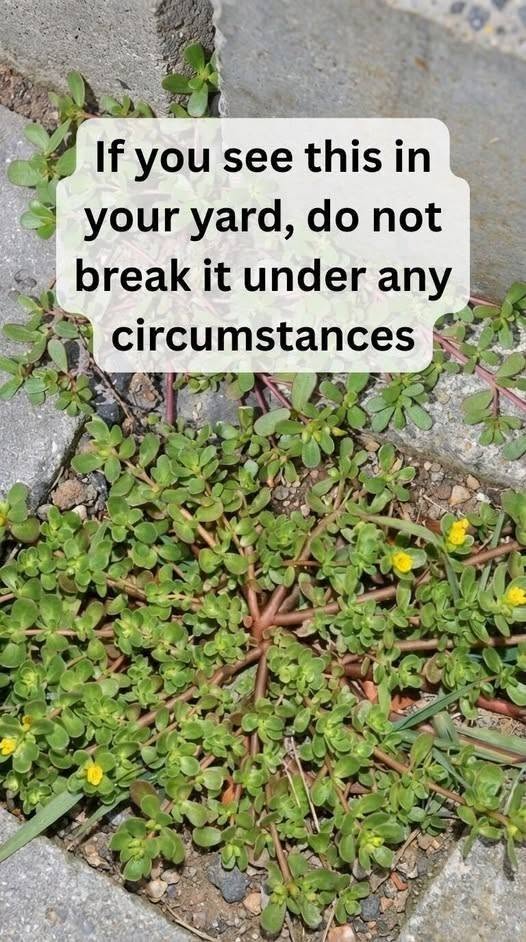
Discover 8 reasons to leave purslane growing in your garden. This often-overlooked edible plant is packed with nutrients, including omega-3 fats, vitamins, minerals, antioxidants, and fiber.
8 Reasons to Leave Purslane Growing — The “Weed” That’s Actually a Superfood!
If you’ve ever spotted a low-growing plant spreading through your garden and immediately thought, “That’s just a weed,” you may want to take a closer look.
Purslane (Portulaca oleracea) is a succulent-like plant with small, fleshy leaves and reddish stems. It grows easily in sunny areas and is often removed from gardens simply because it appears where it wasn’t planted.
But purslane isn’t merely an unwanted garden visitor. In many parts of the world, it has traditionally been eaten as a leafy vegetable and valued for its nutritional content.
Before pulling it out, here are 8 reasons you might want to let purslane stay—provided you can positively identify it and it hasn’t been exposed to pesticides, herbicides, contaminated soil, or other pollutants.
1. Purslane Is Surprisingly Nutritious
One of the biggest reasons to appreciate purslane is its nutritional profile.
Its tender leaves contain a variety of nutrients, including:
- Vitamin A
- Vitamin C
- Vitamin E
- Magnesium
- Potassium
- Calcium
- Iron
- Folate
- Fiber
The exact nutrient content can vary depending on growing conditions, plant maturity, and preparation.
Unlike many leafy vegetables, purslane also contains notable amounts of alpha-linolenic acid (ALA), a plant-based omega-3 fatty acid.
That makes this humble garden plant an interesting addition to a varied diet.
2. It Contains Plant-Based Omega-3 Fatty Acids
Purslane is particularly interesting because it contains ALA omega-3 fatty acids.
Omega-3 fats are essential nutrients that the body needs but cannot produce in sufficient amounts on its own.
ALA is found primarily in plant foods such as:
- Flaxseeds
- Chia seeds
- Walnuts
- Hemp seeds
- Purslane
The body can convert ALA into other omega-3 fatty acids, although the conversion is limited. For that reason, purslane shouldn’t be viewed as a replacement for sources of EPA and DHA, but it can contribute to overall omega-3 intake.
3. It Provides Antioxidant Compounds
Purslane contains several naturally occurring antioxidant compounds.
Antioxidants help protect cells from oxidative damage caused by unstable molecules known as free radicals.
Purslane contains compounds such as vitamin C, vitamin E, carotenoids, and various polyphenols.
Eating a variety of colorful vegetables and herbs is a simple way to increase the range of beneficial plant compounds in your diet.
Purslane can be one of those foods.
4. It Can Add Variety to Your Diet
Healthy eating doesn’t have to mean eating the same handful of vegetables every week.
Purslane has a slightly tangy, refreshing flavor and a pleasant succulent texture. The leaves and tender stems can be eaten raw or cooked.
Try adding young purslane to:
- Salads
- Sandwiches
- Wraps
- Soups
- Stir-fries
- Omelets
- Grain bowls
- Yogurt-based dishes
Its slightly lemony flavor can work particularly well alongside tomatoes, cucumbers, herbs, lemon juice, and olive oil.
5. It’s an Easy Plant to Grow
Purslane has a reputation for being difficult to get rid of—and that can actually be an advantage if you want an edible ground-cover plant.
It generally tolerates:
- Hot weather
- Dry conditions
- Poorer soils
- Full sun
- Limited watering
Its fleshy leaves help it retain water, allowing it to tolerate conditions that can stress more delicate leafy greens.
If you intentionally grow purslane, give it a clean growing area and avoid harvesting plants growing beside roads, treated lawns, industrial areas, or places where chemicals may have been applied.
6. It Can Help Support Garden Biodiversity
Not every plant in a garden needs to be a traditional ornamental or vegetable crop.
Allowing some non-invasive plants to remain can contribute to a more diverse garden environment.
Purslane can provide ground-level vegetation and may interact with insects and other organisms in the garden ecosystem.
However, whether you should leave it depends on your garden. If purslane is aggressively competing with seedlings or taking over vegetable beds, removing some of it may be appropriate.
The goal isn’t necessarily to let every purslane plant grow everywhere.
Instead, consider keeping a small, controlled patch.
7. It May Help Reduce Food Waste
There’s something satisfying about finding an edible plant growing naturally in your garden instead of immediately throwing it into the compost bin.
If you have correctly identified purslane and know that it has grown in clean, chemical-free soil, harvesting it can turn an overlooked plant into an ingredient.
Young leaves and tender stems are generally the most pleasant to eat.
Wash them thoroughly under running water before consuming.
You can use a small handful in a salad rather than buying another packaged leafy green.
8. It’s a Wonderful Example of Traditional Food Knowledge
Purslane has been eaten traditionally in different regions around the world for generations.
It has appeared in a variety of cuisines and is sometimes used in soups, salads, stews, sauces, and cooked vegetable dishes.
The fact that a plant is commonly labeled a “weed” doesn’t automatically mean it has no culinary or nutritional value.
Many plants that grow spontaneously have long histories as traditional foods.
That doesn’t mean every wild plant is safe to eat, however. Correct identification is essential.
How to Eat Purslane
If you’ve confirmed that your purslane is safe to eat, there are several easy ways to prepare it.
Fresh Purslane Salad
Combine washed purslane with:
- Chopped tomatoes
- Cucumber
- Red onion
- Fresh herbs
- Lemon juice
- Olive oil
- A pinch of salt
The crisp, slightly juicy leaves make a refreshing salad.
Add It to Soup
Tender purslane can be added toward the end of cooking. It can provide a pleasant texture and mild tanginess.
Sauté It
Heat a little olive oil in a skillet and add washed purslane with garlic.
Cook briefly until the leaves soften.
Season with lemon juice, black pepper, and a small amount of salt.
Add It to Eggs
Chop tender purslane and add it to scrambled eggs, omelets, or frittatas.
It pairs nicely with tomatoes, onions, peppers, and herbs.
Important: Make Sure It’s Actually Purslane
This is one of the most important points.
Don’t eat a wild plant simply because it looks like purslane.
Purslane has distinctive characteristics, including:
- Smooth, fleshy leaves
- Reddish or reddish-green stems
- A low, spreading growth habit
- Small yellow flowers
- Leaves that are often rounded or spoon-shaped
One commonly confused plant is spurge, which can have a similar low-growing appearance.
Spurge should not be treated as edible purslane.
If you’re uncertain about identification, don’t consume the plant. A local extension service, experienced botanist, or knowledgeable foraging expert can help with identification.
Be Careful Where You Harvest It
Even correctly identified purslane isn’t automatically safe to eat.
Avoid plants growing:
- Along busy roads
- Near areas treated with herbicides
- In pesticide-treated lawns
- Near industrial contamination
- In areas contaminated by animal waste
- In soil of unknown quality
If you intentionally grow purslane for food, choose clean soil and a location where you can control what comes into contact with the plant.
What About Oxalates?
Purslane contains oxalates, naturally occurring compounds found in many plant foods.
For most healthy people, eating a varied diet is generally the best approach rather than focusing on one compound in isolation.
However, people who have been advised by a healthcare professional to follow a low-oxalate diet may need to limit certain foods, including purslane.
If you have a medical condition requiring dietary restrictions, check with your healthcare professional before making purslane a regular part of your diet.
Can You Grow Purslane on Purpose?
Absolutely.
If you enjoy eating it, you don’t have to wait for purslane to appear randomly in your garden.
Choose a sunny location with well-draining soil. Sow seeds shallowly and keep the soil appropriately moist while the plants become established.
Once established, purslane is generally quite tolerant of dry conditions.
Harvest young stems and leaves regularly to encourage fresh growth.
You can also grow it in containers, which makes it easier to control its spread.
The Bottom Line
Purslane may look like an ordinary garden weed, but it’s a surprisingly useful edible plant.
Its nutritional profile, including ALA omega-3 fats, vitamins, minerals, fiber, and antioxidant compounds, gives it a legitimate place among nutrient-rich leafy greens.
The key is not to assume that every purslane plant you see is automatically safe to eat.
Identify it correctly, grow or harvest it in a clean environment, wash it thoroughly, and enjoy it as part of a varied diet.
So the next time you see purslane popping up in your garden, don’t reach for the weed killer immediately.
Take a closer look.
That little “weed” may actually be a nutritious edible plant worth keeping—at least in one carefully managed corner of the garden.