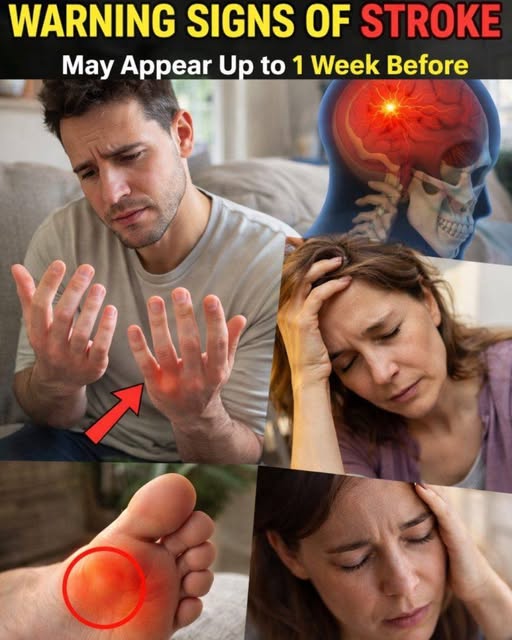
Learn about possible warning signs associated with stroke, including sudden neurological symptoms and transient ischemic attacks (TIAs), and when emergency medical care is needed.
A stroke usually happens suddenly, so there is no reliable set of symptoms that can predict a stroke days or weeks in advance. However, some people experience a transient ischemic attack (TIA) beforehand. A TIA can produce stroke-like symptoms that disappear after minutes or hours, but it is still a medical emergency because it can signal a higher risk of a subsequent stroke.
1. Sudden weakness or numbness
Unexpected weakness or numbness—particularly on one side of the face, arm, or leg—is one of the most important warning signs.
2. A sudden drooping face
One side of the face may suddenly droop or feel numb. Ask the person to smile and check whether both sides move normally.
3. Difficulty speaking
Speech may suddenly become slurred, confused, or difficult to understand. A person may also struggle to find or understand words.
4. Sudden vision problems
Blurred, double, or lost vision in one or both eyes can occur with a stroke or TIA and should never be ignored.
5. Sudden dizziness or loss of balance
Unexpected dizziness, difficulty walking, loss of coordination, or severe imbalance can sometimes occur, particularly with certain types of stroke.
6. A sudden, severe headache
A sudden, unusually severe headache—especially one that is different from previous headaches—can be a warning sign of bleeding in or around the brain.
7. Temporary stroke-like symptoms
Symptoms that disappear quickly are not necessarily harmless. A TIA can cause temporary weakness, speech difficulty, vision changes, or numbness. Even if the person feels completely normal afterward, urgent medical evaluation is important.
8. Sudden confusion
New confusion, difficulty understanding what people are saying, or an unexpected change in mental function can be associated with stroke.
9. Sudden difficulty walking
An abrupt change in walking ability, coordination, or balance can be a neurological warning sign.
Remember FAST
F — Face: Does one side droop?
A — Arms: Can the person raise both arms normally?
S — Speech: Is speech slurred or unusual?
T — Time: Call emergency medical services immediately.
Important: Don’t wait for symptoms to become severe or disappear. A suspected stroke or TIA requires urgent medical assessment. The exact treatment depends on the type and timing of the event, and early treatment can be critical.
Also, claims that specific symptoms reliably appear “one month,” “one week,” or “days” before every stroke are misleading. Stroke warning signs are not predictable that way.