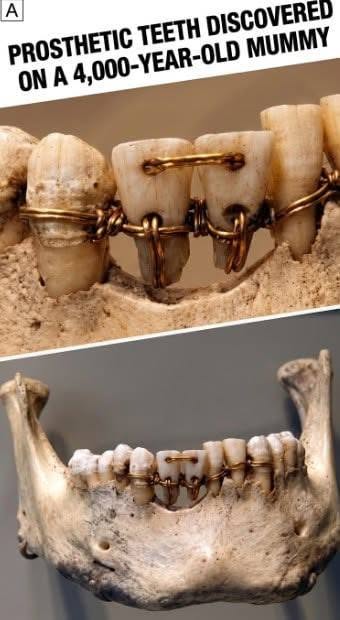
Ancient Egypt is famous for its pyramids, temples, mummies, and medical knowledge, but archaeological discoveries reveal another fascinating part of Egyptian life: early dental care. Among the most intriguing discoveries are traces of gold used in and around teeth, suggesting that some forms of dental treatment and tooth modification existed thousands of years ago.
Gold in Ancient Egyptian Dentistry
Gold was highly valued in ancient Egypt because it did not rust or corrode easily and was associated with wealth, status, and religious significance. Archaeologists have discovered evidence of gold wires, bands, and other dental materials in ancient Egyptian remains.
Some findings suggest that gold may have been used to secure loose or damaged teeth, particularly by connecting teeth together. In cases where teeth had been lost, gold could also have had a decorative or possibly prosthetic purpose.
However, it is important not to assume that every piece of gold found near ancient teeth was a functional dental filling or crown. Archaeologists must examine the exact placement, construction, and condition of the material before determining its purpose.
Why Would Egyptians Use Gold?
Ancient Egyptians had access to sophisticated metalworking techniques. Gold was relatively easy to shape because it is naturally malleable, while its resistance to corrosion made it particularly useful for objects intended to last.
For wealthy individuals, placing gold around or between teeth may also have demonstrated social status. Just as jewelry communicated wealth, unusual dental work could potentially have served both practical and cosmetic purposes.
Evidence From Mummies and Archaeological Discoveries
Mummies have provided researchers with valuable information about ancient Egyptian health. Their teeth frequently show evidence of severe wear, cavities, abscesses, gum problems, and tooth loss.
The Egyptian diet could be hard on teeth. Bread and other foods sometimes contained tiny particles of sand and stone introduced during grinding. Repeated exposure to these particles could gradually wear down tooth enamel.
Researchers have also found dental abnormalities and signs of infection in ancient remains, providing clues about the kinds of problems Egyptian people experienced.
Did Ancient Egyptians Have Dentists?
Egyptian medicine was surprisingly organized for its time. Ancient texts describe medical practitioners specializing in different areas of the body, and some individuals appear to have had roles connected with oral health.
One famous example is Hesy-Ra, an official from the Old Kingdom who is often described as the earliest known person associated with dentistry. His title has traditionally been translated as “Great One of the Dentists.”
This does not mean Egyptian dentistry resembled modern dentistry. There were no electric drills, modern anesthesia, antibiotics, or sterile surgical environments. Treatment was limited by the medical technology available at the time.
Dental Problems Were Still Common
Despite their medical knowledge, ancient Egyptians suffered from many dental problems. Tooth decay, infections, excessive wear, and periodontal disease could cause considerable pain.
Some remedies recorded in ancient Egyptian medical texts involved mixtures of ingredients intended to treat toothache or gum problems. These treatments demonstrate that Egyptians recognized dental pain as a medical issue, even though many of their remedies would not meet modern medical standards.
Gold Was More Than Decoration
The discovery of gold associated with ancient teeth gives historians an unusual glimpse into Egyptian technology and culture. It shows how valuable materials could sometimes intersect with medicine, personal appearance, and social identity.
Rather than thinking of ancient Egyptian dentistry as an early version of today’s dental clinics, it is more accurate to see it as a combination of practical treatment, experimentation, craftsmanship, and cultural traditions.
What These Discoveries Tell Us
Ancient Egyptian teeth can reveal much more than whether someone had cavities. They can provide clues about diet, occupation, social status, disease, medical practices, and even technological abilities.
The traces of gold are particularly fascinating because they demonstrate that people thousands of years ago were capable of manipulating materials with considerable skill and applying them to the human body.
Modern dentistry is vastly more advanced, but these archaeological discoveries remind us that people in ancient Egypt were already trying to solve dental problems—and sometimes they turned to one of the most precious materials available: gold.
Final Thought
A tiny piece of gold preserved alongside an ancient tooth may look insignificant, but it can represent a remarkable story of technology and human ingenuity. Thousands of years before modern crowns, bridges, and dental instruments, ancient Egyptians were already experimenting with ways to protect, stabilize, or decorate teeth.