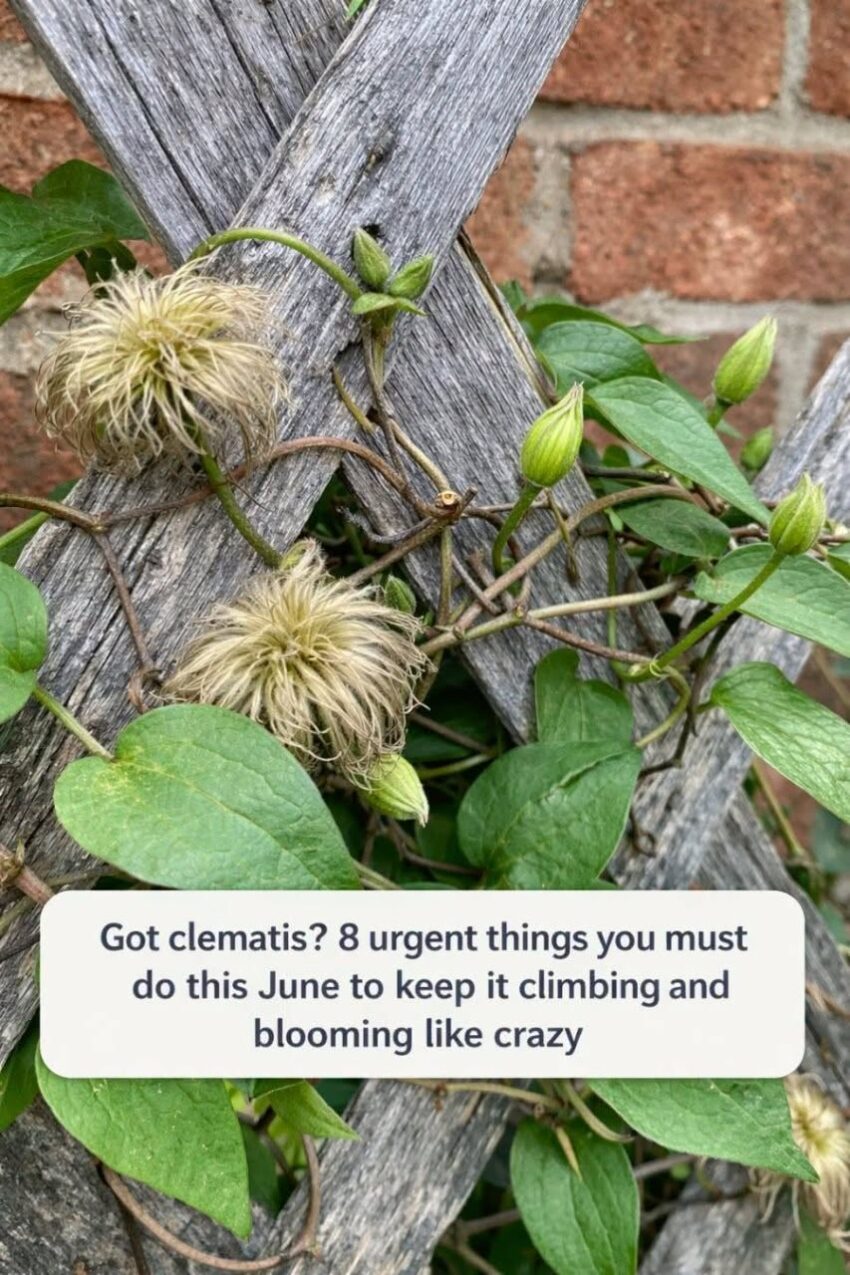
Clematis is one of the most beautiful climbing plants you can grow in your garden. With its stunning star-shaped flowers, rich colors, and graceful vines, it can transform a plain fence, wall, pergola, or trellis into a breathtaking floral display. But if you want your clematis to climb vigorously and produce an abundance of blooms, June is an important month to give it the care it needs.
As temperatures rise and growth accelerates, a little attention can make a big difference. From watering and feeding to pruning and training, here are eight essential things to do in June to help your clematis thrive.
1. Water Deeply When the Soil Begins to Dry
Clematis prefers consistently moist but well-drained soil. During warmer weather, the soil around the roots can dry out faster, particularly if your plant grows in a container or receives direct afternoon sunlight.
Water deeply at the base of the plant when the top layer of soil begins to dry. Avoid frequent, shallow watering because it may not deliver enough moisture to the deeper roots.
June tip: Check container-grown clematis daily during hot weather. Pots can dry out quickly, especially in direct sun or windy conditions.
2. Feed Your Clematis for Healthy Growth and Flowers
June can be a period of vigorous growth and flowering for many clematis varieties. A suitable fertilizer can help support healthy foliage, strong stems, and continued blooming when the plant needs extra nutrients.
Use a balanced, general-purpose fertilizer according to the product label if your plant needs feeding. Avoid applying excessive nitrogen, which can encourage leafy growth at the expense of flowers.
If your clematis is growing in fertile soil and looks healthy, additional fertilizer may not be necessary.
June tip: Water the soil before applying fertilizer if it is dry, and never exceed the recommended dose.
3. Train the Vines Before They Become Tangled
Clematis climbs by wrapping its leaf stalks around narrow supports. It cannot reliably cling to a smooth wall on its own, so it needs a trellis, netting, wires, or another suitable structure.
As new shoots grow, gently guide them toward the support. Spread the stems out rather than allowing them to bunch together in one spot.
Use soft garden ties if necessary, and avoid tying stems tightly because they can become damaged as they thicken.
June tip: Check your plant every few days during rapid growth. Training young shoots early helps create a fuller, more evenly covered display.
4. Prune Carefully According to Your Clematis Variety
Pruning is one of the most important aspects of clematis care, but the wrong cut at the wrong time can remove developing flowers.
Clematis varieties generally fall into three pruning groups:
- Group 1: Early-flowering varieties that bloom mainly on older wood. Usually prune lightly after flowering.
- Group 2: Large-flowered varieties that often bloom in late spring or early summer on older growth and may flower again on new growth. Remove dead or damaged stems and trim selectively.
- Group 3: Varieties that flower on the current season’s growth, often in summer. These are generally cut back in late winter or early spring, rather than automatically being pruned in June.
If you do not know your clematis variety, identify it before making major cuts.
June tip: Remove dead, damaged, or diseased stems when needed, but do not give the whole plant a hard trim simply to control its size.
5. Keep the Roots Cool With a Layer of Mulch
Clematis generally benefits from cool, moist roots while its upper growth receives suitable light. Hot weather can dry the soil and stress the plant, particularly when it grows against a sun-warmed wall.
Spread a layer of organic mulch, such as composted bark or leaf mold, over the root area. Keep the mulch a few centimeters away from the main stem to reduce the risk of persistent moisture against the crown.
You can also grow shallow-rooted companion plants nearby to provide some shade, provided they do not compete heavily with the clematis for water and nutrients.
June tip: Mulch helps retain moisture, suppress weeds, and moderate soil temperature.
6. Remove Faded Flowers and Check for Seed Heads
Deadheading can help keep your clematis looking tidy and encourage additional flowering in some varieties. Remove faded blooms carefully, especially if your plant is a repeat-flowering type.
However, not every clematis will produce another flush after deadheading. Some varieties naturally finish flowering after their main display, while others may bloom again under suitable conditions.
If you enjoy the attractive, fluffy seed heads that many clematis varieties produce, leave some flowers in place.
June tip: Identify whether your plant is a repeat bloomer before removing every faded flower.
7. Inspect Leaves and Stems for Pests and Disease
Warm, sometimes humid weather can create conditions in which certain pests and diseases become troublesome. Inspect your clematis regularly for aphids, damaged leaves, unusual discoloration, wilting, or blackened stems.
Improve airflow by spreading the vines across their support and avoid wetting the foliage late in the day. Remove clearly diseased plant material and dispose of it appropriately.
If a stem suddenly wilts, do not immediately assume the entire plant is dying. Clematis wilt can cause rapid stem collapse, but root stress, drought, and physical damage can also cause wilting.
June tip: Investigate the cause before applying pesticides or fungicides. Use any treatment only when appropriate and according to its label.
8. Give Your Clematis Enough Sunlight to Bloom Well
Many clematis varieties flower best when their foliage receives several hours of sunlight daily, although requirements differ between cultivars and climates. Excessive heat can stress some varieties, so afternoon shade may be beneficial in particularly hot locations.
If your clematis produces plenty of leaves but very few flowers, check its variety, light exposure, pruning history, and fertilizer use before making changes.
Ensure the support is sturdy enough for the mature plant, and keep new growth spread out so that leaves and flowers receive adequate light and air.
June tip: In very hot weather, morning sun with some protection from harsh afternoon heat can be a useful arrangement for suitable varieties.
Your June Clematis Checklist
Before the month ends, make sure you have:
- Checked soil moisture and watered when necessary.
- Fed the plant only if appropriate.
- Guided new shoots onto their support.
- Identified the pruning group before cutting.
- Added mulch if the root zone needs protection.
- Removed faded flowers where beneficial.
- Inspected the plant for pests and disease.
- Checked sunlight exposure and airflow.
Final Thoughts
Clematis does not need constant fussing to flourish, but thoughtful care in June can help it make the most of its growing season. Consistent watering, suitable feeding, careful training, and variety-specific pruning are the keys to maintaining a healthy climbing plant with beautiful flowers.
Remember that clematis varieties differ in their flowering times and pruning needs. The best approach is to understand which type you have and adjust your care accordingly.
Give your clematis the right support, protect its roots from drying out, and let its vines grow naturally. With the right conditions, your garden can enjoy a spectacular display of climbing greenery and colorful blooms.
Have a clematis growing in your garden? Share its flower color and variety in the comments, and tell us what has helped it bloom best!