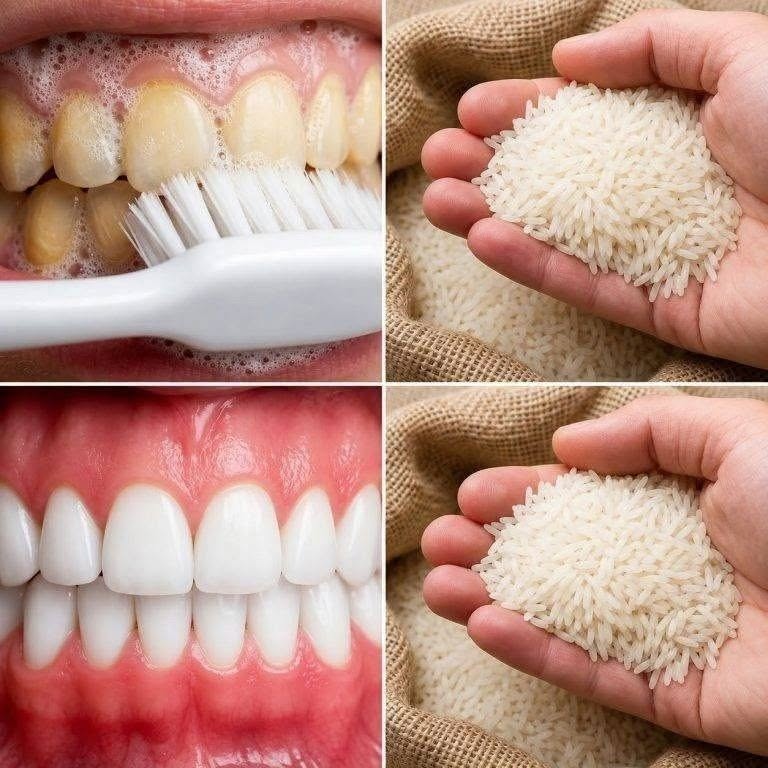
Can rice really make your teeth whiter in one minute? Learn what rice water can and cannot do for your smile, safer natural options, and simple habits for brighter-looking teeth.
A Natural Method Using Rice to Achieve a Brighter Smile
A bright, healthy-looking smile is something many people want, which is why natural teeth-whitening remedies are constantly appearing online. One popular idea involves using rice or rice water as a simple home treatment.
You may have seen claims suggesting that rice can make your teeth noticeably brighter in just one minute.
But is there any truth behind this?
The short answer is that rice itself is not a proven teeth-whitening treatment, and there is no reliable natural method that can safely transform the color of your teeth in just one minute.
However, rice water can be used as a gentle addition to a general oral-care routine, provided you don’t treat it as a substitute for brushing with fluoride toothpaste or professional dental care.
Let’s look at what you can realistically expect and how to care for your smile safely.
Can Rice Really Whiten Your Teeth?
Rice does not contain a proven whitening ingredient capable of removing deep tooth discoloration in one minute.
Some homemade remedies recommend rubbing uncooked rice directly against the teeth. This isn’t a good idea because the abrasive texture can potentially contribute to enamel wear if used aggressively or repeatedly.
Likewise, rice water should not be considered a replacement for regular brushing and flossing.
If your teeth appear yellow because of plaque buildup or surface stains, improving your oral-hygiene routine may make your smile look cleaner and brighter. But that is different from chemically bleaching the natural color of your teeth.
What About Rice Water?
Rice water is simply water that has been used to soak or cook rice.
It is generally a mild, simple household ingredient, but there is limited evidence that rinsing with rice water whitens teeth.
If you enjoy using rice water as an occasional mouth rinse, don’t expect dramatic whitening results.
More importantly, avoid adding potentially irritating ingredients such as lemon juice, vinegar, or abrasive powders simply because they are claimed to make the treatment stronger.
A Simple Rice Water Rinse
If you’d like to try rice water as a gentle addition to your routine, keep the method simple.
You’ll Need
- ½ cup uncooked rice
- 1–2 cups clean water
- A clean container
Step 1: Rinse the Rice
Place the rice in a clean bowl and rinse it with water.
Discard the first rinse.
Step 2: Soak the Rice
Add fresh water and allow the rice to soak for approximately 15–30 minutes.
Step 3: Strain the Water
Pour the water through a clean strainer into a clean container.
Allow it to cool if necessary.
Step 4: Use as a Rinse
Swish a small amount around your mouth briefly and spit it out.
Do not swallow the rinse as a dental treatment.
Most importantly, don’t replace your normal brushing routine with rice water.
What Actually Helps Keep Teeth Looking Brighter?
If your goal is a naturally brighter-looking smile, everyday oral care is much more important than a quick home remedy.
Brush Twice a Day
Brush your teeth twice daily with a fluoride toothpaste.
Use gentle movements rather than aggressively scrubbing the teeth.
Hard brushing doesn’t necessarily make teeth whiter and can contribute to damage to the gums or tooth surfaces.
Floss or Clean Between Your Teeth
Plaque and food particles can accumulate between teeth where a toothbrush can’t reach effectively.
Cleaning between your teeth regularly helps maintain a cleaner-looking smile and supports gum health.
Limit Stain-Causing Foods and Drinks
Certain foods and drinks can contribute to surface staining over time.
Common examples include:
- Coffee
- Tea
- Red wine
- Dark-colored sauces
- Tobacco products
You don’t necessarily need to eliminate every food or drink you enjoy. Good oral hygiene and moderation can make a difference.
Drink Water
Water can help rinse away food particles and beverages from your mouth.
Drinking water after strongly colored foods or drinks is a simple habit that can support your oral-care routine.
Be Careful With DIY Whitening Remedies
The internet is full of homemade whitening recipes containing ingredients such as lemon juice, vinegar, baking soda, charcoal, or other abrasive substances.
Natural does not automatically mean safe for your teeth.
Acidic ingredients can contribute to enamel erosion, while aggressive abrasives may wear the tooth surface.
Once enamel is lost, it does not simply grow back.
That’s why it’s better to avoid harsh DIY treatments promising instant whitening.
Why Your Teeth May Look Yellow
Not all yellow-looking teeth are dirty.
Natural tooth color varies from person to person. Dentin, the naturally yellowish layer underneath enamel, can influence the overall appearance of your teeth.
As enamel becomes thinner with age, the underlying dentin can become more visible.
Teeth can also become darker because of:
- Coffee and tea
- Smoking or tobacco use
- Certain foods
- Plaque buildup
- Aging
- Some medications
- Dental conditions
Because the cause of discoloration varies, the best whitening approach also varies.
How to Get Faster, More Noticeable Whitening
If you want a visibly whiter smile rather than simply a cleaner-feeling mouth, consider speaking with a dentist.
Professional whitening treatments and dentist-recommended whitening products have been specifically designed for this purpose and can be considerably more predictable than homemade remedies.
A dentist can also check whether discoloration is caused by plaque, cavities, enamel changes, or another dental issue before recommending whitening.
Frequently Asked Questions
Can rice whiten teeth in one minute?
There is no good evidence that rice can safely whiten teeth noticeably in one minute. Claims of instant whitening should be treated cautiously.
Is rice water safe for teeth?
A simple rice-water rinse is unlikely to provide meaningful whitening, but it also shouldn’t replace brushing with fluoride toothpaste or flossing.
Can I rub uncooked rice on my teeth?
It’s better not to. Scrubbing teeth with hard particles can be unnecessarily abrasive and may damage tooth surfaces when done aggressively or repeatedly.
Can rice water remove plaque?
Rice water isn’t a proven plaque-removal treatment. Plaque is best controlled through regular brushing, cleaning between the teeth, and professional dental care when necessary.
What is the safest way to whiten teeth?
The safest approach depends on the cause of discoloration. Dentist-recommended whitening products or professional whitening can provide more predictable results than untested homemade remedies.
Final Thoughts
The idea of using rice for a brighter smile is appealing because rice is inexpensive and widely available. However, there is no reliable evidence that rice or rice water can dramatically whiten teeth in one minute.
If you want to experiment with a simple rice-water rinse, think of it as an optional household practice—not a whitening treatment.
For a genuinely brighter and healthier-looking smile, focus on the basics: brush twice daily with fluoride toothpaste, clean between your teeth, maintain regular dental checkups, and avoid harsh DIY whitening methods.
And remember: a healthy smile doesn’t have to be perfectly white. Natural tooth color varies, and protecting your enamel is far more important than achieving an instant whitening effect.