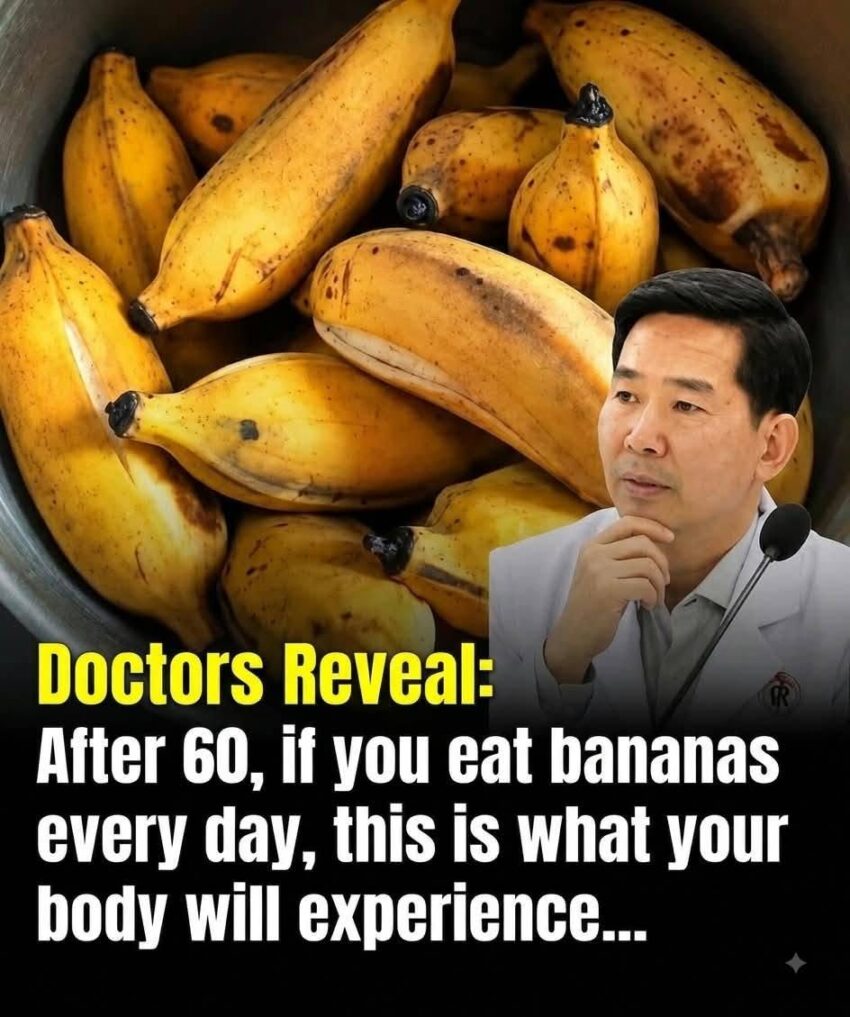
Depends on your overall diet, activity level, medications, and individual health needs. However, there are several potential benefits worth understanding.
1. Bananas Can Help Support a Balanced Diet
As appetite changes with age, some older adults may find it harder to eat enough nutritious food throughout the day.
A banana is convenient because it requires almost no preparation. It can be eaten on its own, added to oatmeal, blended into a smoothie, or paired with yogurt or nuts.
A medium banana provides carbohydrates for energy along with fiber and several vitamins and minerals.
For someone looking for an easy snack, a banana can be a much more nutrient-dense choice than many highly processed snack foods.
2. They Provide Potassium
Potassium is an essential mineral involved in normal muscle function, nerve signaling, and fluid balance.
Bananas are well known for containing potassium, although they aren’t the only good dietary source. Potatoes, beans, lentils, leafy greens, dairy products, and several other foods also contribute potassium.
Getting enough potassium through a varied diet can be part of a heart-healthy eating pattern.
However, more potassium isn’t automatically better for everyone. People with certain kidney conditions or those taking medications that affect potassium levels may need individualized advice from their healthcare professional.
3. Bananas Can Contribute to Digestive Health
Digestive changes are common as people age, and constipation can become a frustrating problem.
Bananas contain dietary fiber, which contributes to overall digestive health. They also contain resistant starch, particularly when they are less ripe.
However, bananas aren’t a guaranteed treatment for constipation.
For regular bowel movements, the bigger picture matters: adequate fiber from different foods, sufficient fluids, physical activity, and an overall balanced diet all play important roles.
If constipation is persistent or severe, it’s better to discuss it with a healthcare professional rather than relying on one food.
4. They Can Be an Easy Source of Energy
Aging doesn’t mean the body stops needing energy.
Older adults who remain physically active may benefit from convenient carbohydrate sources before or after activity. A banana provides carbohydrates that can be used as fuel.
Pairing a banana with a source of protein or healthy fat can make a more substantial snack.
For example:
- Banana with plain Greek yogurt
- Banana with a small amount of peanut butter
- Banana with cottage cheese
- Banana sliced over oatmeal
- Banana with a handful of unsalted nuts
These combinations can be more filling than eating the fruit alone.
5. Bananas Provide Vitamin B6
Vitamin B6 participates in several important processes in the body, including normal metabolism and the production of neurotransmitters and red blood cells.
Bananas are one dietary source of vitamin B6.
However, it’s important not to think of a banana as a treatment for vitamin deficiencies or age-related health problems. A varied diet provides many different nutrients, and deficiencies should be evaluated appropriately.
6. They Can Make Healthy Eating More Convenient
One of the biggest advantages of bananas may have nothing to do with a single nutrient.
They’re simply easy.
There’s no cooking involved, they’re naturally portioned, they’re inexpensive compared with many specialty health foods, and they’re easy to take to work, on a walk, or while traveling.
For older adults who live alone or don’t want to prepare complicated snacks, convenience can make a healthy eating habit much easier to maintain.
7. Bananas Can Fit Into a Heart-Healthy Eating Pattern
A banana alone isn’t going to protect your heart.
Heart health is influenced by many factors, including blood pressure, cholesterol, physical activity, smoking, body weight, sleep, genetics, and the overall quality of the diet.
But fruit—including bananas—can comfortably fit into a dietary pattern rich in fruits, vegetables, whole grains, legumes, nuts, and other minimally processed foods.
The important point is to look at the entire diet rather than expecting one food to do all the work.
8. What About Blood Sugar?
This is an important consideration, especially for people with diabetes or prediabetes.
Bananas contain natural sugars and carbohydrates, so they can raise blood glucose. However, that doesn’t mean people with diabetes necessarily need to avoid bananas.
Portion size, ripeness, what the banana is eaten with, and an individual’s overall carbohydrate intake can all influence the blood-glucose response.
A slightly less ripe banana generally contains more resistant starch than a very ripe banana.
If you have diabetes, your healthcare professional or registered dietitian can help you determine how bananas fit into your individual meal plan.
9. Does Eating a Banana Every Day Help With Muscle Health?
Not directly in the way that protein does.
Muscle maintenance becomes increasingly important with age, and adequate protein, resistance exercise, sufficient calories, and overall nutrition all matter.
A banana can provide carbohydrates and potassium, which can complement an active lifestyle, but it shouldn’t be considered a replacement for protein-rich foods.
For a more balanced snack, combine your banana with yogurt, milk, cottage cheese, nuts, or another nutritious protein source.
10. What Doctors Are Really Looking At
When healthcare professionals talk about nutrition after 60, they’re generally looking at the overall pattern rather than one “superfood.”
Eating a banana every day can be a healthy habit, but the bigger questions are:
- Are you eating enough protein?
- Are you getting enough fiber?
- Are you eating a variety of fruits and vegetables?
- Are you drinking enough fluids?
- Are you staying physically active?
- Are you getting enough calcium and vitamin D?
- Are you maintaining a healthy weight for your individual situation?
- Are your blood pressure, blood sugar, and cholesterol being monitored when appropriate?
A banana can be one small part of that bigger picture.
How to Eat a Banana for a More Balanced Snack
If you’re eating a banana as a snack, consider combining it with protein or healthy fat.
Try:
Banana + Greek yogurt
A simple combination of fruit and protein.
Banana + peanut butter
A satisfying option that adds protein and fat.
Banana + oatmeal
An easy breakfast that provides carbohydrates and fiber.
Banana + nuts
A convenient snack with fruit, healthy fats, and some protein.
Banana + cottage cheese
A higher-protein option that works well as a light snack.
Are There Any Reasons to Limit Bananas?
For most healthy adults, bananas can be part of a balanced diet.
However, individual circumstances matter.
People with certain kidney conditions may need to monitor potassium intake. Some medications can also affect potassium levels. People managing diabetes may need to account for the carbohydrate content of bananas within their overall eating plan.
If you have kidney disease, diabetes, or another condition requiring dietary restrictions, ask your doctor or dietitian how bananas fit into your diet.
How Many Bananas Should You Eat?
There isn’t one ideal number for everyone.
For many people, one banana a day can easily fit into a varied diet. But eating more bananas isn’t necessarily better.
The goal should be variety. Instead of getting most of your fruit from bananas, rotate different fruits throughout the week—such as apples, oranges, berries, pears, melon, or kiwi.
Different fruits provide different combinations of nutrients and plant compounds.
The Bottom Line
Eating a banana every day after 60 can be a simple way to add fruit, fiber, potassium, vitamin B6, and carbohydrates to your diet.
But the real benefit isn’t that bananas are a magical anti-aging food.
It’s that they are easy, nutritious, affordable, and versatile.
For healthy aging, the most important approach is to build a dietary pattern that includes a wide variety of nutrient-rich foods while also paying attention to physical activity, sleep, hydration, and regular medical care.
So if you enjoy bananas, there’s no need to fear this everyday fruit. Enjoy one as part of a balanced diet—and remember that healthy aging is built from many small habits, not one food.
A banana can be a good choice. A balanced lifestyle is what makes the bigger difference.