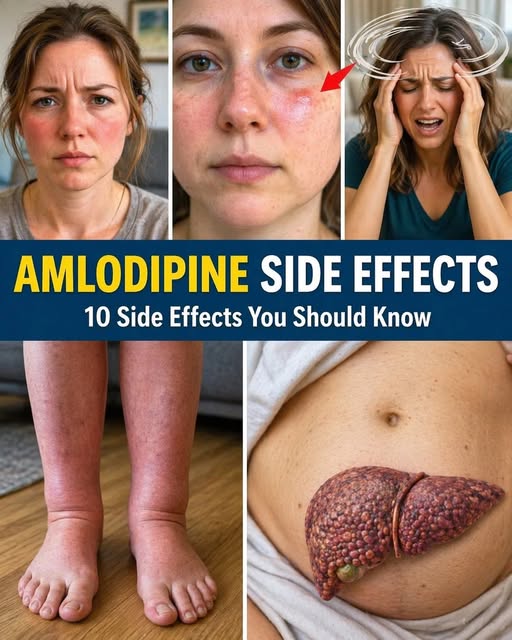
Learn the common and serious amlodipine side effects you should not ignore, when they may require medical attention, and what to do if symptoms appear.
Amlodipine Side Effects You Should Not Ignore
Amlodipine is a commonly prescribed calcium-channel blocker used to treat high blood pressure (hypertension) and certain types of chest pain (angina). Most people tolerate it well, but side effects can occur.
Common side effects
Some effects are usually mild, especially when treatment is first started:
- Swollen ankles or feet
- Headache
- Dizziness or lightheadedness
- Flushing or feeling warm
- Tiredness
- Palpitations or awareness of your heartbeat
- Mild nausea or stomach discomfort
Side effects that deserve prompt medical attention
1. Severe swelling
Some ankle swelling can occur with amlodipine, but rapidly worsening or severe swelling should be discussed with a healthcare professional.
2. Fainting or severe dizziness
This may indicate that your blood pressure has fallen too low, particularly if you also feel weak or confused.
3. New or worsening chest pain
Do not assume new chest pain is simply a medication side effect. Seek urgent medical evaluation, particularly if it is severe or accompanied by sweating, shortness of breath, nausea, or pain spreading to the arm, jaw, back, or shoulder.
4. Trouble breathing or swelling of the face, lips, tongue, or throat
This can indicate a serious allergic reaction and requires emergency medical attention.
5. Very fast, irregular, or unusually strong heartbeat
Occasional awareness of your heartbeat can occur, but persistent or severe palpitations should be evaluated.
Don’t stop amlodipine suddenly without medical advice
If you’re experiencing side effects, don’t stop or change your dose on your own. Your blood pressure can rise again when treatment is interrupted. Contact the clinician who prescribed it and explain exactly what you’re experiencing.
If you have severe chest pain, difficulty breathing, fainting, or swelling of the face/throat, seek emergency medical care rather than waiting to see whether the symptoms disappear.
Important: The risk and seriousness of a symptom depend on your dose, other medications, medical conditions, and the reason you’re taking amlodipine.