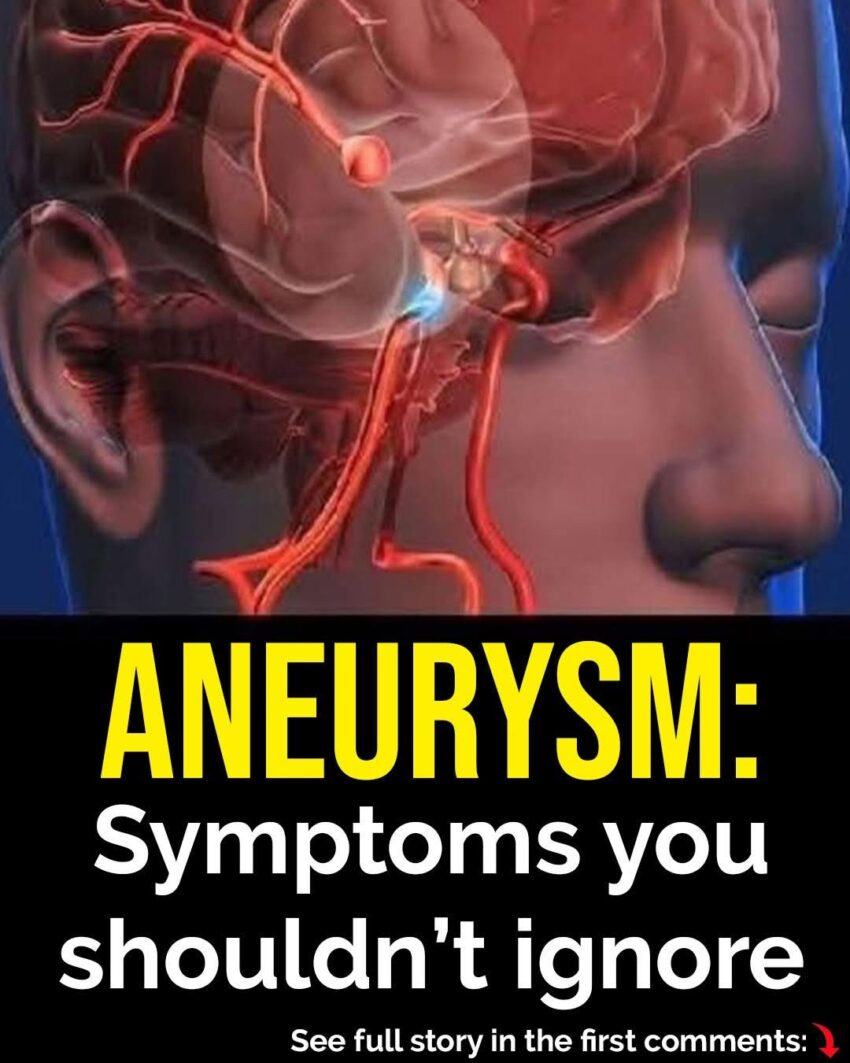
Learn the warning signs of an aneurysm, including symptoms of a ruptured brain or aortic aneurysm, when an aneurysm may be silent, and which symptoms require immediate emergency care.
Aneurysm: Signs You Shouldn’t Ignore
An aneurysm is a weakened area in the wall of a blood vessel that bulges outward. Many aneurysms cause no symptoms at all and may be discovered during an imaging test for another reason. But if an aneurysm grows, presses on nearby structures, or ruptures, it can become a life-threatening emergency.
Knowing the warning signs can make a critical difference.
1. A Sudden, Extremely Severe Headache
A sudden headache that reaches maximum intensity within seconds or minutes—often described as the worst headache of your life—can be a warning sign of a ruptured brain aneurysm.
It may occur with nausea, vomiting, neck stiffness, sensitivity to light, or loss of consciousness.
This requires emergency medical attention.
2. Sudden Vision Changes
A brain aneurysm can sometimes press on nerves involved in vision or eye movement. Possible symptoms include:
- Double vision
- Blurred vision
- Loss of vision
- A drooping eyelid
- One pupil appearing different from the other
Sudden vision loss or major changes should always be assessed urgently.
3. Pain Behind or Around the Eye
An unruptured brain aneurysm can occasionally cause pain behind or around one eye, particularly when it puts pressure on nearby nerves.
Persistent or unusual eye pain accompanied by vision changes should not be ignored.
4. A Sudden Stiff Neck
Neck stiffness can occur after bleeding around the brain following an aneurysm rupture.
If severe neck stiffness appears together with a sudden intense headache, vomiting, confusion, or fainting, seek emergency care immediately.
5. Difficulty Speaking or Understanding
Sudden slurred speech, difficulty finding words, inability to understand speech, or unusual confusion can occur with bleeding or other neurological problems.
These symptoms can also indicate a stroke and require immediate emergency evaluation.
6. Sudden Weakness or Numbness
Weakness or numbness—especially affecting one side of the face or body—is a major neurological warning sign.
Don’t wait to see whether it improves.
7. Loss of Balance or Severe Dizziness
Sudden difficulty walking, severe dizziness, loss of coordination, or inability to maintain balance can indicate a serious problem involving the brain or blood vessels.
8. Severe Abdominal or Back Pain
Not all aneurysms occur in the brain.
An abdominal aortic aneurysm (AAA) can develop in the major artery that runs through the abdomen. If it ruptures, it may cause sudden, severe abdominal or back pain, weakness, dizziness, or fainting.
This is a medical emergency.
9. Sudden, Severe Chest or Upper-Back Pain
An aneurysm involving the aorta can sometimes cause intense chest or upper-back pain.
Aortic dissection and ruptured aortic aneurysm can be rapidly fatal and require immediate emergency treatment.
10. A Pulsating Feeling in the Abdomen
Some larger abdominal aortic aneurysms can produce a noticeable pulsating sensation or mass in the abdomen.
However, many abdominal aortic aneurysms cause no symptoms, so absence of this sign does not rule one out.
What Makes an Aneurysm More Concerning?
Risk varies depending on the aneurysm’s location, size, growth, and individual circumstances. Risk factors can include:
- Smoking
- High blood pressure
- Increasing age
- Family history of certain aneurysms
- Certain inherited connective-tissue disorders
- Atherosclerosis and other blood-vessel conditions
Not everyone with these risk factors will develop an aneurysm.
When to Call for Emergency Help
Treat the following as emergencies:
Sudden severe headache + neurological symptoms
Sudden severe chest or back pain
Sudden severe abdominal pain + weakness or fainting
Loss of consciousness
Sudden weakness, numbness, speech difficulty, or vision loss
These symptoms can have several causes, but some are immediately life-threatening. Do not drive yourself to the hospital if severe symptoms are occurring.
The Bottom Line
Aneurysms can be frightening because they often remain silent until they become complicated. Fortunately, not every aneurysm ruptures, and many are discovered before an emergency occurs.
The most important thing is recognizing sudden, severe symptoms—especially an abrupt “worst-ever” headache or sudden severe chest, back, or abdominal pain—and getting emergency medical care without delay.