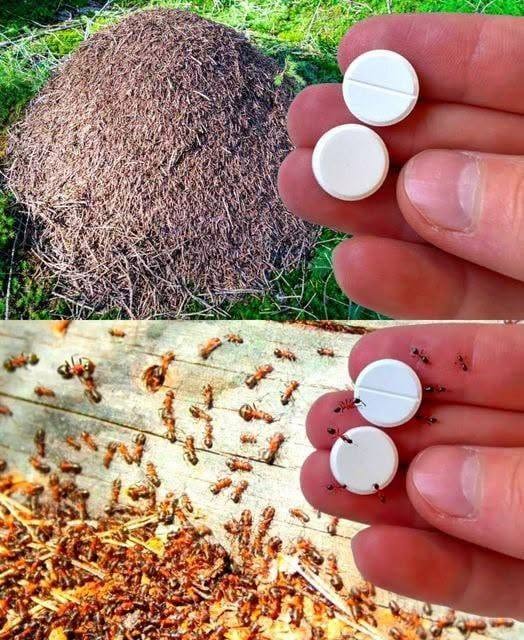
Ants may be tiny, but once they find a reliable source of food or water, they can quickly become a frustrating household problem. Spraying pesticides may kill the ants you can see, but it often doesn’t address the colony or the trail that keeps bringing more ants inside.
Fortunately, there are several simple ways to discourage ants without relying on conventional pesticides.
1. Start by Removing Their Food Source
The first step is to make your home less attractive to ants.
Clean up crumbs, spills, sugary residues, pet food, and grease as soon as possible. Pay particular attention to kitchen counters, floors, cupboards, and areas beneath appliances.
Store sugar, honey, biscuits, cereals, and other foods in tightly sealed containers.
2. Clean the Ant Trail
Ants leave scent trails that help other ants follow the same route.
Wipe areas where you’ve noticed ants with warm soapy water. You can also use a mild vinegar-and-water solution on suitable hard, non-porous surfaces.
Avoid using vinegar on natural stone or other surfaces that can be damaged by acids.
3. Try a Simple Vinegar Barrier
Mix equal parts white vinegar and water and place the solution in a spray bottle.
Spray it around common entry points, such as cracks, window frames, and areas where you frequently see ants. The strong smell can interfere with the scent trails ants use to navigate.
This is best used as a deterrent rather than a guaranteed way to eliminate an established colony.
4. Use Citrus Peels as a Deterrent
Don’t throw away every orange or lemon peel immediately.
Place fresh citrus peels near areas where ants are entering. Citrus odors may discourage some ants, although this method is generally more useful as a temporary deterrent than a complete solution.
Replace the peels when they dry out or lose their smell.
5. Seal Their Entry Points
If ants keep returning, look for where they’re getting inside.
Check around:
- Windows and doors
- Plumbing openings
- Cracks in walls
- Baseboards
- Kitchen cabinets
- Pipes and utility lines
Seal small gaps with an appropriate household sealant or caulk. Blocking access can be one of the most effective long-term steps.
6. Don’t Rely on Instant-Kill Sprays Alone
Killing visible worker ants may make the problem look better temporarily, but it doesn’t necessarily eliminate the colony.
If you want long-term control, the goal should be to remove food and water sources, disrupt trails, block entry points, and address the colony when necessary.
7. Keep Your Kitchen Dry
Water can be just as attractive to ants as food.
Repair leaking taps and pipes, wipe around sinks, dry countertops, and avoid leaving standing water overnight.
Keeping the kitchen clean and dry can significantly reduce the reasons ants have to remain indoors.
8. What About Baking Soda?
Baking soda is frequently promoted online as a natural ant killer, but household recipes involving baking soda aren’t a guaranteed way to eliminate an entire colony.
If you use any homemade mixture, keep it away from children and pets and avoid placing powders where they could accidentally be eaten.
A Better “Ant Trap” Strategy
Instead of simply trying to kill every ant you see, think of ant control as a three-part process:
Remove the attraction → disrupt the trail → block the entrance.
Clean food residues, wipe established trails, seal cracks, and keep food stored securely. If ants continue appearing despite these measures, there may be an established nest nearby.
For a persistent infestation, a properly used commercial ant bait can sometimes be more effective than repeatedly spraying individual ants because worker ants may carry bait back toward the colony. Follow the product label carefully and keep any bait inaccessible to children and pets.
Final Thoughts
You don’t necessarily need to reach for pesticides every time you see a few ants. Good sanitation, eliminating moisture, cleaning scent trails, and sealing entry points can go a long way toward preventing ants from taking over your home.
If the infestation is large, persistent, or involves stinging or biting ants, identifying the species and getting professional pest-control advice may be the safest and most effective approach.