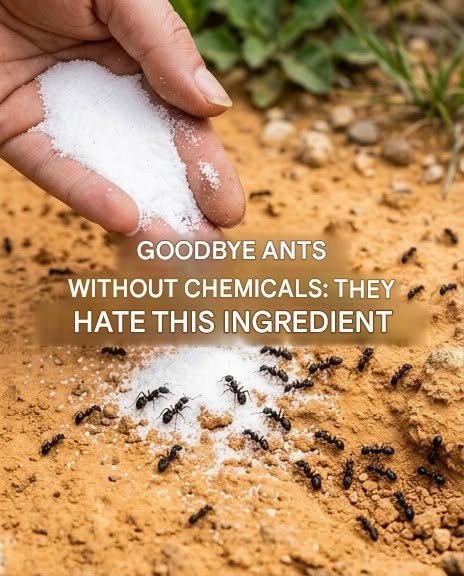
Tired of ants invading your kitchen and home? Learn simple, practical ways to discourage ants, eliminate food sources, and seal entry points without relying on risky homemade mixtures.
Ants Can’t Stand It! Simple Ways to Keep Ants Away for Good
Few things are more frustrating than spotting a line of ants marching across your kitchen counter.
You clean the area, wipe them away, and think the problem is solved—only to discover another trail a few hours later.
The good news is that you don’t need complicated solutions to make your home less attractive to ants. The most effective approach is usually a combination of removing food sources, cleaning scent trails, sealing entry points, and addressing the colony when necessary.
Why Do Ants Keep Coming Back?
Ants don’t randomly wander into your kitchen. Worker ants search for food and water, and once they find a useful source, they can leave chemical trails that help other ants follow the same route.
That’s why killing the ants you can see doesn’t always solve the problem.
If the underlying attraction remains, more ants may appear.
Common attractions include:
- Sugar and sweet foods
- Crumbs
- Grease and food residue
- Pet food
- Standing water
- Leaky pipes
- Overripe fruit
- Uncovered garbage
The Simple Trick: Clean Their Scent Trail
One of the easiest things you can do is thoroughly clean the areas where ants have been traveling.
Wipe countertops, floors, windowsills, and other surfaces with ordinary household cleaner or warm soapy water.
The goal isn’t simply to remove the visible ants. You want to remove food residue and as much of their scent trail as possible.
Pay particular attention to corners and edges where ants frequently travel.
Try Citrus Scents as a Temporary Deterrent
Many homeowners use citrus scents around areas where ants appear.
You can wipe suitable surfaces with a diluted lemon-scented cleaner or place fresh lemon peels near potential entry areas.
However, these methods should be viewed as temporary deterrents, not guaranteed colony-control solutions.
A strong scent may discourage ants from a particular area, but it won’t necessarily eliminate the nest.
Peppermint May Help Discourage Ant Activity
Peppermint’s strong aroma is another popular household deterrent.
A few drops of peppermint essential oil diluted appropriately in water can be used as a surface spray around suspected entry points.
Never apply concentrated essential oils directly to skin, food-preparation surfaces, or areas accessible to pets without checking that the product is appropriate for that use.
Again, the purpose is to make an area less attractive—not to destroy the colony.
Don’t Forget the Most Important Step
If ants keep returning, find where they’re getting inside.
Inspect:
- Window frames
- Door thresholds
- Cracks around pipes
- Baseboards
- Wall gaps
- Areas beneath cabinets
- Openings around utility lines
Once you’ve identified an entry point, seal small cracks and gaps with an appropriate household sealant.
This can be much more effective than repeatedly spraying the ants you see.
Keep Food Completely Sealed
Ants are persistent when they have a reliable food supply.
Store sugar, honey, cereal, cookies, and other foods in tightly sealed containers.
Clean spills immediately, especially sweet drinks and syrups.
Don’t leave dirty dishes sitting overnight if ants are already a problem.
Pet food can also attract ants, so keep feeding areas clean and remove leftover food when practical.
Keep the Sink and Counters Dry
Water can be just as attractive as food.
Fix dripping faucets and plumbing leaks, wipe up standing water, and don’t allow damp areas to remain wet unnecessarily.
A dry kitchen gives ants one less reason to stay.
What About Baking Soda, Cinnamon, or Vinegar?
You’ll often see online claims that certain kitchen ingredients will “kill every ant” or make ants disappear permanently.
The evidence for many of these homemade remedies is limited.
Cinnamon, vinegar, coffee grounds, baking soda, and similar household products may alter odors or temporarily discourage ants, but they shouldn’t be considered reliable replacements for proper pest control.
If you use any household product, avoid mixing chemicals and keep substances away from children and pets.
When You Need More Than a Home Remedy
If ants continue appearing despite cleaning and sealing entry points, there may be a nest nearby.
At that point, a properly labeled ant bait can sometimes be more effective than a repellent spray because worker ants may carry bait back toward the colony.
Always follow the product label carefully and keep pesticides away from children, pets, food, and food-preparation areas.
If you’re dealing with a large infestation, aggressive or stinging ants, or ants coming from inaccessible areas, consider contacting a licensed pest-control professional.
The Best Long-Term Strategy
The most effective ant-control routine is surprisingly simple:
Clean → remove food → eliminate moisture → erase trails → seal entry points → treat the colony if necessary.
Don’t focus only on the ants you can see.
The goal is to make your home less attractive while preventing new ants from finding an easy route inside.
Final Thought
There may not be one magical ingredient that makes ants disappear “for good,” but a few consistent habits can make a huge difference.
Keep surfaces clean, store food securely, eliminate water sources, and seal cracks where ants enter.
And if you’re dealing with a persistent infestation, skip the endless cycle of wiping ants away and tackle the source instead.