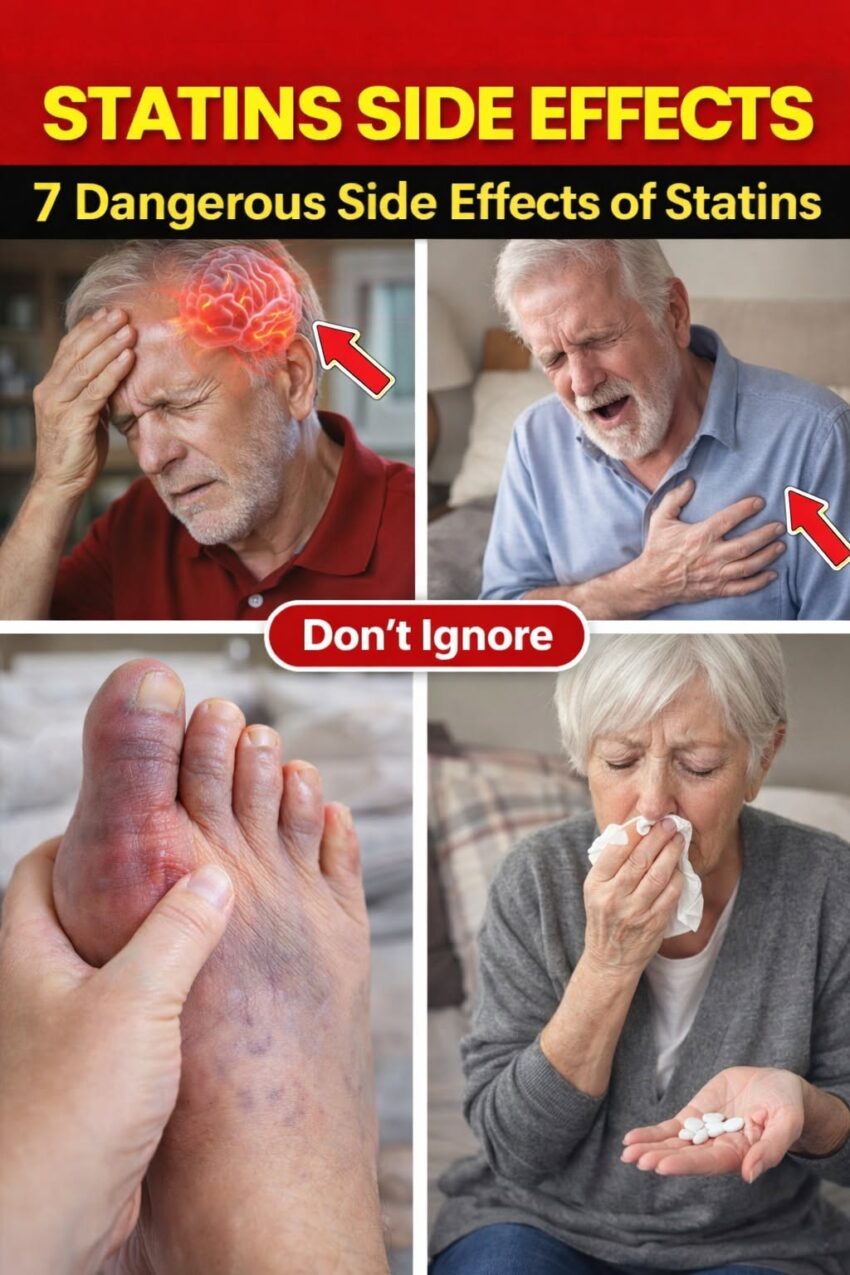
Learn six possible statin side effects that deserve medical attention, including unusual muscle pain, weakness, dark urine, liver-related symptoms, and serious allergic reactions.
Are Statin Side Effects Warning You? 6 Signs You Shouldn’t Ignore
Statins are among the most widely used medications for lowering LDL (“bad”) cholesterol and reducing the risk of heart attack and stroke.
For most people, statins are well tolerated. But like every medication, they can cause side effects. The important thing is knowing the difference between a mild, manageable symptom and a warning sign that needs prompt medical attention.
One important caution: many symptoms blamed on statins can also have other causes. Don’t stop taking a prescribed statin on your own. If you develop a concerning symptom, contact your healthcare professional so they can determine whether the medication is responsible and what to do next.
1. Unexplained Muscle Pain or Tenderness
Muscle aches are one of the side effects most commonly discussed with statins.
You might notice soreness or discomfort in the:
- Thighs
- Calves
- Shoulders
- Back
- Arms
Mild muscle symptoms don’t necessarily mean the medication is damaging your muscles. However, new, persistent, or significant muscle pain should be discussed with your doctor.
They may review your medication dose, other medicines, medical conditions, and—when appropriate—check a blood test called creatine kinase (CK).
2. Unusual Muscle Weakness
There’s a difference between ordinary tiredness after exercise and genuine muscle weakness.
Pay attention if you suddenly have difficulty:
- Climbing stairs
- Getting up from a chair
- Lifting objects
- Walking normally
- Performing activities that were previously easy
Persistent or significant weakness deserves medical assessment.
Rarely, statins can cause serious muscle injury.
3. Dark or Cola-Colored Urine
This is a warning sign that should not be ignored, particularly when it occurs together with severe muscle pain or weakness.
Severe muscle breakdown, known as rhabdomyolysis, can release muscle proteins into the bloodstream and potentially damage the kidneys.
Rhabdomyolysis is rare, but symptoms can include:
- Severe muscle pain
- Marked weakness
- Dark or cola-colored urine
- Reduced urination
If these symptoms occur, seek urgent medical attention rather than waiting for your next routine appointment.
4. Yellowing of the Skin or Eyes
Statins can rarely cause liver-related problems.
Contact a healthcare professional promptly if you develop signs such as:
- Yellow skin
- Yellowing of the whites of the eyes
- Dark urine
- Pale-colored stools
- Persistent upper-abdominal discomfort
- Unusual severe fatigue
Many other conditions can cause these symptoms, but they warrant medical evaluation.
Routine liver testing isn’t necessarily required for everyone taking a statin, but your clinician may check liver enzymes when clinically appropriate.
5. Severe or Unexplained Fatigue
A little tiredness after a busy day isn’t usually a reason to panic.
But if you develop persistent, unusual, or severe fatigue, especially together with weakness, loss of appetite, abdominal symptoms, or dark urine, tell your healthcare professional.
They can determine whether the statin, another medication, an underlying condition, anemia, thyroid problems, or another factor could be responsible.
6. Swelling, Rash, or Difficulty Breathing
A serious allergic reaction is uncommon but requires immediate attention.
Seek emergency medical help if you develop:
- Swelling of the face, lips, tongue, or throat
- Difficulty breathing
- Severe widespread rash
- Fainting or feeling as though you may collapse
Don’t wait to see whether these symptoms disappear.
Not Every Muscle Ache Is Caused by a Statin
This is an important point.
People taking statins can experience muscle pain for many reasons unrelated to the medication, including:
- Exercise
- Aging
- Arthritis
- Vitamin deficiencies
- Thyroid disorders
- Other medications
- Viral infections
Research also suggests that some reported muscle symptoms occur at similar rates with placebo in clinical trials.
That’s why your healthcare professional may investigate other possible causes rather than immediately stopping your statin.
What Increases the Risk of Serious Muscle Problems?
The risk of serious statin-related muscle injury is higher in certain circumstances.
Factors can include:
- Higher statin doses
- Older age
- Kidney or liver problems
- Certain interacting medications
- Some genetic factors
- Significant medical illness
This is why it’s important to tell your doctor or pharmacist about all prescription medicines, over-the-counter drugs, and supplements you’re taking.
Some medications can increase statin concentrations in the body.
Should You Stop Your Statin If You Have Side Effects?
Don’t stop it without medical advice.
Statins are prescribed because reducing LDL cholesterol can substantially lower cardiovascular risk in appropriate patients.
If you develop symptoms, your healthcare professional may consider options such as:
- Checking blood tests
- Reviewing drug interactions
- Adjusting the dose
- Trying a different statin
- Changing the dosing schedule in selected situations
- Considering another cholesterol-lowering medication
The best approach depends on your individual cardiovascular risk and symptoms.
Why Statins Are Still Recommended
It’s easy to focus on side effects because they’re frightening.
But the overall evidence shows that statins can significantly reduce the risk of major cardiovascular events in people who benefit from them.
The goal isn’t to pretend side effects don’t exist.
It’s to balance benefits and risks for the individual patient.
For someone at high risk of heart attack or stroke, the cardiovascular benefit of a statin may be much greater than the potential medication-related risk.
What You Should Remember
If you’re taking a statin, don’t panic over every ache or unusual feeling.
Instead, pay attention to new, persistent, severe, or unusual symptoms.
In particular, seek medical attention for:
- Significant unexplained muscle pain
- New or severe muscle weakness
- Dark or cola-colored urine
- Yellow skin or eyes
- Severe unexplained fatigue with other concerning symptoms
- Facial/throat swelling or difficulty breathing
And remember: these symptoms don’t automatically prove that your statin is responsible.
Your healthcare professional can determine whether the medication is likely involved and help you find the safest treatment plan.
Never trade cardiovascular protection for fear based on an internet list—get your symptoms evaluated and make medication decisions with a qualified healthcare professional.