Learn what the three washing machine detergent compartments are for, where to put detergent and fabric softener, and the common mistakes that can leave clothes less clean.
Many people use their washing machine every week without realizing that the three compartments in the detergent drawer have different purposes. If detergent or fabric softener is placed in the wrong section, it may not be released at the right stage of the wash cycle.
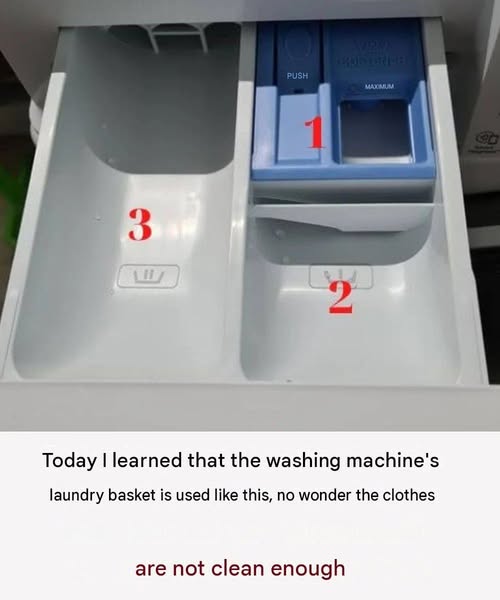
The image shows three sections labeled 1, 2, and 3, but the exact arrangement can vary between washing-machine brands and models. The symbols printed inside the drawer are the best guide.
What does compartment 1 mean?
Compartment 1 is commonly the pre-wash compartment.
It is designed for detergent when you select a washing cycle that includes a pre-wash. The machine uses this detergent during the initial cleaning stage before the main wash.
If you’re running a normal cycle without pre-wash, you generally don’t need to put detergent here.
What does compartment 2 mean?
Compartment 2 is commonly the fabric-softener compartment.
Look for a flower or similar softener symbol. This section often has a MAX line. Don’t fill beyond that line.
Fabric softener is automatically released during the appropriate part of the cycle, so you don’t need to add it directly to the drum.
Tip: Excess fabric softener doesn’t make clothes cleaner. Too much can leave buildup on fabrics and inside the machine.
What does compartment 3 mean?
Compartment 3 is commonly the main-wash detergent compartment in the layout shown.
This is the section you’ll normally use when washing clothes on a standard cycle. Add the recommended amount of detergent according to the detergent packaging, load size, water hardness, and washing-machine instructions.
Why using the wrong compartment matters
Putting detergent in the wrong section can affect when the detergent enters the wash.
For example, if your normal wash detergent is placed in the pre-wash compartment, it may be released during the preliminary stage and flushed away before the main washing stage. Your clothes may then receive less detergent during the main wash.
Similarly, putting fabric softener in a detergent compartment can prevent it from being dispensed at the correct time.
Don’t assume every washing machine is arranged the same way
This is important because the numbers in the viral image aren’t universal.
Depending on the manufacturer, you may see:
- I / 1: Pre-wash
- II / 2: Main wash
- 🌸 / flower: Fabric softener
Some machines have additional compartments for liquid detergent, bleach, stain remover, or other products.
So before following the numbers in an online image, check the symbols on your own detergent drawer or consult your machine’s manual.
Common detergent-drawer mistakes
Using too much detergent: More detergent doesn’t necessarily mean cleaner clothes. Excess detergent can leave residue and may make rinsing more difficult.
Filling the softener above MAX: This can cause problems with dispensing and may contribute to buildup.
Putting detergent directly into the softener compartment: The machine may release it during the wrong part of the cycle.
Leaving the drawer dirty: Detergent and softener can accumulate inside the drawer over time. Remove and clean the drawer periodically.
Never cleaning the drawer: A dirty dispenser can develop residue, mold, or unpleasant odors, which can eventually affect your laundry.
A simple way to remember
For many front-loading machines, think:
Pre-wash → Main wash → Softener
But don’t rely solely on the position of the compartments. Look for the symbols. The main-wash section is often marked II, the pre-wash section I, and the softener section with a flower symbol.
The bottom line
If your clothes don’t seem as clean as they should be, the problem isn’t always the detergent itself. Using the wrong compartment, using too much or too little detergent, overloading the drum, or choosing an unsuitable wash cycle can all affect cleaning performance.
Before your next load, open the detergent drawer and check the symbols. You may discover that you’ve been putting your laundry products in the wrong place all along.