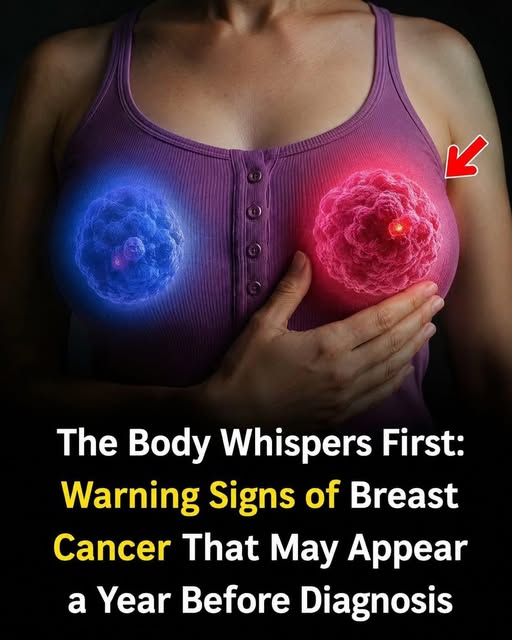
Learn about four possible early warning signs of breast cancer that every woman should know, including changes in the breast, nipple, skin, and underarm area—and when to seek medical advice.
Learn about four possible early warning signs of breast cancer that every woman should know, including changes in the breast, nipple, skin, and underarm area—and when to seek medical advice.
Breast cancer does not always begin with a noticeable lump. Sometimes, the earliest warning may be a subtle change in the breast, nipple, skin, or underarm area.
Knowing what is normal for your body can help you recognize changes that deserve medical attention. Most breast changes are not cancer, but a new or unusual change should not simply be ignored.
Here are four important signs every woman should know.
1. A New Lump or Thickened Area
A new lump in the breast or underarm is one of the best-known possible warning signs of breast cancer.
A concerning lump may feel:
- Firm or hard
- Different from the surrounding tissue
- Fixed or less mobile
- New or persistent
However, many breast lumps are caused by benign conditions such as cysts or hormonal changes.
Don’t try to diagnose a lump by touch alone. If you discover a new lump, arrange an evaluation with a healthcare professional.
2. An Unusual Change in Breast Size or Shape
Pay attention if one breast suddenly looks noticeably different from the other or if there is a new change in its size, contour, or shape.
Some women naturally have breasts that are slightly different in size. That’s normal.
The concern is a new and unexplained change that persists.
A change may be particularly important if it occurs alongside a lump, swelling, skin changes, or nipple changes.
3. Changes to the Skin or Nipple
Changes in the skin over the breast can sometimes be a warning sign.
Watch for:
- New dimpling or puckering
- Persistent redness or swelling
- Skin that becomes thicker or develops an unusual texture
- A newly inverted nipple
- Scaling or crusting around the nipple
These symptoms can also result from infections, eczema, irritation, or other non-cancerous conditions.
The important point is that a persistent or unexplained change deserves professional assessment.
4. Unusual Nipple Discharge
Unexpected nipple discharge can have many causes, most of which are not cancer.
However, new spontaneous discharge, particularly if it comes from only one breast or contains blood, should be evaluated by a healthcare professional.
Do not assume that discharge is harmless simply because there is no lump.
A medical examination can help determine whether further testing is necessary.
What About Breast Pain?
Breast pain by itself is not usually the main warning sign of breast cancer.
Hormonal fluctuations, medications, injuries, infections, cysts, and other conditions can cause breast discomfort.
Nevertheless, persistent or unexplained pain should be discussed with a healthcare professional, especially when it occurs alongside another breast change.
When Should You See a Doctor?
Make an appointment if you notice a breast change that is:
- New
- Unusual for you
- Persistent
- Getting worse
- Associated with a lump or swelling
- Associated with nipple or skin changes
Don’t wait for a symptom to become painful before seeking advice.
Screening Still Matters
It’s also important to remember that breast cancer can exist without causing noticeable symptoms.
That’s why following recommended breast cancer screening guidelines for your age and individual risk factors is important.
Screening recommendations can vary depending on age, family history, genetic risk, and personal medical history. Ask your healthcare professional which screening schedule is appropriate for you.
A Simple Habit That Can Help
You don’t need to constantly examine your breasts or panic over every small difference.
Instead, become familiar with how your breasts normally look and feel.
When you notice something genuinely new or unusual, take it seriously enough to have it checked.
Final Reminder
A lump, skin change, nipple change, or unusual discharge does not automatically mean breast cancer. Many breast changes have harmless explanations.
But because early evaluation can be important, don’t ignore a persistent or unexplained change.
Know your normal. Notice what’s different. And when something doesn’t seem right, talk to a healthcare professional.