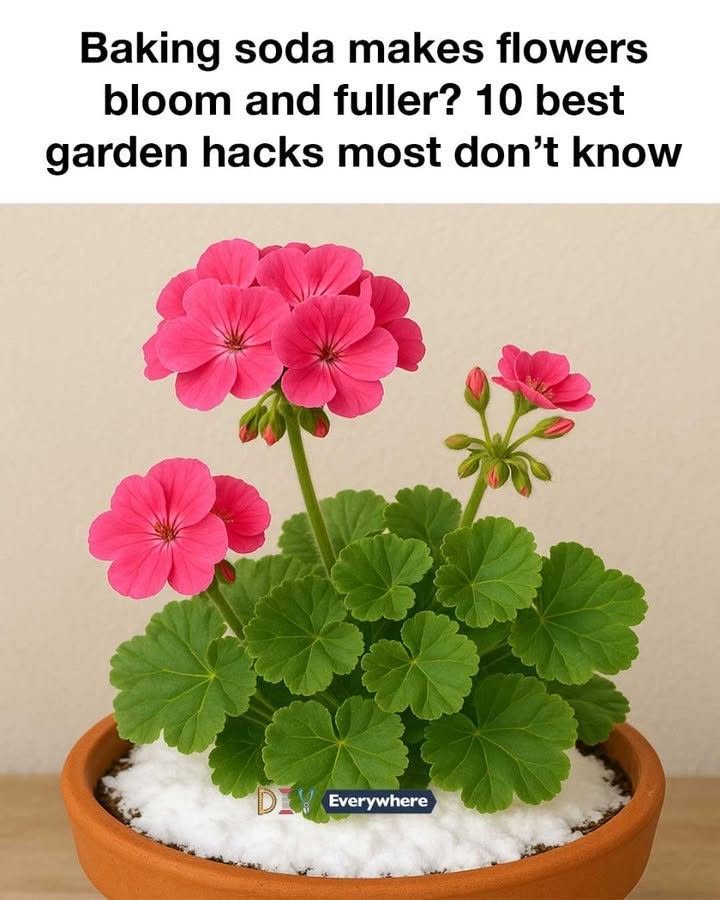
Gardening is full of simple tricks that can save time, reduce waste, and help plants look healthier without spending a fortune on specialized products. Some of the most useful garden hacks involve everyday household items—but not every popular gardening tip works the way social media claims.
One frequently shared tip is using baking soda around flowering plants. Can it really make flowers bloom bigger and fuller? The answer is a little more complicated. Baking soda is not a flower-boosting fertilizer, and sprinkling large amounts around plants can actually damage soil conditions. However, in certain situations, a very dilute baking soda solution may be used as part of a strategy to manage some fungal problems on plant leaves.
Here are 10 practical garden hacks worth knowing.
1. Use Baking Soda Carefully for Leaf Fungal Problems
Baking soda is often mentioned as a homemade treatment for powdery mildew, a fungal disease that can leave leaves covered with a white, powdery coating.
A weak solution containing baking soda, water, and a small amount of mild liquid soap can sometimes help make leaf surfaces less favorable for fungal growth. It does not cure every fungal disease, and stronger concentrations can burn leaves.
Always test a small area first and avoid applying homemade sprays during very hot, sunny conditions.
Important: Baking soda does not directly provide the nutrients plants need to produce more flowers. If your goal is fuller blooms, adequate sunlight, appropriate watering, healthy soil, and proper fertilization are much more important.
2. Save Coffee Grounds—But Don’t Dump Them Everywhere
Used coffee grounds can be added to compost, where they contribute organic material and nutrients as they break down.
The common idea that coffee grounds automatically make every plant thrive is misleading. Fresh or excessive coffee grounds can create problems, while used grounds are better incorporated into compost or soil in moderation.
A compost pile containing coffee grounds, dry leaves, vegetable scraps, and other organic materials can eventually produce a useful soil amendment.
3. Turn Vegetable Scraps Into Free Compost
Instead of throwing away vegetable peels, fruit scraps, coffee grounds, and other suitable kitchen waste, consider composting them.
Compost improves soil structure and adds organic matter. It can help sandy soil hold moisture while improving drainage in heavier soils.
Avoid adding meat, oily foods, and diseased plant material to a simple backyard compost pile unless you have a composting system designed to handle them.
4. Use Mulch to Protect Plant Roots
A layer of organic mulch around plants can be one of the easiest ways to improve a garden.
Dry leaves, straw, shredded bark, and finished compost can help reduce evaporation, moderate soil temperature, and gradually contribute organic matter as they decompose.
Keep mulch slightly away from the stems and trunks of plants. Piling it directly against them can encourage rot and create hiding places for pests.
5. Reuse Eggshells Instead of Throwing Them Away
Crushed eggshells contain calcium carbonate, so gardeners sometimes add them to soil.
However, eggshells break down slowly, meaning they are not a quick calcium treatment. Simply scattering large pieces around a plant will not immediately solve a nutrient deficiency.
If you want to use them, wash and dry the shells, crush them finely, and add them to compost or soil. For a confirmed nutrient deficiency, a proper soil amendment is usually more predictable.
6. Water Plants at the Soil Level
One of the simplest ways to reduce certain plant diseases is to avoid repeatedly soaking the foliage.
Whenever practical, water near the base of the plant so the roots receive moisture without keeping the leaves wet for long periods.
Morning watering is often useful because excess moisture on foliage has more time to evaporate during the day.
Of course, plants have different watering requirements, so avoid following a rigid schedule if the soil is already wet.
7. Use a Layer of Cardboard to Suppress Weeds
Plain brown cardboard can be useful when preparing a new garden bed.
Lay overlapping pieces over existing weeds and grass, then cover them with compost and mulch. The cardboard blocks light while gradually decomposing.
Remove plastic tape, labels, and heavily coated or glossy materials before using cardboard in the garden.
This technique can be especially useful when converting a small lawn area into a planting bed without digging up every bit of vegetation.
8. Cinnamon Can Help With Some Gardening Situations
Cinnamon is sometimes used by gardeners around cuttings or seedlings because of its antimicrobial properties.
However, it shouldn’t be treated as a universal plant medicine. It cannot replace appropriate treatment for serious fungal infections, pests, or root problems.
For propagation, clean tools, sterile or clean growing media, proper moisture, and suitable light are much more important than any kitchen spice.
9. Reuse Rainwater for Suitable Garden Plants
Collecting rainwater can reduce reliance on treated tap water and provide a useful source of irrigation.
Use a clean, covered container designed for water collection and avoid allowing standing water to become a mosquito-breeding site.
Rainwater can be particularly convenient for outdoor ornamental plants, vegetables, and other plants that don’t require specially treated water.
10. Use Banana Peels Through Compost Rather Than Burying Them Whole
Banana peels contain nutrients, including potassium, which is important for plant growth. But burying a whole banana peel beside a plant is not an instant fertilizer solution.
The peel needs to decompose before many of its nutrients become available. It can also attr