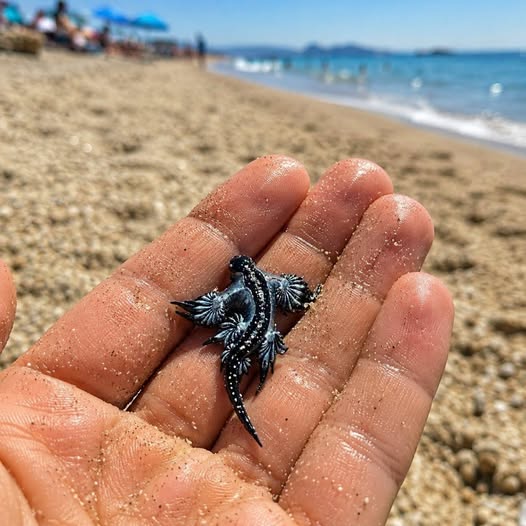
A striking blue dragon sea creature has been spotted along the coast, prompting beach warnings in some areas. Learn what this tiny marine animal is, why it attracts attention, and what beachgoers should know.
Beaches Closed After Blue Dragon Found in the Sea: What Is Its Target?
A tiny creature with an almost mythical appearance has been making headlines after being spotted in coastal waters. Known as the blue dragon, this unusual marine animal looks beautiful—but its appearance is a reminder that some fascinating ocean creatures should be observed from a safe distance.
The name “blue dragon” commonly refers to Glaucus atlanticus, a small sea slug also known as the blue glaucus or blue angel.
🌊 What Is a Blue Dragon?
The blue dragon is a remarkably small marine gastropod. Its body is usually only a few centimeters long, with striking blue and silver coloration that helps it blend into the ocean surface.
Unlike many creatures that spend their lives on the seafloor, blue dragons often float upside down at the surface, carried along by currents.
Their unusual appearance is one reason photographs of them can quickly spread online.
🪼 What Does the Blue Dragon Eat?
Here’s the fascinating part: the blue dragon isn’t generally looking for humans as prey.
It feeds on other marine organisms, including Portuguese man o’ war and other siphonophores.
Blue dragons can consume stinging organisms and retain some of their defensive stinging cells. These can then be concentrated and used for their own defense.
That’s why touching one can be a very bad idea.
⚠️ Can a Blue Dragon Hurt People?
Yes. Although the animal is tiny, contact can potentially cause a painful sting.
The risk comes partly from the stinging cells it obtains from its prey. A blue dragon that has washed onto a beach may still pose a hazard if someone handles it.
Never pick one up with your bare hands, even if it appears dead.
Children and pets should also be kept away from unfamiliar marine creatures found along the shoreline.
🏖️ Why Would a Beach Be Closed?
A beach closure can happen for many reasons, including dangerous marine life, poor water quality, severe weather, or other public-safety concerns.
Importantly, finding a blue dragon does not automatically mean an entire beach is dangerous or that everyone in the water is at risk. Any closure should be understood in the context of the specific local authorities’ warning.
If officials have temporarily closed an area, follow their instructions rather than entering the water to look for the animals.
What Should You Do If You See One?
If you spot a blue dragon:
- Don’t touch it.
- Keep children and pets away.
- Don’t attempt to move it.
- Follow local beach warnings.
- If you were stung, leave the water and seek appropriate medical advice, particularly if symptoms are severe or worsening.
🌊 Beautiful—but Best Left Alone
The blue dragon is one of those creatures that looks almost too beautiful to be real. Its bright blue body and unusual shape make it fascinating to photograph.
But like many wild marine animals, it’s best appreciated without touching it.
The sea is full of creatures that can surprise us. If an unfamiliar animal washes ashore, admiring it from a safe distance is usually the smartest choice.