Discover the correct way to hang toilet paper and why the overhand method is generally preferred, from easier tearing and accessibility to hygiene and practical everyday benefits.
Which Way Is the Correct Way to Hang Toilet Paper? The Answer May Surprise You!
Have you ever walked into a bathroom and noticed that the toilet paper is hanging differently from how you normally place it? Some people insist the loose end should hang over the roll, while others prefer it hanging behind the roll.
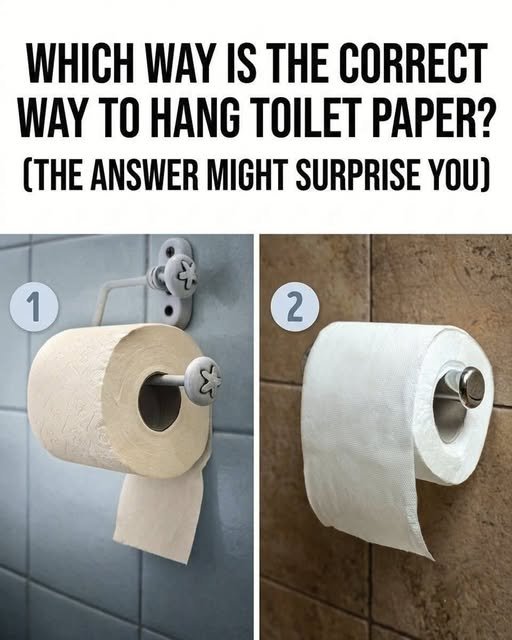
The image shows both methods. So which one is actually correct?
For most people, the overhand method—shown as #1—is the preferred way to hang toilet paper.
#1: Toilet Paper Hanging Over the Roll
In this position, the loose end comes over the top of the roll and toward you.
This is the traditional arrangement many people expect to see in bathrooms.
Why many people prefer this method
1. It’s easier to grab
The loose sheet is clearly visible, making it easy to find and pull without touching or searching around the back of the roll.
2. It’s easier to tear
Because the paper hangs toward the front, you can pull it down and tear off the desired amount more conveniently.
3. It’s easier to see how much is left
The exposed end makes it easier to monitor the roll and notice when you’re running low.
4. It can be more convenient for children and older adults
People who have difficulty reaching behind a roll may find the overhand position easier to use.
#2: Toilet Paper Hanging Behind the Roll
In the second position, the loose end hangs behind the roll, closer to the wall.
This isn’t inherently incorrect. Toilet paper will still work perfectly well this way.
Some people actually prefer it because they believe it looks tidier or makes it less tempting for pets to unroll the paper.
However, the loose end can be harder to locate and grab, particularly when the roll is mounted close to the wall.
What About Hygiene?
The difference between the two orientations isn’t likely to make a major difference to bathroom hygiene by itself.
The more important habits are:
- Wash your hands thoroughly after using the bathroom.
- Avoid unnecessarily touching large amounts of toilet paper.
- Keep the toilet and surrounding surfaces clean.
- Replace rolls when they become wet or contaminated.
- Keep toilet paper stored in a clean, dry location.
So while #1 may be more convenient, hand hygiene is far more important than the direction of the roll.
What Does the Original Patent Show?
One interesting detail often mentioned in discussions about toilet-paper orientation is the original toilet-paper patent associated with Seth Wheeler.
The patent illustrations show the paper coming over the top of the roll, supporting the traditional #1 orientation.
That doesn’t mean hanging it the other way is unsafe or objectively wrong—it simply shows that the overhand arrangement has a long history.
Why Do People Argue About It So Much?
The toilet-paper debate is surprisingly common because people develop habits based on how they were taught or how their household installed the roll.
Some people prefer #1 because it is practical and easy to access, while others choose #2 because they think it looks neater or is less likely to be pulled by pets or small children.
In other words, there isn’t a major health rule requiring everyone to use one orientation.
The Verdict
If you’re asking which orientation is the traditional and generally preferred method, choose #1: paper hanging over the top and toward the front.
But if someone in your household prefers #2, there’s no need to start a bathroom argument—the toilet paper will still do its job! 😄
#1 = traditional, convenient, and easy to access.
#2 = perfectly functional, but less convenient for many people.