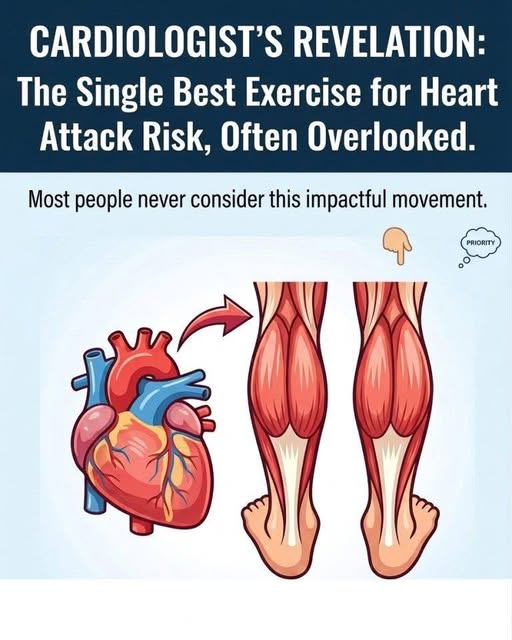
Bilkul — is topic ke liye detailed, natural health-article style content aur meta description yeh rahi. Maine “protect your heart” ko medically safer “support heart health” mein rakha hai, kyunki ek single exercise heart disease ko prevent ya treat karne ki guarantee nahi deti.
Meta Description:
Discover one simple exercise cardiologists often recommend for supporting heart health, improving circulation, and building everyday fitness. Learn how to do it safely and who should take extra precautions.
Cardiologist Reveals 1 Exercise That May Help Support Your Heart Health
When it comes to protecting your heart, you might assume you need intense workouts, long gym sessions, or complicated exercise routines. In reality, one of the most valuable things you can do for your cardiovascular health is move your body regularly.
Walking is one simple form of exercise that can be surprisingly beneficial. It is accessible to most people, requires little or no equipment, and can easily become part of a daily routine.
While no single exercise can guarantee protection against heart disease, regular physical activity can support cardiovascular health by helping improve fitness, maintain a healthy weight, manage blood pressure, and improve blood sugar control.
The Simple Exercise: Brisk Walking
A brisk walk may not look like a traditional workout, but it can give your heart and lungs a meaningful workout when performed consistently.
The goal isn’t necessarily to walk as fast as possible. Instead, aim for a pace that makes you breathe somewhat harder while still allowing you to speak in short sentences.
For many people, brisk walking can be a practical starting point for becoming more physically active.
Why Walking Can Be Good for Your Heart
Regular walking can provide several cardiovascular benefits.
1. It gets your heart working
During physical activity, your heart pumps faster to deliver oxygen-rich blood to your working muscles. Over time, consistent aerobic activity can help improve cardiovascular fitness.
2. It may help support healthy blood pressure
Regular physical activity is associated with better blood-pressure control. This is particularly important because high blood pressure can place additional strain on the cardiovascular system.
3. It can help with weight management
Walking burns calories, and when combined with a balanced diet, regular activity can contribute to maintaining or reaching a healthier body weight.
4. It supports better blood-sugar control
Muscles use glucose for energy during physical activity. Regular exercise can therefore be part of a lifestyle that supports healthy blood-sugar levels.
5. It can improve overall fitness
You don’t have to start with an hour-long workout. Gradually increasing the amount and intensity of walking can improve endurance and make everyday activities feel easier.
How to Try It
If you’re currently inactive, don’t feel that you need to immediately complete a long or difficult workout.
Start with a comfortable walk for 10–15 minutes and gradually increase the duration as your fitness improves.
A simple progression might look like:
- Start with 10–15 minutes.
- Walk at an easy-to-moderate pace.
- Gradually increase your time.
- When comfortable, introduce short periods of faster walking.
- Work toward regular weekly physical activity.
The most important factor is consistency.
A 20-minute walk that you actually do several times a week can be more useful than an ambitious workout plan that you abandon after a few days.
What About Older Adults?
Walking can be especially appealing for older adults because it is relatively low-impact and can be adjusted to different fitness levels.
However, people with significant heart or lung conditions, balance problems, severe joint pain, or other medical concerns should talk with their healthcare professional about the safest type and intensity of exercise.
If you’re starting after a long period of inactivity, gradually increasing activity is generally more sensible than suddenly pushing yourself hard.
Listen to Your Body
Exercise should challenge you, but it shouldn’t cause alarming symptoms.
Stop exercising and seek medical attention if you experience symptoms such as:
- Chest pressure, squeezing, or significant pain
- Severe or unusual shortness of breath
- Fainting or feeling close to fainting
- Sudden severe weakness
- A rapid or irregular heartbeat accompanied by concerning symptoms
These symptoms shouldn’t simply be “worked through.”
The Bigger Picture
Although walking is an excellent form of physical activity, heart health isn’t determined by one exercise alone.
A heart-healthy lifestyle also includes:
- Eating a balanced diet
- Avoiding tobacco
- Getting adequate sleep
- Managing stress
- Maintaining a healthy weight when appropriate
- Keeping blood pressure and cholesterol under control
- Staying physically active on a regular basis
- Following medical advice for existing conditions
Think of exercise as one important piece of the heart-health puzzle, rather than a magic solution.
The Bottom Line
You don’t necessarily need an expensive gym membership or an extreme workout to start taking better care of your cardiovascular health.
Brisk walking is a simple, accessible exercise that can help improve fitness and support heart health when performed regularly.
If you’re new to exercise, start slowly and build up over time. And if you have a medical condition or are unsure what level of activity is appropriate for you, speak with your healthcare professional before beginning a new exercise routine.
Your heart doesn’t need perfection—it benefits from consistent healthy habits.