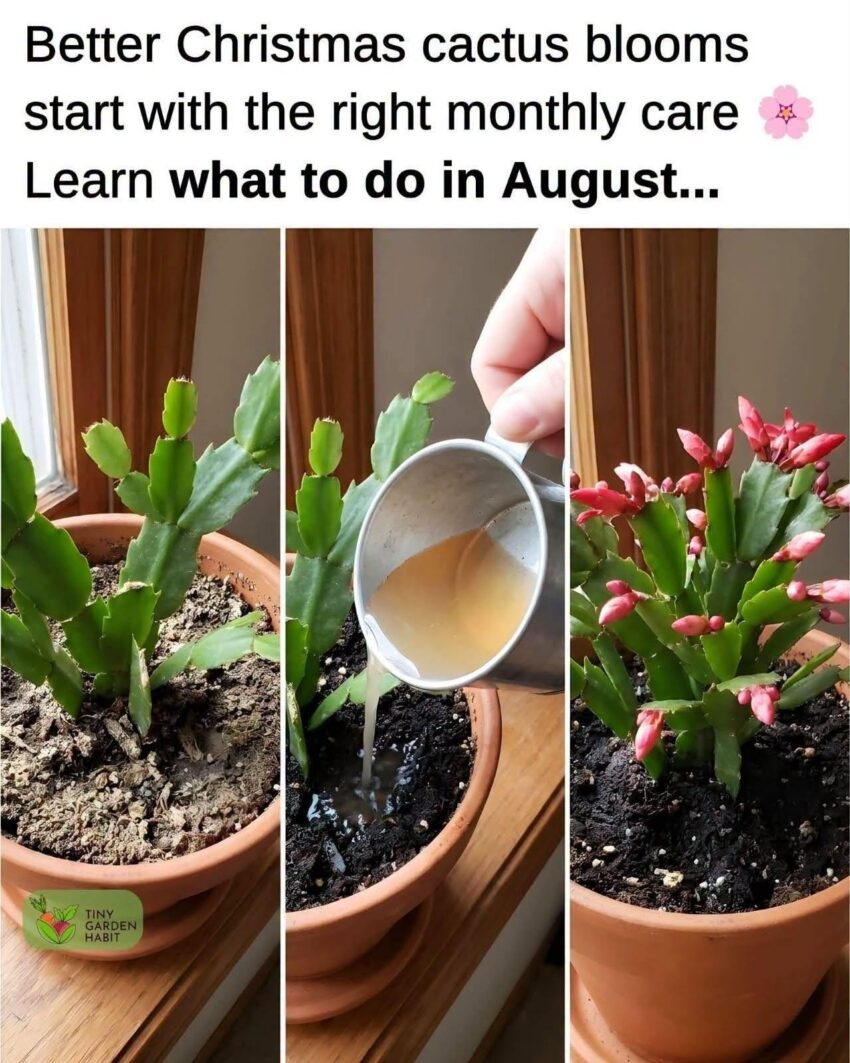
Learn how to care for a Christmas cactus throughout the year with this simple monthly calendar. Discover when to water, fertilize, prune, repot, and provide the right light and temperature for beautiful holiday blooms.
Christmas Cactus Care Calendar: The Routine for On-Time Blooms
A Christmas cactus can become one of the most rewarding houseplants to grow. When cared for properly, it can produce beautiful flowers around the holiday season and continue blooming for many years.
Unlike desert cacti, Christmas cactus prefers more moisture, humidity, and indirect light. Its blooming cycle is also strongly influenced by changes in temperature and daylight.
The secret to getting flowers at approximately the right time isn’t a last-minute trick. The preparation begins months before the buds appear.
Here’s a simple year-round care calendar to help keep your Christmas cactus healthy and encourage seasonal flowering.
January: Enjoy the Blooms and Slow Down
If your plant is flowering in January, avoid making major changes while it is still in bloom.
Place it somewhere with:
- Bright, indirect light
- Comfortable indoor temperatures
- Protection from cold drafts
- Consistent moisture without waterlogging
Water when the upper portion of the potting mix has dried rather than following a rigid schedule.
If flowers begin to fade, you can gently remove spent blooms.
Don’t Overwater
One of the easiest mistakes is watering too frequently because the plant is flowering.
Christmas cactus likes more moisture than many traditional cacti, but constantly soggy soil can damage the roots.
February: Rest and Recovery
After flowering, your plant may enter a quieter period.
This is a good time to reduce watering slightly while still preventing the plant from becoming extremely dry for long periods.
Keep it in bright, indirect light and avoid unnecessary repotting.
If the plant looks healthy, there is no need to disturb it simply because flowering has finished.
March: Start Preparing for New Growth
As daylight increases, your Christmas cactus may begin producing new segments.
This is a good time to gradually return to normal care.
Check the plant for:
- Yellowing or mushy segments
- Signs of pests
- Very dry or compacted soil
- Damaged stems
- Roots emerging heavily from drainage holes
If your plant needs repotting, spring is generally a better time than the weeks immediately before flowering.
April: Repot If Necessary
Christmas cactus does not need to be repotted every year.
If the roots have completely filled the container or the potting mix has deteriorated, move the plant into a slightly larger container with good drainage.
Avoid choosing a dramatically oversized pot.
A pot that is only modestly larger can be easier to manage because excess soil stays wet for longer in a very large container.
Use a loose, well-draining potting mix.
May: Encourage Healthy Growth
During active growth, provide bright but indirect light.
A little gentle morning sunlight can be suitable in many indoor settings, but strong, intense afternoon sunlight through glass can scorch the stems.
Water when the soil has partially dried.
This is also a good period to begin regular feeding with a balanced houseplant fertilizer according to the product’s directions.
Avoid excessive fertilizer. More fertilizer does not automatically mean more flowers.
June: Keep Growth Steady
Your Christmas cactus should have plenty of daylight during this part of the year.
Continue providing:
Bright indirect light + well-draining soil + appropriate watering + moderate feeding.
If the stems are growing unevenly, rotate the pot occasionally so different sides receive similar light.
Don’t constantly move the plant from one extreme environment to another.
July: Avoid Stress
Summer heat can cause the potting mix to dry more quickly.
Check the soil rather than automatically increasing watering.
If your home becomes very hot, protect the plant from intense direct sunlight and hot windows.
Good air circulation is helpful, but avoid placing the plant directly in front of strong air-conditioning vents.
August: Start Thinking About Flowering
August is an important transition period.
Your Christmas cactus is preparing for the environmental changes that eventually encourage flower-bud formation.
Continue normal growth care, but avoid excessive pruning, repotting, or major changes later in the season.
If the plant is healthy and growing well, this is the time to focus on maintaining stable conditions.
September: Begin the Bloom Preparation
As autumn approaches, flowering can be encouraged by providing the environmental cues Christmas cactus naturally responds to.
Two important factors are:
- Longer periods of darkness
- Cooler nighttime temperatures
For many Christmas cactus plants, naturally shortening autumn days can help initiate flowering.
Avoid exposing the plant to bright artificial light late into the night if you’re trying to encourage buds.
A dark room at night is helpful.
October: Protect the Developing Buds
By October, you may begin seeing tiny buds forming at the ends of the segments.
This is when consistency becomes especially important.
Once buds appear, avoid unnecessary changes.
Try not to:
- Move the plant repeatedly
- Rotate it dramatically
- Repot it
- Let it experience extreme temperature changes
- Allow it to become severely dry
Sudden environmental changes can cause developing buds to drop.
November: Buds Begin to Develop
If conditions have been suitable, the buds should gradually become more noticeable.
Continue providing bright indirect light during the day and a consistent dark period at night.
Water when the soil requires it rather than keeping the plant constantly wet.
You don’t need to drown the plant to encourage flowering.
What If the Buds Fall Off?
A few dropped buds aren’t necessarily a disaster.
Possible causes include:
- Sudden temperature changes
- Moving the plant
- Improper watering
- Very dry air
- Insufficient light
- Other environmental stress
Try to keep conditions stable.
December: Enjoy the Flowers
This is the moment you’ve been preparing for.
When the flowers open, place the plant somewhere where you can enjoy the display while maintaining stable conditions.
Keep it away from heating vents, cold drafts, and dramatic temperature fluctuations.
With good care, flowering can provide a beautiful burst of color during the holiday season.
The Simple Christmas Cactus Calendar
| Month | Main Focus |
|---|---|
| January | Enjoy flowers and avoid overwatering |
| February | Rest and reduce watering slightly |
| March | Encourage new growth |
| April | Repot only if necessary |
| May | Feed and support active growth |
| June | Maintain light and watering |
| July | Protect from excessive heat |
| August | Maintain healthy growth |
| September | Begin encouraging bloom conditions |
| October | Protect developing buds |
| November | Keep conditions stable |
| December | Enjoy the flowers |
How Much Light Does Christmas Cactus Need?
Christmas cactus generally performs best in bright, indirect light.
Too little light can result in weak growth and poor flowering.
On the other hand, intense direct sunlight—especially through a hot window—can damage the stems.
An east-facing window can often provide suitable conditions, while stronger southern or western exposure may require some protection from intense midday or afternoon sunlight.
How Often Should You Water It?
There isn’t one perfect watering schedule for every home.
Temperature, humidity, pot size, soil composition, season, and light levels all affect how quickly the soil dries.
Instead of watering simply because it’s Monday or Friday, check the potting mix.
When the upper portion has dried and the plant needs water, water thoroughly enough for some moisture to reach the entire root zone, then allow excess water to drain away.
Never allow the pot to sit continuously in a saucer full of water.
Why Isn’t My Christmas Cactus Blooming?
Several factors can interfere with flowering.
Too Much Light at Night
Artificial light can interfere with the long dark period that helps initiate flowering.
Excessive Fertilizer
Heavy feeding, particularly late in the growing season, isn’t a reliable way to increase flowers.
Too Much Heat
Very warm nighttime conditions can make flowering more difficult.
Inconsistent Care
Repeatedly moving the plant, changing watering dramatically, or exposing it to sudden temperature shifts can cause stress.
Insufficient Light During the Day
The plant still needs adequate daytime light to remain healthy.
Should You Prune Christmas Cactus?
Pruning isn’t essential, but light pruning can help create a fuller-looking plant.
The easiest time is generally after flowering, when the plant has finished its main bloom period.
You can gently twist or remove individual stem segments rather than aggressively cutting large portions of the plant.
The removed healthy segments can also potentially be propagated.
Can Christmas Cactus Live for Years?
Yes.
With appropriate care, Christmas cactus can be a long-lived houseplant. Mature plants can become large and develop trailing stems that look particularly attractive in hanging containers.
That’s one reason it is worth learning the plant’s yearly cycle rather than treating it as a temporary holiday decoration.
The Most Important Rule for Holiday Blooms
You don’t need a complicated routine.
The most important thing is consistency.
Give your Christmas cactu