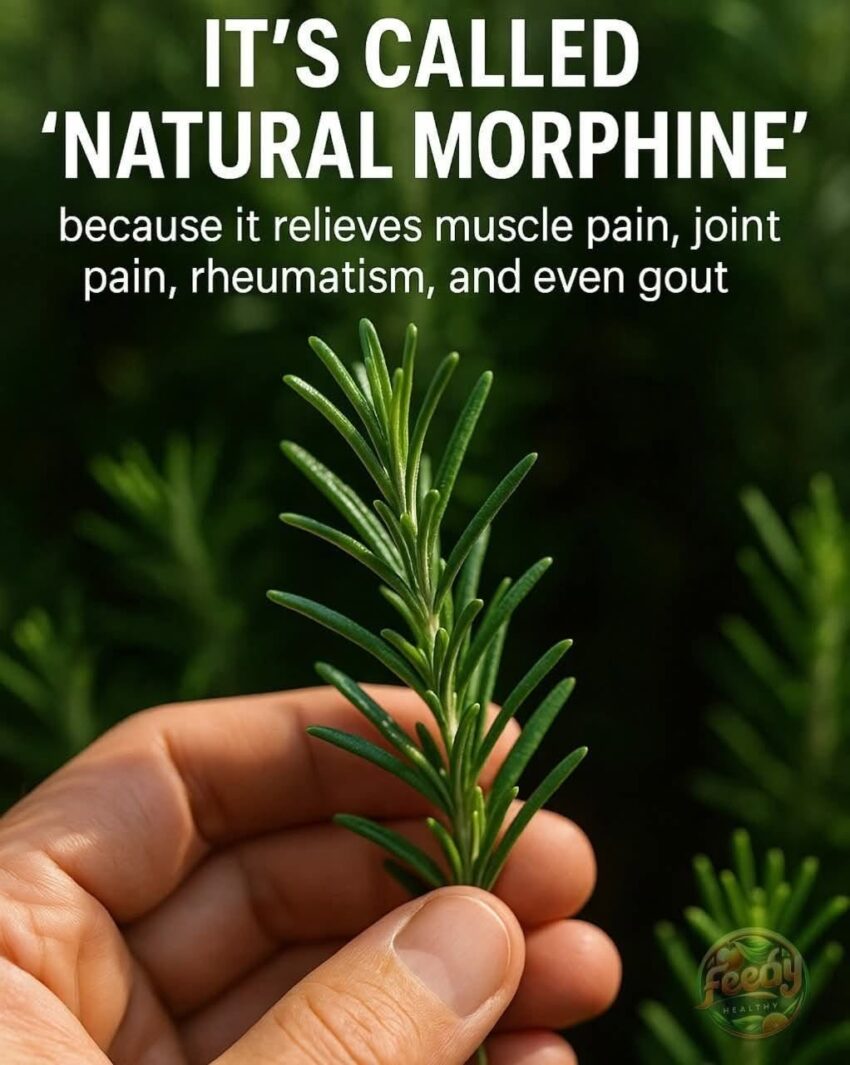
Rosemary is more than a flavorful kitchen herb. Discover its potential antioxidant benefits, traditional uses, ways to add it to meals, and why calling rosemary “natural morphine” is misleading.
Discover the Power of Rosemary: What This Fragrant Herb Can Really Do
Rosemary has been used in kitchens and traditional herbal practices for centuries. Its distinctive aroma and pine-like flavor make it a popular addition to roasted vegetables, potatoes, meats, soups, sauces, and teas.
But in recent years, rosemary has also become the subject of online health claims—some calling it a “natural morphine.”
That description is catchy, but it is not medically accurate.
Rosemary does contain biologically active compounds, including rosmarinic acid, carnosic acid, and carnosol. Research has investigated these compounds for antioxidant and other biological effects. However, rosemary has not been shown to work like morphine, and it should not be used as a substitute for prescribed pain medication.
Still, there are several interesting reasons to keep this fragrant herb in your kitchen.
1. Rosemary Contains Antioxidant Compounds
One of rosemary’s most interesting characteristics is its concentration of naturally occurring antioxidant compounds.
Antioxidants help protect cells from oxidative stress caused by unstable molecules known as free radicals.
Rosemary contains compounds such as:
- Rosmarinic acid
- Carnosic acid
- Carnosol
- Various aromatic plant compounds
These substances have been studied extensively in laboratory and experimental research.
However, promising laboratory findings do not automatically mean that eating rosemary will prevent or treat a particular disease in humans.
2. It Can Add Flavor Without Extra Sugar
One of the simplest benefits of rosemary is nutritional rather than medicinal.
Fresh or dried rosemary can dramatically increase the flavor of food without requiring sugar or large amounts of sauce.
Try adding it to:
- Roasted potatoes
- Chicken
- Fish
- Beans
- Lentils
- Vegetables
- Soups
- Homemade bread
- Rice dishes
Using herbs and spices can make nutritious meals more enjoyable without relying heavily on calorie-dense flavorings.
3. Rosemary Has a Long History of Traditional Use
Rosemary has traditionally been used for a variety of purposes, including digestive complaints and as an aromatic herb.
Its strong fragrance has also made it popular in traditional preparations for the scalp and hair.
Modern research continues to investigate different rosemary compounds, but traditional use should not be confused with proof that rosemary can treat a medical condition.
4. Rosemary and Memory: An Interesting Area of Research
Rosemary has attracted scientific interest because of its aroma and potential relationship with cognitive function.
Some small human studies have investigated whether exposure to rosemary aroma or rosemary compounds could influence aspects of memory or alertness.
The results are interesting, but they are not strong enough to conclude that rosemary prevents dementia or dramatically improves memory.
Think of rosemary as a flavorful herb with intriguing research behind it—not as a guaranteed brain-health treatment.
5. Could Rosemary Help With Digestion?
Rosemary has traditionally been consumed as part of herbal preparations for digestive discomfort.
Some of its plant compounds have demonstrated biological activity in laboratory studies, but evidence in humans is more limited.
If you regularly experience severe heartburn, abdominal pain, persistent nausea, unexplained weight loss, or changes in bowel habits, don’t rely on rosemary as a treatment. Those symptoms deserve proper medical evaluation.
6. What About Pain Relief?
This is where the phrase “natural morphine” becomes especially misleading.
Morphine is a powerful opioid medication that acts on opioid receptors in the nervous system and is used medically for certain types of moderate-to-severe pain.
Rosemary does not contain morphine and should not be expected to produce the same pain-relieving effect.
Some rosemary compounds have demonstrated anti-inflammatory or other biological effects in experimental research, but this is very different from proving that rosemary can replace opioid medication or treat severe pain.
If you have significant or persistent pain, identify the underlying cause rather than attempting to replace prescribed treatment with an herb.
7. Rosemary Oil Is Different From the Herb
Another important distinction is between culinary rosemary and concentrated rosemary essential oil.
Essential oils contain concentrated plant compounds and are not equivalent to eating a small amount of rosemary with food.
Essential oils should not automatically be swallowed or applied directly to the skin. Some can cause irritation, allergic reactions, or other adverse effects when used incorrectly.
Always follow the product’s instructions and seek professional advice when using concentrated herbal products.
8. How to Add Rosemary to Your Daily Meals
You don’t need a complicated recipe to enjoy rosemary.
Simple Rosemary Potatoes
Toss chopped potatoes with:
- A small amount of olive oil
- Chopped fresh rosemary
- Garlic
- Black pepper
- A modest amount of salt
Roast until the potatoes are tender and golden.
You can use the same combination with carrots, pumpkin, cauliflower, or other vegetables.
Rosemary Tea
Some people enjoy rosemary as an herbal infusion.
Use a small amount of fresh or dried rosemary with hot water and allow it to steep before straining.
Avoid assuming that stronger tea provides greater health benefits. More is not necessarily better with herbs.
9. Who Should Be Careful With Rosemary?
The amounts normally used to flavor food are generally different from concentrated medicinal doses or supplements.
Extra caution is appropriate with large amounts, concentrated extracts, and essential oils.
People who are pregnant, breastfeeding, taking prescription medications, have certain medical conditions, or are considering concentrated rosemary supplements should discuss their use with a healthcare professional.
Herbal products can have biological effects and may interact with medications.
10. The Best Way to Think About Rosemary
Rather than thinking of rosemary as a miracle cure or “natural morphine,” consider it what it really is: a flavorful herb containing interesting plant compounds that are being studied for their potential biological effects.
Its biggest everyday advantage may be how easily it can make simple, nutritious foods taste better.
And that is a benefit worth appreciating without exaggerating what the herb can do.
Final Thoughts
Rosemary is a fascinating plant with a long culinary and traditional history. Its antioxidant compounds and potential biological effects have attracted scientific interest, particularly in laboratory and early human research.
But rosemary is not morphine, and it should never be presented as a natural substitute for prescription pain medication.
Use rosemary generously as a culinary herb, enjoy its aroma and flavor, and view its possible health effects realistically. When it comes to treating significant pain or a medical condition, evidence-based medical care remains important.