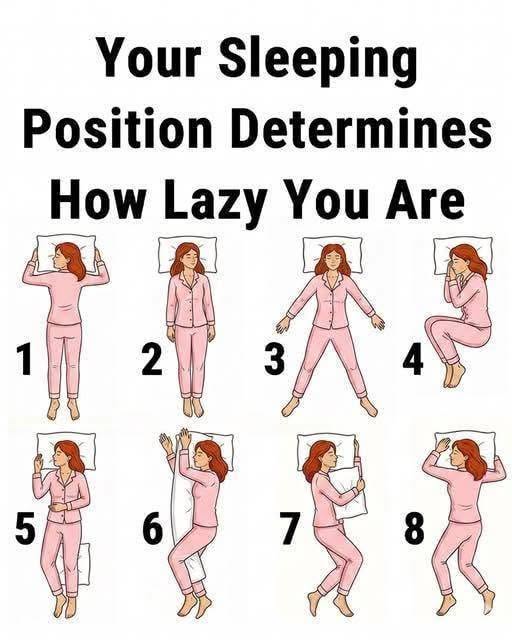
Discover what common sleep positions may suggest about personality, from side and back sleeping to the fetal position, and learn what science really says about these habits.
Discover What Your Sleep Position Reveals About Your True Personality
Have you ever wondered whether the way you sleep says something about who you are? We spend a large part of our lives asleep, and many people naturally settle into a favorite position without even realizing it.
From sleeping curled up on your side to lying flat on your back, different sleep positions have been linked to personality traits in popular psychology. However, it’s important to remember that sleep position is not a scientifically proven way to determine someone’s personality. Comfort, habit, body pain, mattress quality, and other factors can influence how you sleep.
Still, these common positions can make for an interesting look at personality stereotypes.
1. The Fetal Position
If you sleep curled on your side with your knees drawn toward your chest, you’re a fetal-position sleeper.
Popular personality interpretations often describe fetal sleepers as:
- Sensitive
- Caring
- Cautious around new people
- Emotionally thoughtful
- Comfortable with familiar surroundings
People who sleep this way may also find the curled-up position physically comforting and relaxing.
2. Sleeping on Your Side
Side sleeping is one of the most common sleep positions.
People who naturally sleep on their side are sometimes described as easygoing, sociable, or adaptable. They may enjoy having a sense of comfort and security around them.
Of course, your preference for side sleeping may simply come down to what feels most comfortable for your body.
3. The Log Position
The “log” position involves lying on your side with your arms relatively straight alongside your body.
According to popular personality descriptions, people who sleep this way are sometimes portrayed as relaxed, trusting, and friendly.
They’re often associated with being comfortable in social situations and generally easy to get along with.
4. The Yearner Position
In the yearner position, you sleep on your side with both arms stretched out in front of you.
Popular interpretations associate this position with someone who may be open-minded but thoughtful when making decisions.
These sleepers are sometimes described as people who take their time before fully trusting others.
5. Sleeping on Your Back
Back sleepers lie relatively flat, often with their arms resting by their sides or slightly away from the body.
This position is sometimes associated with confidence, independence, and a preference for personal space.
Back sleeping can also simply be a natural preference based on your mattress, body shape, and comfort.
6. The Starfish Position
The starfish position involves sleeping on your back with your arms spread out around the pillow.
Popular personality descriptions often portray starfish sleepers as friendly, generous, and willing to listen to others.
They may enjoy being around people but don’t necessarily need to be the center of attention.
7. The Stomach Position
Stomach sleepers lie face-down, usually with their head turned to one side.
Popular sleep-personality theories sometimes describe these people as energetic, outgoing, or more willing to take charge.
However, stomach sleeping can put additional strain on the neck because your head remains turned to one side for an extended period.
Does Your Sleep Position Really Reveal Your Personality?
This is where it’s important to separate fun personality theories from established science.
There isn’t strong scientific evidence showing that a person’s favorite sleeping position can accurately reveal their personality. Your position can be influenced by many things, including physical comfort, pregnancy, pain, temperature, mattress firmness, and established habits.
So if your sleeping position doesn’t match the personality description, there’s no reason to worry.
Final Thoughts
Your favorite sleep position can certainly be interesting, and the personality descriptions attached to different positions can be fun to explore. But they shouldn’t be treated as a psychological test or a reliable way to judge someone’s character.
The most important thing is whether your sleeping position allows you to wake up feeling comfortable, rested, and refreshed.