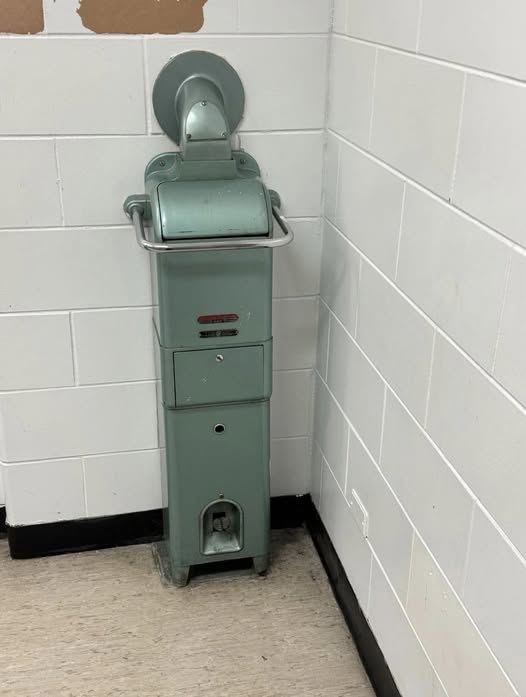
What was that mysterious fixture found in a 1920s school washroom? Discover the history and possible purpose of unusual early-20th-century bathroom fixtures.
Walking through an old school building from the 1920s can feel like stepping into another era. Everything from the plumbing to the sinks and toilets can look surprisingly different from what we’re accustomed to seeing today.
That’s why an unusual fixture in an old washroom can leave modern visitors completely puzzled.
But before assuming it was something strange, it’s worth remembering that school washrooms from the early 20th century often contained specialized fixtures that disappeared as plumbing standards and bathroom designs changed.
What Could It Be?
Without seeing the exact fixture clearly, it isn’t possible to identify it with certainty from the description alone.
Old school washrooms commonly contained features that may look unfamiliar today, including:
- Wall-mounted drinking fountains
- Foot-operated or unusual flushing mechanisms
- Old-fashioned urinals
- Janitorial sinks
- Boot or shoe-cleaning fixtures
- Plumbing access fittings
- Wash basins and communal sinks
- Older sanitary fixtures designed for children
Some fixtures were also connected to water systems in ways that aren’t immediately obvious to modern eyes.
Why Did Older Washrooms Look So Different?
Bathroom design changed dramatically during the late 19th and early 20th centuries.
Public institutions such as schools were increasingly designed around sanitation, ventilation, and easier cleaning. Fixtures were often made from porcelain, cast iron, or other durable materials and were built to withstand heavy daily use.
Schools also had different ideas about hygiene and student facilities than modern buildings do.
As plumbing technology improved, many of these fixtures were removed, replaced, or repurposed.
Could It Be a Drinking Fountain?
One possibility with mysterious school washroom fixtures is an old drinking fountain or related plumbing fixture.
Early drinking fountains could look quite different from modern fountains. Some were wall-mounted, while others were built into sinks or attached to plumbing systems.
However, shape and placement are important clues, so a photograph is needed before making a confident identification.
Could It Have Been a Toilet or Urinal Fixture?
Older toilets and urinals can also look surprisingly unfamiliar.
Early plumbing fixtures sometimes had unusual shapes, exposed pipes, large porcelain surfaces, or flushing mechanisms that aren’t commonly seen today.
A fixture’s height, drain location, water inlet, and position relative to other bathroom features can provide important clues about its original purpose.
The Location Is a Big Clue
If you have discovered an unusual object in a historic washroom, look at exactly where it is located.
Ask:
Is it on the wall, floor, or beside a sink?
Does it have a drain?
Is there a visible water pipe?
Is it positioned at adult or child height?
Does it have a handle, pedal, valve, or opening?
These details can often narrow down its purpose dramatically.
Don’t Remove or Alter It
If the building is historically significant, an unusual bathroom fixture may actually be an important piece of the building’s original design.
Even something that looks useless today can tell historians how people used the building nearly a century ago.
Instead of removing it, photograph it from several angles and look for manufacturer markings, inscriptions, or plumbing connections.
The Mystery May Be Easier to Solve Than You Think
What looks like a bizarre object to a modern visitor may simply be an ordinary piece of 1920s plumbing technology.
The exact identification depends on its shape and installation, though. A clear photograph showing the entire fixture, along with its surrounding wall or floor, would make it much easier to determine what it was designed to do.
If you have a photo of the mysterious fixture, share it—the shape, pipes, handles, and location can reveal a lot about its original purpose.