Before disposable diapers changed baby care forever, generations relied on cloth diapers, pins, folding techniques, and careful washing. Discover how families managed baby care in the days before Pampers.
Does Anyone Remember Cloth Diapers Before Pampers? A Look Back at Old-Fashioned Baby Care
Long before brightly packaged disposable diapers filled supermarket shelves, caring for a baby meant mastering a much more hands-on routine. For generations, parents and caregivers relied on cloth, safety pins, homemade diapers, washing, drying, and plenty of patience.
Today, disposable diapers are so common that it can be difficult to imagine what everyday baby care looked like before products such as Pampers became widely available. Yet many parents and grandparents remember those days clearly—and some even remember making diapers from materials they already had at home.
Cloth diapers were not simply an alternative to disposable diapers. They were part of an entire approach to raising babies that required planning, practical skills, and considerable household work.
What Did Babies Wear Before Disposable Diapers?
Before modern disposable diapers became popular, babies were commonly wrapped in washable cloth.
The exact materials and designs varied considerably depending on the time period, location, and family’s financial circumstances. Cotton was widely used, while old household textiles could also be repurposed.
A simple cloth diaper could be folded into layers and positioned around the baby. Pins or other fastening methods helped keep everything securely in place.
There was no single universal “old-fashioned diaper.” Families developed different folding styles and solutions based on what materials were available to them.
The Famous Cloth Diaper Pin
One of the most recognizable symbols of traditional diapering is the large diaper pin.
Parents had to fasten cloth securely enough to stay in place while also being extremely careful around a moving baby. Specialized diaper pins were designed with protective features, but adults still needed to handle them cautiously.
Experienced parents often became remarkably efficient at folding and fastening diapers.
For someone who has only ever used modern disposable diapers, watching an experienced caregiver fold a cloth diaper could almost seem like a small piece of household magic.
Diapering Was a Constant Household Job
Perhaps the biggest difference between traditional cloth diapers and modern disposable diapers was what happened after the diaper was used.
There was no simply removing the diaper and throwing it into a trash can.
Cloth diapers had to be collected, cleaned, dried, and prepared for another use.
That meant diapering became part of the household laundry routine.
Families with several children could go through a substantial number of cloth diapers, making regular washing essential. In households without modern washing machines, this work could be especially demanding.
Water had to be carried, laundry washed, rinsed, dried, and sometimes ironed or folded.
The arrival of household washing machines eventually made reusable diapers considerably easier to manage, but they still required more work than disposable alternatives.
How Were Cloth Diapers Cleaned?
Cleaning methods varied greatly depending on the period and available household facilities.
Some families rinsed soiled diapers immediately. Others kept used diapers in a designated container until wash day.
Diapers were then washed with soap or laundry detergent and thoroughly rinsed.
Before modern conveniences became widespread, hot water and physical scrubbing could play an important role in household laundry.
Sunlight was also extremely valuable.
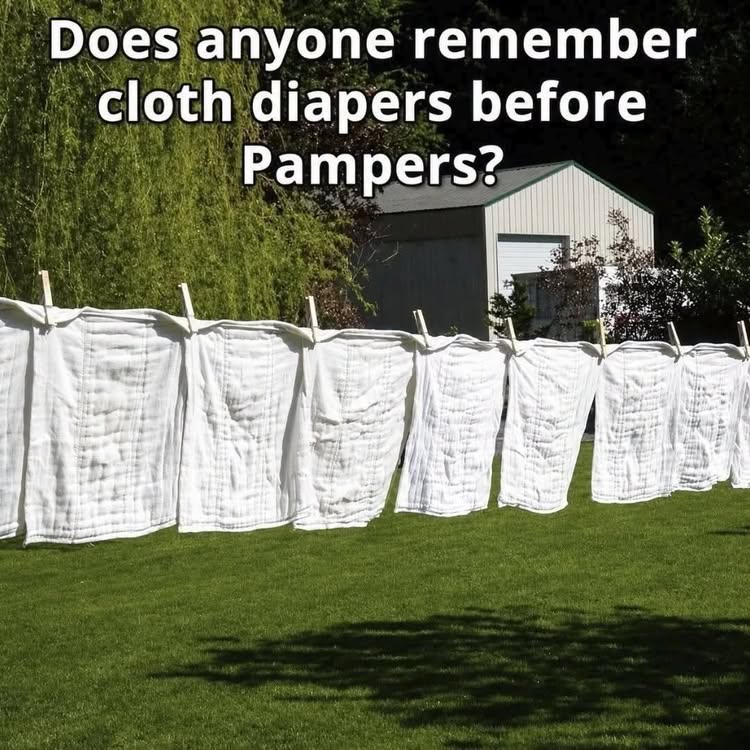
Families commonly hung freshly washed cloth outdoors to dry. A sunny clothesline was not just a pleasant sight—it was an important part of everyday household life.
The Clothesline Was Part of Baby Care
For many older generations, a row of white diapers blowing gently in the breeze was an ordinary sight.
Outdoor drying had several practical advantages. Fresh air and sunlight helped dry laundry naturally, while hanging diapers outside avoided the need for mechanical dryers.
Cloth diapers could take up a surprising amount of space, especially in households with babies.
A full clothesline could therefore tell a story about the work happening inside the home.
Today, seeing cloth diapers hanging outside can evoke a strong sense of nostalgia for people who grew up with this routine.
Homemade Diapers Were Also Common
Not every family purchased specially manufactured cloth diapers.
Some parents made their own.
Old cotton garments, sheets, towels, and other suitable fabrics could sometimes be cut or folded into useful baby-care items.
This reflected a broader household philosophy common in earlier generations: use what you have before buying something new.
Families often repaired clothing rather than replacing it, reused fabric, and found practical purposes for materials that might otherwise have been discarded.
Baby care was part of that resourceful culture.
Cloth Diapers Required Experience
Modern disposable diapers come with standardized shapes, elastic edges, adhesive tabs, absorbent cores, and sizing information.
Traditional cloth diapers required considerably more technique.
Parents had to learn:
- How to fold the fabric
- How many layers were needed
- How to position the diaper
- How tightly to fasten it
- When the diaper needed changing
- How to wash and dry it properly
- How to maintain enough clean diapers for the next day
Grandmothers and experienced mothers often passed these techniques from one generation to another.
In this way, diapering knowledge became part of family knowledge.
The Arrival of Disposable Diapers Changed Everything
Disposable diapers existed in various early forms before the modern era, but their design, availability, affordability, and convenience developed substantially over time.
The introduction and commercialization of modern disposable diapers transformed baby care.
Instead of washing the same piece of fabric repeatedly, parents could use a diaper once and dispose of it.
This was particularly attractive to families who were already overwhelmed by the demands of caring for a newborn.
Disposable diapers also became increasingly convenient as manufacturers improved absorbency, fit, fastening systems, and sizing.
The result was a major shift in how parents approached one of the most repetitive tasks of early childhood.
Pampers Became a Household Name
When people remember the transition from traditional cloth diapers to disposable diapers, Pampers is often one of the names that comes to mind.
The Pampers brand was introduced in the United States in the 1960s and became an important part of the history of disposable diaper development.
For many families, disposable diapers represented more than a new consumer product. They represented a change in household labor.
A task that had previously required washing and drying could now be completed much more quickly.
For busy parents, that convenience was significant.
Why Did Some Families Prefer Cloth?
Despite the growing popularity of disposable diapers, cloth never completely disappeared.
Some families preferred reusable diapers because they could be washed and used repeatedly.
Cost was another consideration. Although cloth diapers require an initial investment and ongoing washing, they can be reused many times.
Others appreciated the ability to choose different fabrics, folding methods, and diaper systems.
Cloth diapering also remained closely connected to traditions of thrift and self-sufficiency.
The Grandmother’s Diaper Bag
Older generations often remember baby supplies differently from parents today.
A traditional diaper bag might contain folded cloth diapers, pins, baby clothing, wipes or cloths, and other basic necessities.
There was less emphasis on carrying a large collection of specialized products.
Instead, parents often relied on simple, reusable items.
A clean cloth could serve multiple purposes, while carefully folded diapers occupied a significant portion of the bag.
The entire routine was more labor-intensive but also more familiar to families who had grown up with it.
Baby Care Was More Hands-On
Looking back, one of the most striking differences between then and now is how physically involved caregivers had to be.
There were fewer disposable conveniences and fewer specialized baby products.
Parents had to improvise.
If something was stained, it was washed.
If clothing became worn, it might be repaired.
If a diaper was needed, fabric had to be folded and prepared.
This did not necessarily mean that life was simpler. In many ways, it meant that ordinary household tasks required substantially more time and effort.
What About Diaper Rash?
Diaper rash is not a modern problem. Babies have experienced irritation from moisture, friction, and prolonged contact with soiled diapers throughout history.
Caregivers traditionally tried to keep babies clean and dry, change diapers regularly, and allow the skin to dry when possible.
Cloth diaper users also had to pay attention to how thoroughly diapers were washed and rinsed.
Modern parents have access to specially formulated barrier creams and other products, but the basic principle remains the same: reducing prolonged moisture and irritation is important for healthy baby skin.
Persistent or severe diaper rash, however, can have different causes and may require advice from a healthcare professional.
The Advantages and Disadvantages of Old-Fashioned Cloth Diapers
Traditional cloth diapering had genuine advantages, but it also involved significant work.
Advantages
Reusable: A cloth diaper could be washed and used repeatedly.
Resourceful: Families could sometimes make diapers from available fabric.
Potentially economical: Reusing cloth could reduce the need to continually purchase disposable diapers.
Simple construction: Traditional diapers did not require complicated technology.
Long-lasting tradition: Knowledge could be passed from parents to children and grandparents to grandchildren.
Disadvantages
Laundry: Washing diapers was a major ongoing responsibility.
Water use: Cleaning reusable diapers requires water.
Time: Folding, washing, drying, and preparing diapers takes effort.
Storage: Families needed enough clean diapers available between washings.
Leaks: Traditional cloth designs could leak more easily than many modern high-absorbency diapers.
Nighttime challenges: Keeping a baby comfortable and dry overnight could require additional layers or more frequent changes.
Why People Still Remember Them
Perhaps the reason old-fashioned cloth diapers remain such a memorable part of family history is that they represent something larger than diapering.
They remind people of a time when many household tasks were slower and more physical.
A grandmother may remember washing dozens of diapers by hand.
A mother may remember folding a stack of freshly dried cloth diapers.
Someone else may remember the sound of a diaper pin opening or the sight of white diapers hanging from a backyard clothesline.
These ordinary details become powerful memories because they were part of everyday family life.
Cloth Diapers Are Not Really Gone
Interestingly, cloth diapers did not disappear when disposable diapers became popular.
Modern reusable diapers have evolved considerably.
Today’s cloth diaper systems can include fitted diapers, pocket diapers, all-in-one designs, waterproof covers, adjustable fasteners, and specialized inserts.
They may look very different from the simple folded cloth and pin systems remembered by older generations.
Yet the basic concept remains the same: use fabric, wash it, and use it again.
From Diaper Pins to Modern Convenience
The history of baby diapers is really a story about changing technology and changing lifestyles.
Older generations depended on reusable materials and household labor.
Later generations gained access to disposable products that dramatically reduced the amount of laundry involved in baby care.
Neither period can be described simply as “better.”
Traditional cloth diapers required dedication and physical work. Modern disposable diapers provide convenience but create a different set of environmental and waste considerations.
Families today can choose from many options depending on their budget, lifestyle, preferences, and circumstances.
A Small Piece of Everyday History
Cloth diapers may seem like an insignificant detail of the past, but they reveal a lot about how families once lived.
Before Pampers and other modern disposable diaper brands became household names, parents had to rely on fabric, washing, drying, folding, and generations of practical knowledge.
The routine could be tiring, messy, and time-consuming—but it was also ordinary.
For today’s parents and grandparents, remembering those old-fashioned diapering methods can offer a fascinating glimpse into how dramatically everyday life has changed.
The next time someone talks about babies being raised “the old-fashioned way,” cloth diapers are likely to be one of the first things that comes to mind.
And for anyone who remembers a backyard clothesline covered with freshly washed diapers, it may bring back a surprisingly vivid piece of childhood—or parenthood—history.