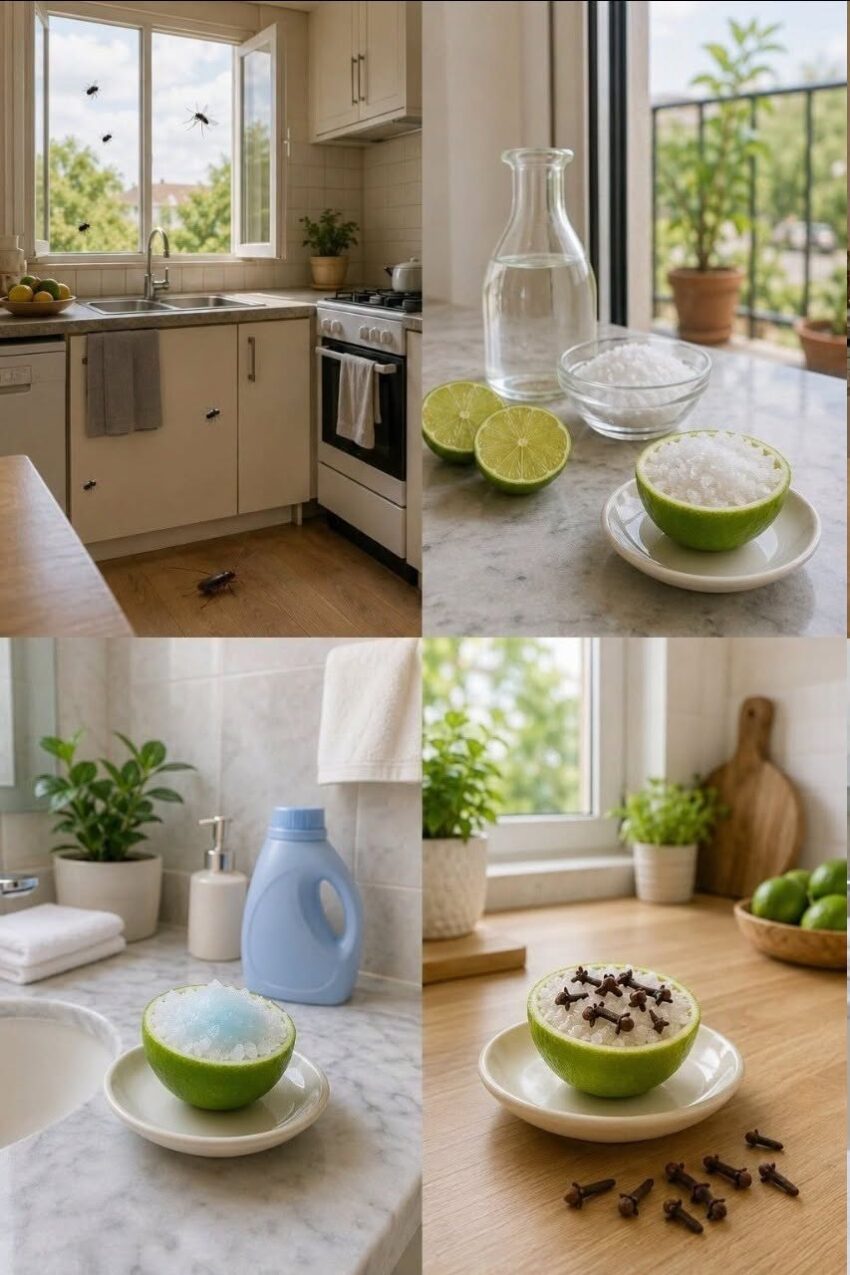
Looking for natural ways to reduce flies, mosquitoes and cockroaches around your home? Try these simple cleaning, prevention and household tips to make your home less attractive to common pests.
Nobody likes seeing flies, mosquitoes or cockroaches inside the home. They can be annoying, difficult to control, and may become especially troublesome when food, standing water, moisture or clutter gives them places to feed and hide.
Although no single homemade mixture can guarantee that every pest will disappear, a few simple natural methods can make your home less attractive to insects.
Start With a Clean Home
The most effective “natural” pest-control method is often basic prevention.
Clean food crumbs from counters and floors, wipe up spills quickly, and avoid leaving uncovered food on kitchen surfaces.
Pay particular attention to:
- Kitchen counters
- Dining areas
- Under appliances
- Garbage bins
- Pet-food areas
- Sink and drain areas
Even small food particles can attract unwanted insects.
Try a Simple Vinegar Cleaning Spray
For general household cleaning, you can make a simple spray using:
- 1 cup water
- 1 cup white vinegar
Mix them in a spray bottle and use the solution on suitable washable surfaces.
Vinegar can help remove food residues and odors that may attract insects. However, it should not be treated as an insecticide, and it is not suitable for every surface.
Never mix vinegar with bleach or other chemical cleaners.
Keep Mosquitoes Away by Removing Standing Water
Mosquito prevention is especially important because mosquitoes can breed in surprisingly small amounts of standing water.
Check around your home for:
- Buckets
- Plant saucers
- Open containers
- Water trays
- Clogged drains
- Outdoor toys
- Unused pots
Empty standing water regularly and keep water-storage containers properly covered.
This is usually much more useful than relying on a homemade spray alone.
Make Your Kitchen Less Attractive to Cockroaches
Cockroaches are attracted to food, moisture and hiding places.
To discourage them:
- Store food in sealed containers.
- Keep countertops clean.
- Empty garbage regularly.
- Repair leaking taps or pipes.
- Avoid leaving dirty dishes overnight.
- Clean crumbs from floors.
- Reduce unnecessary cardboard and clutter.
Sealing cracks and gaps around pipes, doors and walls can also reduce the places where cockroaches enter or hide.
What About Strong-Smelling Natural Ingredients?
You may see recommendations for ingredients such as peppermint, cloves, bay leaves or citrus peels as natural insect repellents.
Some strong scents may discourage certain insects temporarily, but their effectiveness can vary. They should not be considered a guaranteed replacement for proper pest control.
If you use essential oils, keep them away from children and pets and avoid applying concentrated oils directly to surfaces where they could cause irritation or damage.
Don’t Forget Window and Door Screens
A very simple way to reduce flies and mosquitoes indoors is to prevent them from entering in the first place.
Check window screens and doors for holes or gaps. Repair damaged screens and keep doors closed when possible.
This small step can make a surprisingly noticeable difference.
When Natural Methods Aren’t Enough
If you have a persistent cockroach infestation, large numbers of flies, or repeated mosquito problems, home remedies may not be sufficient.
In that situation, professional pest control or an appropriate registered insect-control product may be necessary.
The goal isn’t simply to kill the insects you can see—it is to identify and remove the conditions that allow them to keep returning.
Final Thoughts
There is no magic household mixture that will make flies, mosquitoes and cockroaches permanently disappear.
But keeping food sealed, removing standing water, controlling moisture, cleaning regularly, reducing clutter and blocking entry points can make your home considerably less attractive to common household pests.
Sometimes the most effective natural approach is not one powerful ingredient—it’s a combination of good cleaning and consistent prevention.