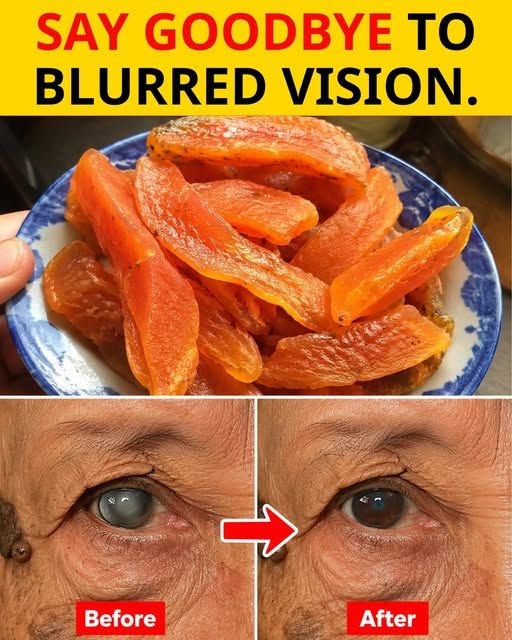
That headline makes a strong medical claim that isn’t supported by evidence. No natural fruit has been proven to quickly reverse cataracts or make cloudy vision “razor sharp” again. Cloudy vision can have several causes, including cataracts, and treatment depends on the cause.
A safer, SEO-friendly version would be:
Meta Description: Can fruit improve cloudy eyesight? Learn which fruits and nutrients support eye health, what they can and cannot do, and when cloudy vision requires an eye examination.
Can This Natural Fruit Improve Cloudy Eyesight? What You Really Need to Know
Cloudy or blurry vision can be worrying, especially when it gradually interferes with reading, driving, recognizing faces, or seeing clearly at a distance. While eating fruit is an excellent way to obtain vitamins, minerals, fiber, and antioxidants, no fruit has been shown to rapidly clear a cloudy lens or restore vision on its own.
One fruit often discussed for eye health is orange. Oranges and other citrus fruits provide vitamin C, an antioxidant that contributes to normal eye health. Other fruits and vegetables also provide nutrients that support the body and eyes as part of an overall balanced diet.
But there is an important difference between supporting eye health and treating an existing eye disease.
Why Does Vision Become Cloudy?
Cloudy vision can have many possible causes.
One of the most common in older adults is a cataract, which occurs when the normally clear lens inside the eye becomes cloudy. Cataracts can gradually cause blurred or hazy vision, increased sensitivity to light, glare, faded colors, and difficulty seeing at night.
Other causes of blurry or cloudy vision can include dry eyes, refractive errors, glaucoma, retinal conditions, diabetes-related eye disease, certain medications, and other medical problems.
That is why persistent cloudy vision shouldn’t simply be treated with a home remedy.
Can Fruit Prevent or Reverse Cataracts?
A nutritious diet is important for maintaining overall health and may contribute to long-term eye health. Fruits and vegetables provide antioxidants and other nutrients that the body needs.
However, there is no good evidence that eating one particular fruit can dissolve an established cataract or rapidly restore cloudy vision.
If a cataract is responsible for significant vision impairment, an eye-care professional can determine how advanced it is and discuss appropriate treatment.
What About Vitamin C?
Vitamin C is found in many fruits, particularly citrus fruits such as oranges, lemons, grapefruit, and mandarins.
It is an antioxidant and an essential nutrient. Including vitamin-C-rich foods in a balanced diet is a sensible choice.
But taking extra vitamin C—or eating large quantities of citrus fruit—should not be presented as a substitute for professional treatment of cataracts or other eye diseases.
Other Foods That Support Eye Health
Instead of looking for one “miracle” fruit, focus on variety.
A healthy eating pattern can include:
- Oranges and other citrus fruits
- Berries
- Kiwi
- Leafy green vegetables
- Carrots and other colorful vegetables
- Eggs
- Fish
- Nuts and seeds
- Beans and lentils
- Whole grains
These foods provide different nutrients rather than relying on a single food to solve a complex eye problem.
When Should Cloudy Vision Be Checked?
Make an appointment with an optometrist or ophthalmologist if cloudy or blurry vision persists, gradually worsens, or begins affecting daily activities.
Seek urgent medical attention for sudden vision loss or sudden major changes in vision, especially when accompanied by severe eye pain, flashes of light, a sudden increase in floaters, a curtain-like shadow, severe headache, weakness, or difficulty speaking.
The Bottom Line
Fruit is an important part of a healthy diet, but there is no natural fruit proven to rapidly clear cloudy eyesight or replace cataract surgery when surgery is medically necessary.
If your vision has become cloudy, the most useful first step is to determine why. Once the cause is identified, an eye-care professional can explain which treatment—or monitoring—is appropriate.