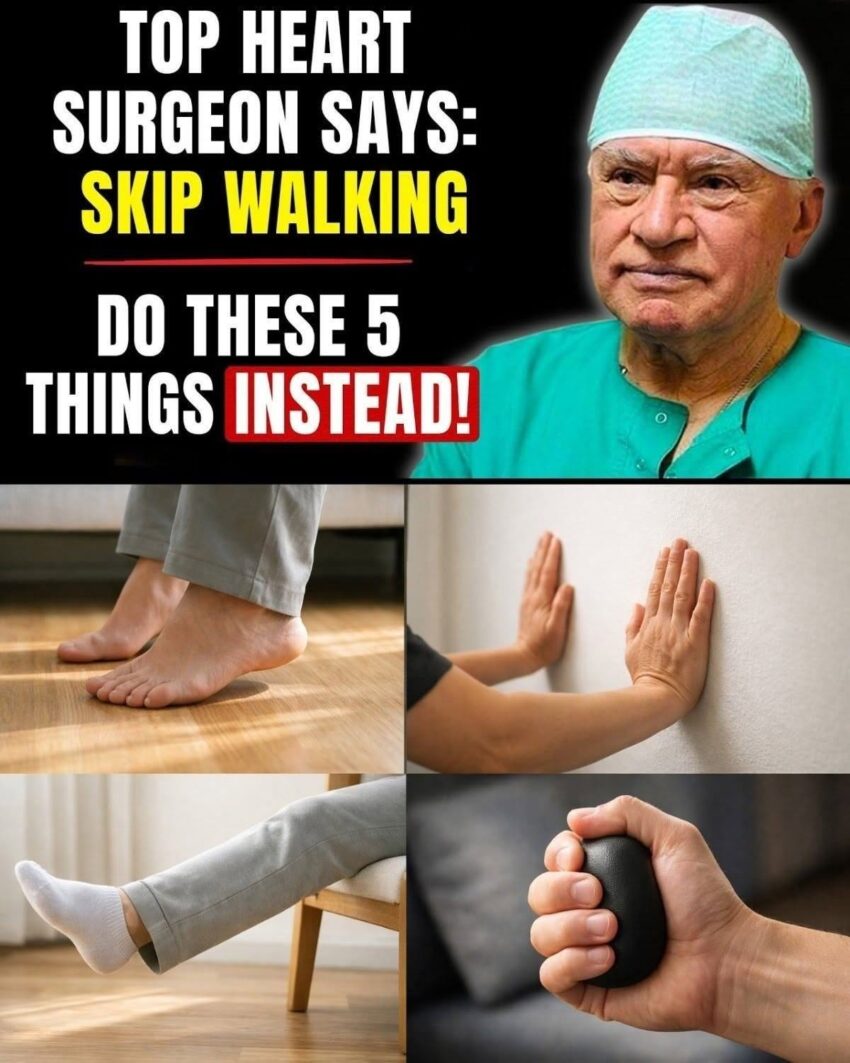
Discover 5 simple exercises for adults over 60 that can support muscle strength, balance, flexibility, mobility and independence. Learn how to safely add strength and balance exercises to your routine.
As we get older, staying active becomes more important—not less. Walking is an excellent form of exercise, but after 60, a well-rounded fitness routine should also include exercises that challenge the muscles, improve balance and make everyday movements easier.
You do not need an expensive gym membership or complicated equipment. Many effective exercises can be performed at home using a sturdy chair, a wall or your own body weight.
The key is to start slowly, focus on good form and gradually build up your strength.
Why Exercise Matters More After 60
Age-related muscle loss can make everyday activities such as climbing stairs, getting out of a chair, carrying groceries or getting up from the floor more difficult.
Regular physical activity can help older adults maintain strength and mobility. Balance-focused exercise is also particularly useful because maintaining good balance can help reduce the risk of falls.
The CDC recommends that older adults include aerobic activity, muscle-strengthening activity and balance activities as part of their weekly routine.
That means you don’t necessarily have to choose between walking and strength exercises. The best routine often combines both.
1. Chair Squats
Chair squats are one of the simplest ways to work the muscles used for standing, sitting and climbing stairs.
How to do them:
- Place a sturdy chair behind you.
- Stand with your feet about shoulder-width apart.
- Slowly bend your knees and push your hips backward.
- Lower yourself toward the chair with control.
- Lightly touch the chair with your hips.
- Push through your feet to stand again.
Keep your chest lifted and avoid dropping quickly into the chair.
Why they’re useful
Chair squats primarily work the thighs, hips and glute muscles. Stronger lower-body muscles can make everyday movements easier.
If regular chair squats are difficult, use your hands lightly on the chair or another stable support.
2. Wall Push-Ups
Traditional push-ups can be challenging, especially for beginners. Wall push-ups provide a gentler alternative.
How to do them:
- Stand facing a wall.
- Place your palms against the wall around chest height.
- Take a small step backward.
- Slowly bend your elbows and bring your chest toward the wall.
- Push yourself back to the starting position.
Keep your body relatively straight throughout the movement.
Benefits
Wall push-ups work the chest, shoulders and arms while requiring less load than floor push-ups.
As your strength improves, you can gradually increase the number of repetitions or move to a slightly more challenging variation.
3. Resistance-Band Rows
Resistance bands are inexpensive, lightweight and useful for home workouts.
Rows can help strengthen the muscles of the upper back and arms.
How to do them:
- Sit or stand with good posture.
- Hold the resistance band securely.
- Pull the band toward your body.
- Keep your elbows close to your sides.
- Gently squeeze your shoulder blades together.
- Slowly return to the starting position.
Avoid jerking the band or using excessive resistance.
Why they’re important
Strong back and shoulder muscles can support posture and make movements such as pulling, carrying and lifting easier.
If you have shoulder problems, use a lighter resistance and stop if the movement causes pain.
4. Sit-to-Stand Exercise
This simple exercise closely resembles one of the most common movements we perform every day: getting up from a chair.
How to do it:
- Sit near the front of a sturdy chair.
- Place both feet firmly on the floor.
- Lean slightly forward.
- Push through your feet and stand up.
- Pause briefly.
- Slowly lower yourself back into the chair.
Try not to drop quickly onto the seat.
Why it’s valuable
The sit-to-stand movement works several lower-body muscles and can help you practice controlled movement.
If standing without using your hands is too difficult, use the armrests or another stable support while building strength.
5. Heel-to-Toe Balance Practice
Balance exercises are especially valuable as we age.
For safety, perform this exercise next to a sturdy countertop, wall or other stable support.
How to do it:
- Stand upright while holding a stable surface if needed.
- Place one foot directly in front of the other.
- Slowly shift your weight forward.
- Take a few controlled steps.
- Keep one hand close to your support throughout the exercise.
Do not perform balance exercises on slippery surfaces or when you feel dizzy.
Why balance matters
Good balance helps with everyday activities such as walking around the house, stepping over objects and changing direction.
If your balance is poor, have someone nearby the first few times you practice.
How Often Should You Do These Exercises?
You don’t need to spend hours exercising.
A beginner can start with a small number of repetitions and gradually increase the workload as strength improves.
For example:
- Chair squats: 8–12 repetitions
- Wall push-ups: 8–12 repetitions
- Resistance-band rows: 8–12 repetitions
- Sit-to-stands: 8–12 repetitions
- Balance practice: 10–30 seconds at a time
The exact amount should be adjusted according to your fitness level and medical situation.
Strength exercises are generally recommended at least twice per week for older adults, while balance activities can be incorporated regularly.
What About Walking?
Despite the headline, there is no need to stop walking.
Walking can be an excellent aerobic activity and may be easier to maintain consistently than many other forms of exercise.
The bigger lesson is that walking alone may not address every aspect of fitness.
A balanced routine can include:
Walking + strength training + balance exercises + flexibility work
This combination can help you work on several different aspects of physical fitness rather than focusing on just one.
Safety Tips for Adults Over 60
Before starting a new exercise program, consider your current health and fitness level.
Start gently and increase the intensity gradually.
Keep these precautions in mind:
- Use a sturdy chair or support rather than an unstable piece of furniture.
- Wear comfortable shoes with good traction.
- Exercise on a clear, non-slip surface.
- Keep movements slow and controlled.
- Don’t hold your breath during strength exercises.
- Stop if you experience significant pain, dizziness or unusual shortness of breath.
- If you have a chronic health condition, recent surgery, significant joint problems or a history of falls, speak with your healthcare professional before starting a new exercise program.
The Bottom Line
Turning 60 doesn’t mean you have to slow down. In fact, maintaining an active lifestyle can become even more important as you age.
Walking remains a great choice, but adding simple strength and balance exercises can make your routine more complete.
Chair squats, wall push-ups, resistance-band rows, sit-to-stands and balance exercises can all be adapted to different fitness levels.
Start small, stay consistent and focus on quality rather than speed.
Your goal isn’t to exercise like you’re 20 again. The goal is to build the strength, balance and confidence you need to keep doing the things you enjoy for years to come.