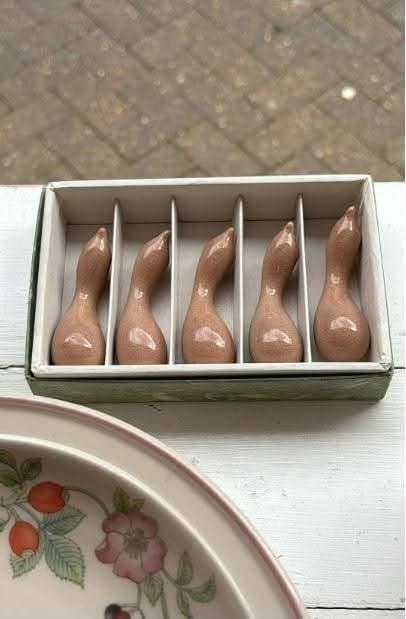
Yes — but from that description alone, I’d keep the identification tentative. The flat base, ceramic/pottery construction, light weight, solid feel, and especially the lack of obvious holes are useful clues.
My first thoughts would be:
- A decorative ceramic object or small vessel rather than a functional planter, because you found no drainage/filling holes.
- A pottery finial or ornamental piece — some decorative ceramic pieces are shaped like bulbs or knobs and simply stand on a flat base.
- A small vintage decorative vase/bud vase whose opening may be hidden by the shape or positioned elsewhere.
- A ceramic garden ornament or plant-related accessory is also possible. Pottery flower-pot accessories and stands can have surprisingly unusual shapes; museum collections contain many purpose-specific ceramic pieces. (British Museum)
- If the shape resembles a bulb, onion, pear, or elongated teardrop, it could potentially be an old decorative or specialist pottery item rather than ordinary household crockery.
The “not hollow” detail is particularly important. That makes things such as a conventional vase, bottle, or water container much less likely. A flat base also suggests it was designed to sit upright, rather than being a loose component that was attached somewhere.
One thing would make this much easier
If you have a photo, please upload it — ideally showing the object from the front, side, top, and bottom. The shape, glaze, seams, openings, and any marks on the base could make the difference between several completely different identifications.
If you upload it, I can try to identify what it is, what it was used for, approximate age, and whether it looks vintage/collectible.