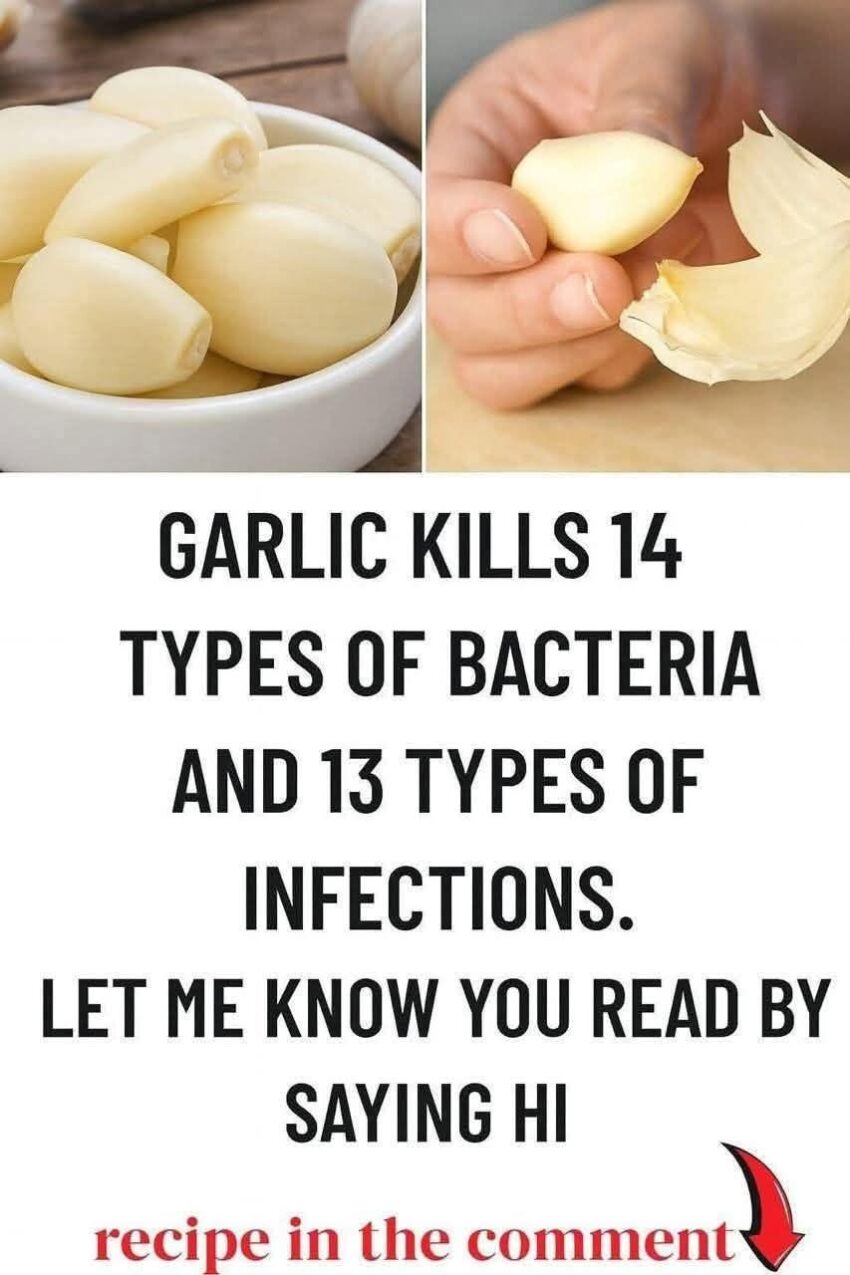
Garlic contains powerful sulfur compounds such as allicin that have demonstrated antimicrobial activity in laboratory research. Learn what garlic can—and cannot—do for infections and how to use it safely.
Garlic has been used in traditional medicine for centuries, long before modern antibiotics became available. Today, this pungent kitchen staple continues to attract scientific interest because it contains several sulfur-containing compounds that may have antimicrobial properties.
One of the most well-known compounds is allicin, which forms when fresh garlic is crushed or chopped. Laboratory research has found that allicin can act against a variety of microorganisms, including certain bacteria and fungi.
But there is an important distinction: garlic is a food with potentially beneficial compounds, not a substitute for medically prescribed antibiotics.
What Makes Garlic Interesting?
The special chemistry of garlic begins when its cells are damaged.
Whole garlic contains a compound called alliin and an enzyme called alliinase. When garlic is crushed or chopped, these substances interact and produce allicin.
Allicin is responsible for much of the characteristic smell associated with freshly crushed garlic and has been extensively studied for antimicrobial activity.
Research suggests that allicin can interact with important proteins and enzymes in microorganisms, potentially interfering with processes they need to survive.
Garlic and Bacteria
Laboratory studies have demonstrated that allicin can inhibit a range of Gram-positive and Gram-negative bacteria.
Researchers have investigated garlic-derived compounds against organisms including certain strains of E. coli, Staphylococcus, Salmonella, and other bacteria.
Some studies have also examined garlic compounds in relation to bacterial biofilms. Biofilms are protective communities that bacteria can form on surfaces, making some infections more difficult to manage.
However, laboratory activity does not automatically mean that eating garlic will cure an infection in a person. The concentration, preparation, absorption, and location of an infection all matter.
Garlic May Also Have Antifungal Activity
Garlic’s antimicrobial potential isn’t limited to bacteria.
Allicin has demonstrated antifungal activity in laboratory research, including activity against Candida albicans. Researchers continue to investigate whether garlic-derived compounds could have useful applications alongside conventional treatments.
Again, these findings should not be interpreted as proof that eating raw garlic can cure a fungal infection.
Does Garlic Really Work Like an Antibiotic?
This is where viral health claims often go too far.
Calling garlic a “natural antibiotic” can be misleading.
Prescription antibiotics are specific medicines that have undergone testing for particular bacterial infections, doses, safety, effectiveness, and side effects.
Garlic contains compounds with antimicrobial activity, but that does not make garlic equivalent to an antibiotic prescription.
If you have a serious bacterial infection, replacing prescribed treatment with garlic could allow the infection to worsen.
Think of garlic as a nutritious food with interesting biological compounds—not as a replacement for professional medical treatment.
How to Include Garlic in Your Diet
For most people, garlic can simply be incorporated into normal meals.
You can add it to:
- Soups
- Vegetable dishes
- Stir-fries
- Sauces
- Roasted vegetables
- Beans and lentils
- Meat and poultry dishes
- Homemade salad dressings
- Pasta and rice dishes
Freshly chopped or crushed garlic is particularly interesting from a chemistry perspective because crushing the cloves allows the enzymatic reaction that produces allicin to occur.
There is no need to consume large quantities to obtain the benefits of garlic as a food.
Raw Garlic vs. Cooked Garlic
Raw garlic tends to have a much stronger flavor and can be harder on the stomach for some people.
It may cause:
- Heartburn
- Stomach discomfort
- Nausea
- Gas
- Strong breath and body odor
The amount and preparation also influence the compounds present in garlic.
Rather than treating raw garlic like a medicine, a practical approach is to use it as part of a varied diet.
Can Garlic Prevent Colds and Infections?
Garlic is frequently promoted as an immune booster.
However, evidence in humans is not strong enough to claim that garlic prevents or treats infections such as colds or influenza. The U.S. National Center for Complementary and Integrative Health notes that research on garlic for immune function is limited, with only a small number of studies addressing this question.
So while garlic can be part of a healthy diet, it shouldn’t be presented as a guaranteed infection-prevention remedy.
Garlic and Your Heart
Garlic has also been studied for cardiovascular health.
According to the National Center for Complementary and Integrative Health, garlic supplements may produce a small reduction in total cholesterol and LDL cholesterol in people with high cholesterol. Evidence also suggests a possible small reduction in blood pressure among people with hypertension.
These effects are different from garlic’s antimicrobial properties and should not be exaggerated.
Important Safety Precautions
More garlic is not necessarily better.
Garlic can cause digestive symptoms, particularly when consumed in large amounts or in raw form.
Garlic supplements also deserve extra caution because they may increase bleeding risk. This is particularly important for people taking anticoagulants or aspirin or those preparing for surgery.
People taking regular medications should discuss garlic supplements with a healthcare professional because herbal products can interact with medicines.
Never Put Raw Garlic Directly on a Wound
A common internet remedy involves applying raw garlic directly to the skin, wounds, or infections.
This is not recommended.
The NCCIH warns that fresh raw garlic applied to the skin can cause severe irritation and chemical burns.
Garlic belongs in your food—not as a substitute for appropriate wound care.
What About Garlic During Pregnancy?
Garlic used as an ordinary food ingredient is different from taking concentrated garlic supplements.
The NCCIH notes that garlic may not be safe during pregnancy or breastfeeding when taken orally in amounts greater than those normally found in food.
Anyone who is pregnant, breastfeeding, preparing for surgery, or taking medications should discuss concentrated garlic supplements with a healthcare professional.
When You Should See a Doctor
Do not rely on garlic alone if you may have a serious infection.
Seek medical attention for symptoms such as:
- High or persistent fever
- Difficulty breathing
- Severe weakness
- Confusion
- Severe or worsening pain
- Rapidly spreading redness or swelling
- Pus from a wound
- Severe dehydration
- Persistent vomiting
- Symptoms that continue to worsen
Some infections require antibiotics, antifungal medicines, antivirals, drainage, or other specific treatment.
The Bottom Line
Garlic is much more than a flavoring ingredient. Its sulfur-containing compounds—particularly allicin—have demonstrated interesting antimicrobial effects in laboratory research.
But the phrase “garlic is a natural antibiotic” should be used carefully.
Garlic can be a valuable part of a balanced diet and has been studied for several potential health effects. However, it should not replace prescribed antibiotics or medical treatment for an infection.
The smartest approach is simple: enjoy garlic in your meals, understand what the research actually shows, and seek appropriate medical care when an infection may be serious.