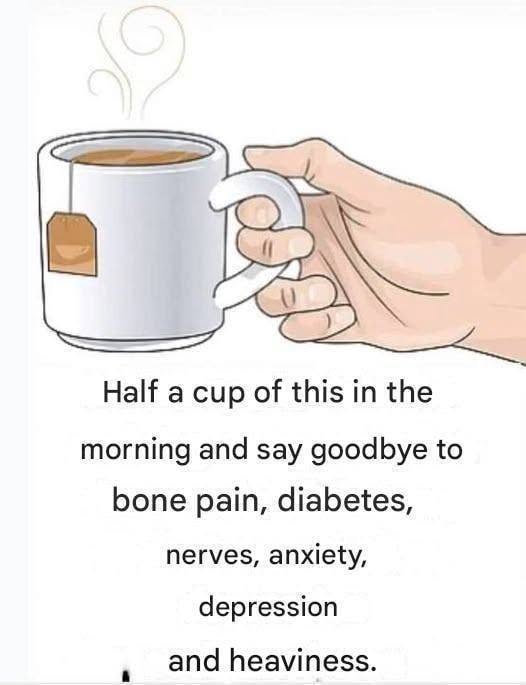
Can half a cup of a morning drink really relieve bone pain, diabetes, nerve problems, anxiety, depression, and heaviness? Learn what these claims mean, what may actually help, and when symptoms require medical care.
Half a Cup of This in the Morning? What It Can—and Cannot—Really Do
Claims that a simple morning drink can make you “say goodbye” to bone pain, diabetes, nerve problems, anxiety, depression, and feelings of heaviness are extremely tempting. But there is no single drink proven to cure all of these conditions.
The important question is: What exactly is in that half cup?
Depending on the ingredient, a morning beverage may provide nutrients, hydration, antioxidants, or other potentially useful compounds. But those benefits should not be confused with treating or curing a medical condition.
Bone pain
Bone or joint pain can have many causes, including injury, arthritis, vitamin deficiencies, osteoporosis, or other medical problems. A drink alone cannot reliably determine or treat the underlying cause.
Persistent or unexplained bone pain should be discussed with a healthcare professional.
Diabetes
No food or drink should be promoted as a replacement for diabetes treatment. Some foods may have a smaller effect on blood glucose than others, but people with diabetes still need to monitor their blood sugar and follow their individualized treatment plan.
If you are taking glucose-lowering medication, adding a concentrated herbal or food preparation could potentially affect your blood sugar.
Nerve symptoms
Tingling, burning, numbness, or weakness can have several causes. Diabetes is one possibility, but nutritional deficiencies, nerve compression, medication effects, and other conditions can also contribute.
Rather than trying to mask these symptoms with a home remedy, finding the cause is important.
Anxiety and depression
Certain nutritious foods can support overall health, but there is no half-cup remedy that reliably cures anxiety or depression.
Persistent sadness, loss of interest, severe anxiety, sleep changes, or difficulty functioning deserve proper medical or mental-health support.
What about “heaviness”?
A feeling of heaviness can mean different things depending on where and how it occurs. General tiredness is different from heaviness or pressure in the chest.
Chest heaviness, pressure, or discomfort—especially with shortness of breath, sweating, nausea, dizziness, or pain spreading to the arm, back, neck, or jaw—should be treated as an emergency.
The Bottom Line
A healthy morning drink can certainly be part of a balanced diet, but “half a cup cures diabetes, bone pain, nerve problems, anxiety, and depression” is an unsupported claim.
If you tell me what the “half cup” ingredient is—for example, a particular seed, juice, herb, or drink—I can explain its actual evidence-based benefits, possible risks, and the safest way to use it.