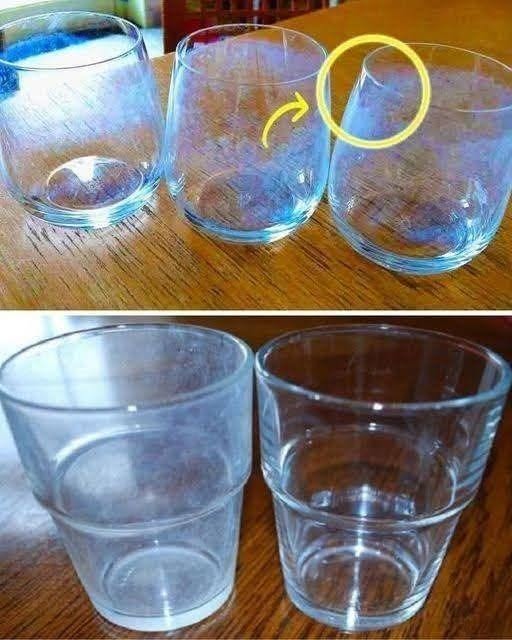
Learn how to remove the cloudy white film from drinking glasses and restore their shine. Find out whether it’s limescale or permanent glass damage and which cleaning tricks work best.
Here’s How to Remove White Patina From Glasses and Make Them Shine With a Simple Trick
Have your drinking glasses developed a cloudy, whitish film that doesn’t disappear after washing?
You’re not alone. This is particularly common when glasses are repeatedly washed in a dishwasher or exposed to hard water.
The good news is that the cloudy coating is often mineral buildup—usually limescale—and can sometimes be removed with a simple acidic cleaning solution.
But there’s an important distinction: not every cloudy glass can be restored. Sometimes the glass itself has been permanently etched by repeated dishwasher washing.
Here’s how to tell the difference and what you can safely try.
What Causes the White Film on Glasses?
That white or chalky coating is often caused by minerals in hard water, especially calcium and magnesium.
When water evaporates, these minerals can remain behind on the surface.
You may notice:
- White spots
- Cloudy patches
- A chalky film
- Rings or streaks
- Reduced shine
Dishwasher detergent residue can sometimes contribute as well.
The Simple Vinegar Trick
White vinegar can help dissolve mineral deposits because its acidity reacts with limescale.
You’ll Need:
- White vinegar
- Warm water
- A soft microfiber cloth or sponge
- A clean towel
Step 1: Prepare the Solution
Mix equal parts white vinegar and warm water in a bowl.
For heavier mineral deposits, you can use undiluted white vinegar for a short contact time, provided the glass is suitable for this type of cleaning.
Step 2: Soak or Wipe the Glass
For individual drinking glasses, place them in the solution for around 10–15 minutes.
Alternatively, soak a cloth and wrap it around the cloudy areas.
Don’t leave delicate or decorated glassware soaking indefinitely.
Step 3: Gently Wipe
Use a soft sponge or microfiber cloth to loosen the residue.
Avoid abrasive scrubbers that could scratch the glass.
Step 4: Rinse Thoroughly
Rinse the glass with clean water.
This removes both the loosened minerals and the vinegar.
Step 5: Dry Immediately
Use a clean, lint-free towel to dry the glass.
Allowing water droplets to evaporate on the surface can simply leave another layer of mineral deposits.
The Lemon Trick
If you don’t have white vinegar, lemon juice can also help with light mineral buildup.
Apply fresh lemon juice to the affected area, let it sit briefly, then rinse and dry thoroughly.
Because lemon juice is acidic, it can help dissolve some mineral deposits.
However, vinegar is generally more practical for treating multiple glasses.
What If the Cloudiness Doesn’t Come Off?
This is where many cleaning hacks become misleading.
If you’ve tried an acidic solution and the glass remains permanently cloudy, the problem may not be a removable coating.
It could be glass etching.
Repeated exposure to hot water, alkaline dishwasher detergents, and harsh washing conditions can damage the glass surface over time.
Etching isn’t the same thing as limescale.
Mineral Film
- Often feels slightly chalky.
- May appear as white spots or streaks.
- Can sometimes be dissolved with vinegar or another appropriate descaling product.
- Usually improves after cleaning.
Glass Etching
- Looks permanently cloudy or frosted.
- Doesn’t disappear after descaling.
- Is actually damage to the glass surface.
- Generally cannot be reversed with household cleaners.
Unfortunately, once glass has been significantly etched, no cleaning trick can truly restore the original surface.
Don’t Use Baking Soda and Vinegar Together
You may see recipes recommending baking soda and vinegar mixed together.
Although the bubbling looks impressive, the two substances largely neutralize each other.
If your goal is to dissolve mineral deposits, an acidic cleaner such as vinegar is more useful than immediately neutralizing it with baking soda.
Avoid Abrasive Scrubbing
Don’t attack cloudy glasses with:
- Steel wool
- Rough scouring pads
- Sandpaper
- Abrasive powders
- Aggressive scraping
You could create tiny scratches that make the glass look even worse.
A soft sponge or microfiber cloth is usually enough.
How to Prevent the White Film From Coming Back
Once you’ve cleaned your glasses, prevention is much easier than repeated restoration.
Use the Correct Dishwasher Detergent
Too much detergent isn’t necessarily better.
Follow the manufacturer’s recommended dosage.
Use Rinse Aid
If your dishwasher manufacturer recommends rinse aid, it can help water drain from glassware rather than drying in droplets.
Check Your Water Hardness
Hard water is one of the biggest causes of mineral deposits.
If your dishwasher has a water-softening system, make sure it is correctly adjusted for your local water hardness.
Don’t Overload the Dishwasher
Give water and detergent enough room to circulate around each glass.
Remove Glasses Promptly
Leaving wet dishes sitting in the dishwasher for a long time can allow mineral spots to dry onto the surface.
A Quick Test for Your Glasses
Not sure whether you’re dealing with limescale or permanent etching?
Try the vinegar test on one affected glass.
Apply white vinegar to a small cloudy area and allow it to sit briefly. Rinse and dry.
If the cloudiness noticeably improves, mineral buildup was probably contributing to the problem.
If nothing changes, the glass may be etched rather than simply dirty.
Final Thoughts
That ugly white “patina” on your glasses isn’t necessarily a reason to throw them away.
If you’re dealing with hard-water mineral deposits, white vinegar and a little patience can often make a remarkable difference.
But if the glass has been permanently etched by years of dishwasher use, cleaning products won’t be able to reverse the damage.
The key is knowing the difference:
Limescale can often be cleaned. Etched glass usually cannot.
So before replacing your cloudy glasses, try a gentle vinegar treatment first—you may be surprised by how much shine comes back.