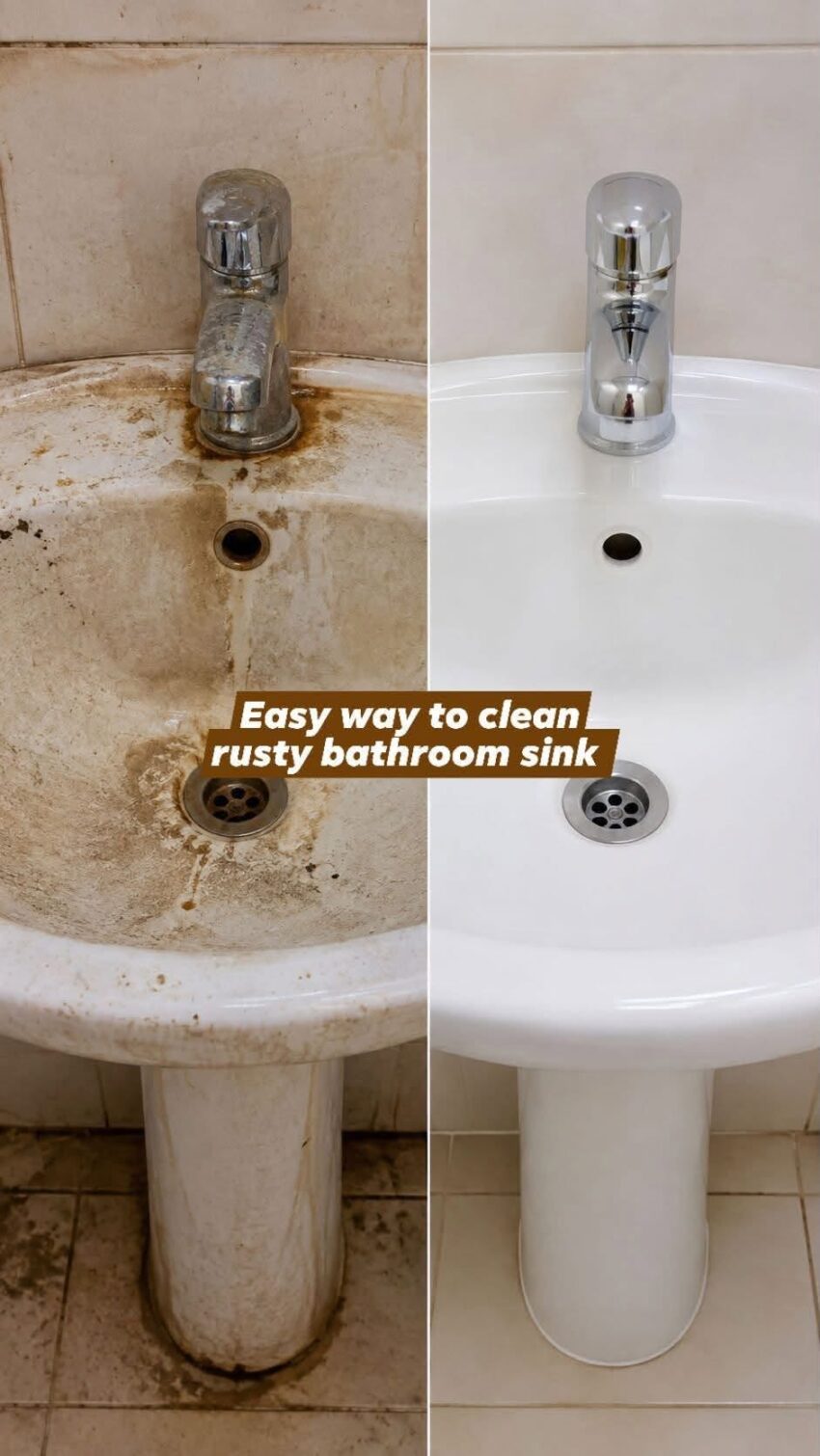
Learn how to clean a rusty bathroom sink safely and effectively using simple household ingredients. Remove surface rust, prevent stains from returning, and restore your sink’s shine.
A rusty bathroom sink can make an otherwise clean bathroom look old and neglected. Those orange and brown stains around the drain, faucet, or basin may seem impossible to remove, but many surface rust stains can be treated with simple household cleaning methods.
The key is to use the right technique for the sink’s material and avoid harsh scrubbing that could scratch the surface.
What Causes Rust Stains in a Bathroom Sink?
Rust usually appears when iron comes into contact with water and oxygen. In bathrooms, rusty stains can come from:
- Hard water containing iron
- Older or corroded plumbing
- Metal fixtures beginning to rust
- Rust particles entering the water supply
- Water that sits around the drain
- Leaking or aging faucets
Sometimes the sink itself isn’t rusting—the orange stain is simply being deposited by the water.
What You’ll Need
For a simple cleaning method, gather:
- Baking soda
- White vinegar or lemon juice
- Soft sponge or microfiber cloth
- Old toothbrush
- Dish soap
- Clean water
- Rubber gloves
For stubborn rust, a commercial rust remover specifically labeled as safe for your sink material may work better.
Method 1: Baking Soda and Lemon Juice
This is a gentle option for light surface staining.
Step 1: Rinse the Sink
Remove toothpaste, soap residue, hair, and other debris. Rinse the basin with warm water.
Step 2: Make a Paste
Mix baking soda with a small amount of water until it forms a thick paste.
For extra cleaning power, you can use lemon juice instead of some of the water.
Step 3: Apply to the Rust
Spread the paste over the rusty areas.
Let it sit for about 10–15 minutes.
Step 4: Gently Scrub
Use a soft sponge or cloth to work over the stain.
For areas around the drain or faucet, use an old toothbrush to reach small spaces.
Step 5: Rinse Thoroughly
Rinse everything away with clean water and dry the sink with a microfiber cloth.
Repeat if necessary rather than aggressively scrubbing.
Method 2: Vinegar for Light Rust Stains
White vinegar can help loosen mineral deposits and some surface staining.
Soak a cloth or paper towel with white vinegar and place it over the affected area for several minutes.
Remove the cloth, gently wipe the stain, and rinse the sink thoroughly.
Don’t leave acidic cleaners sitting on delicate surfaces for extended periods.
Method 3: Use a Rust Remover for Stubborn Stains
If household methods aren’t enough, a dedicated rust-removing product may be the better option.
Before applying anything, check the product label and confirm that it is suitable for your sink material.
Follow the manufacturer’s instructions carefully, use gloves, and provide good ventilation.
Never mix different cleaning products unless the manufacturer specifically says they are compatible.
Be Careful With Porcelain and Ceramic Sinks
Porcelain and ceramic sinks can often tolerate gentle cleaning, but abrasive powders, steel wool, and aggressive scrubbing can scratch or dull the surface.
Use a soft sponge whenever possible.
For an older or delicate sink, test your cleaning method on a small inconspicuous area first.
What About Stainless Steel Sinks?
If your bathroom sink is stainless steel, avoid steel wool and harsh abrasive cleaners that can scratch the finish.
Clean in the direction of the existing grain rather than scrubbing randomly across it.
After cleaning, rinse thoroughly and dry the surface to reduce water spots.
What NOT to Use
Avoid combining cleaning chemicals.
In particular, never mix bleach with vinegar or other acids, because dangerous chlorine gas can be produced.
Also avoid:
- Steel wool on delicate surfaces
- Metal scrapers
- Aggressive abrasive pads
- Unknown chemical combinations
- Leaving strong acids on the sink for long periods
More cleaning power isn’t always better. The goal is to remove the stain without damaging the finish.
How to Prevent Rust From Coming Back
Once you’ve removed the stain, prevention is the next step.
Keep the Sink Dry
After using the sink, wipe away standing water whenever practical.
Fix Leaky Faucets
A constantly dripping faucet keeps the area wet and may contribute to mineral and rust staining.
Check Your Water
If orange staining keeps returning quickly, the problem may be related to iron in your water or aging plumbing.
A water-quality test can help identify the underlying issue.
Clean Regularly
A quick weekly cleaning can prevent mineral deposits and stains from becoming difficult to remove.
A Simple Weekly Routine
You don’t need to deep-clean your sink every day.
Once a week:
- Rinse the basin.
- Apply a small amount of mild dish soap.
- Wipe with a soft sponge.
- Rinse thoroughly.
- Dry with a clean microfiber cloth.
- Check around the drain and faucet for new discoloration.
Catching small stains early is usually much easier than dealing with years of buildup.
Final Thoughts
A rusty bathroom sink doesn’t necessarily mean you need to replace the fixture. If the discoloration is only surface staining, gentle cleaning with appropriate household ingredients or a sink-safe rust remover can often make a dramatic difference.
Start with the mildest method, avoid abrasive tools, and always consider the material of your sink before choosing a cleaner.
And if rust keeps returning despite regular cleaning, don’t just keep scrubbing—investigate the water or plumbing source, because treating the underlying problem is the best way to keep your sink looking clean.