Learn how to clean tarnished silverware at home using simple household methods. Remove dullness and dark tarnish while protecting your silver, silver-plated, and stainless-steel pieces.
Silverware can lose its shine over time. Instead of looking bright and polished, forks, spoons, knives, and serving pieces may develop a dark, gray, or yellowish layer called tarnish.
The good news is that many silver pieces can be cleaned at home with simple supplies. The key is to identify what your silverware is made from and avoid methods that can scratch or remove a thin silver-plated surface.
What Causes Silverware to Tarnish?
Real silver reacts with substances in the environment, particularly sulfur-containing compounds in the air. This creates silver sulfide, which appears as a dark or dull coating.
Tarnish can develop faster when silverware is exposed to:
- Humidity
- Air pollution
- Certain foods
- Rubber materials
- Chemicals
- Long periods of storage
Tarnish doesn’t necessarily mean that your silverware is damaged. In many cases, the surface can be restored with careful cleaning.
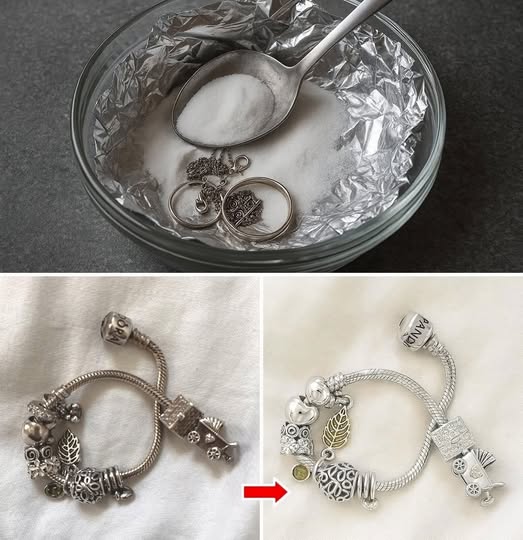
Method 1: Baking Soda and Aluminum Foil
This is one of the most popular home methods for cleaning tarnished silver.
You’ll Need:
- Aluminum foil
- A bowl or baking dish
- Baking soda
- Very hot water
- A soft cloth
How to Do It:
- Line the bottom of a heat-safe container with aluminum foil.
- Place the tarnished silverware inside so it touches the foil.
- Sprinkle a small amount of baking soda over the pieces.
- Carefully pour in hot water until the silverware is covered.
- Let it sit for several minutes.
- Remove the pieces carefully and rinse them with clean water.
- Dry immediately with a soft cloth.
The aluminum-and-baking-soda method can help transfer sulfur compounds away from silver through an electrochemical reaction.
Important: Don’t use this method automatically on antique, intentionally oxidized, engraved, glued, or delicate pieces. A professional conservator may be safer for valuable items.
Method 2: Mild Dish Soap
For silverware that is only slightly dull or dirty, start with the gentlest option.
Add a few drops of mild dish soap to warm water and gently wash the silverware with a soft sponge or cloth.
Rinse thoroughly and dry immediately.
This won’t remove heavy tarnish, but it can remove grease, food residue, and everyday grime without aggressive polishing.
Method 3: Commercial Silver Polish
For heavily tarnished silver, a polish specifically designed for silver is often the safest practical option.
Apply a small amount according to the product instructions, then gently polish with an appropriate soft cloth.
Avoid using excessive pressure. Silver-plated objects have only a thin layer of silver over another metal, so repeated aggressive polishing can eventually wear through the plating.
Method 4: Baking Soda Paste
For small areas of tarnish, you can make a mild paste using baking soda and a little water.
Apply it gently with a soft cloth, then rinse thoroughly and dry.
However, baking soda is mildly abrasive. Don’t scrub hard, and avoid making this your everyday cleaning method—especially for silver-plated or highly polished pieces.
Method 5: Vinegar — Use Caution
Vinegar is often recommended online for cleaning household items, but acidic cleaners aren’t ideal for every type of silverware.
If you’re dealing with valuable, antique, plated, or decorative silver, it’s better to avoid experimenting with vinegar unless the manufacturer specifically recommends it.
A silver-specific cleaner is generally a better choice for delicate pieces.
What About Toothpaste?
Toothpaste is another popular DIY silver-cleaning trick, but it’s not my first recommendation.
Many toothpastes contain abrasive ingredients designed for cleaning teeth. Those abrasives can leave fine scratches on polished metal and may damage silver plating.
For valuable silverware, choose a proper silver polish instead.
Don’t Use Steel Wool or Rough Scrubbers
Never attack tarnish with steel wool, scouring pads, or rough abrasive materials.
They can create scratches that are much harder to remove than tarnish.
Use a soft microfiber cloth or a cloth specifically designed for silver polishing.
How to Clean Silver-Plated Silverware
Silver-plated pieces require extra care.
Unlike sterling silver, silver-plated items have only a thin layer of silver over another metal. Aggressive polishing can gradually remove that layer.
For silver-plated silverware:
- Start with mild dish soap and warm water.
- Dry the pieces completely.
- If tarnish remains, use a silver polish labeled as suitable for silver plate.
- Polish gently rather than scrubbing.
- Stop if you begin seeing a different-colored metal underneath.
How to Keep Silverware From Tarnishing Again
Once your silverware is clean, proper storage can make a big difference.
Keep silver pieces:
- Completely dry before storage
- Away from rubber and certain chemically treated materials
- In a dry environment
- Wrapped in an appropriate anti-tarnish cloth or stored in an anti-tarnish bag when possible
- Away from strong household chemicals
Regularly using and cleaning silverware can also prevent heavy buildup from being ignored for long periods.
A Simple Routine for Shiny Silverware
For everyday maintenance, don’t wait until the silverware becomes completely black.
Wash it gently, rinse away food residue, dry it immediately, and give it a light polish when you notice the surface becoming dull.
For valuable or antique silver, avoid aggressive DIY treatments and consider having the piece professionally assessed before cleaning.
Final Tip
The goal isn’t to scrub the tarnish away as hard as possible. Gentle cleaning is usually better than aggressive polishing, especially when you’re dealing with silver-plated or valuable pieces.
With the right method, tarnished silverware can often regain much of its original shine and look beautiful again without damaging the surface.