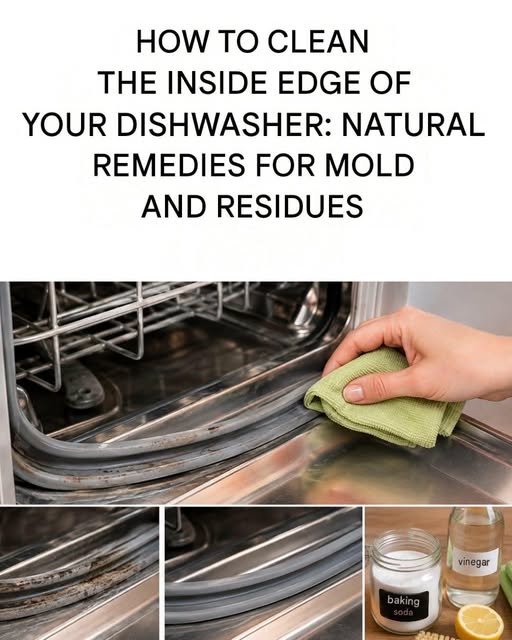
Learn how to naturally clean the hidden edges, corners, and rubber gasket of your dishwasher. Remove food residue, grease, grime, and unpleasant odors with simple household cleaning methods.
Your dishwasher may look sparkling clean from the outside, but there is one area that often gets overlooked: the inside edge of the dishwasher door, corners, and rubber gasket.
These narrow areas don’t always receive enough water pressure during a normal wash cycle. Over time, they can collect food particles, grease, soap residue, dirt, and moisture. Because the gasket stays damp, it can also develop an unpleasant smell or dark buildup.
Fortunately, you don’t need expensive specialty cleaners to give these areas a thorough cleaning. A few simple household supplies and a little attention can make a noticeable difference.
Why Does the Dishwasher Door Edge Get So Dirty?
Every time you run the dishwasher, tiny amounts of food residue, grease, detergent, and dirty water can reach the edges of the door.
The problem is that these areas are often protected from the strongest spray of the dishwasher.
Common trouble spots include:
- The rubber door gasket
- The bottom inside edge of the door
- Corners around the door frame
- The area underneath the gasket
- The hinge area
- The narrow gap between the door and frame
- The bottom lip of the dishwasher door
Over weeks or months, this residue can become sticky and difficult to remove.
What You’ll Need
You don’t need a complicated collection of products.
Gather:
- Warm water
- Mild dish soap
- White vinegar
- Baking soda
- An old soft toothbrush
- Microfiber cloths
- A small bowl
- Cotton swabs for narrow areas
- A soft sponge
Important: Always check your dishwasher manufacturer’s care instructions before using vinegar or any other cleaner. Some manufacturers advise against repeated exposure of certain rubber or specialty components to acidic cleaners.
Step 1: Empty the Dishwasher
Start by removing all dishes, racks, and removable items that may get in your way.
This gives you better access to the entire door edge and gasket.
If there is standing water or obvious food debris inside the dishwasher, remove it before cleaning.
Step 2: Wipe Away Loose Food and Dirt
Use a dry or slightly damp microfiber cloth to remove loose crumbs and food particles.
Pay particular attention to the bottom corners.
You may be surprised by how much debris can accumulate in areas that are difficult to see.
For stubborn pieces, use a soft toothbrush rather than a sharp object.
Avoid knives, metal scrapers, or other sharp tools, which can damage the rubber seal or scratch the dishwasher surface.
Step 3: Clean the Rubber Gasket
The rubber gasket is one of the most important areas to clean.
Dip a microfiber cloth into warm water mixed with a small amount of mild dish soap.
Wring out the cloth so it is damp rather than dripping wet.
Gently wipe along the entire gasket.
Don’t simply clean the visible front surface. Carefully wipe the folds and grooves where dirt can hide.
For stubborn grime, use a soft toothbrush.
Move slowly around the entire perimeter of the door.
Pay Special Attention to the Corners
Corners are easy to miss because they are narrow and difficult to reach.
Use a soft toothbrush or cotton swab to work around:
- Upper corners
- Lower corners
- Hinge areas
- Gasket folds
- Small grooves
After cleaning, wipe the area with a clean damp cloth to remove soap residue.
Step 4: Make a Gentle Baking Soda Paste
For stubborn food residue or greasy buildup on suitable hard surfaces, baking soda can provide mild scrubbing action.
Mix:
2–3 tablespoons baking soda + a small amount of water
until you have a thick paste.
Apply a small amount to dirty areas of the dishwasher door edge.
Let it sit for several minutes, then gently scrub with a soft toothbrush or sponge.
Don’t use aggressive pressure.
The goal is to loosen the residue rather than scratch the surface.
Avoid using abrasive powders or rough scrubbers on stainless-steel surfaces or delicate finishes.
Step 5: Use Vinegar Carefully for Odors and Mineral Residue
White vinegar is commonly used as a household cleaning aid because its acidity can help loosen some mineral deposits and odors.
However, vinegar isn’t appropriate for every dishwasher component or finish.
If your dishwasher manufacturer’s instructions allow it, you can use a small amount of diluted white vinegar on appropriate hard surfaces.
Apply it to a cloth rather than pouring large amounts directly into the dishwasher.
Wipe the affected area and then follow with a clean damp cloth.
Never Mix Vinegar With Bleach
This is extremely important.
Never mix vinegar with chlorine bleach or chlorine-containing cleaners.
The combination can produce dangerous chlorine gas.
When cleaning, use one cleaning product at a time and rinse surfaces appropriately before using another product.
Step 6: Clean the Bottom Edge of the Door
The bottom edge of the dishwasher door is one of the dirtiest hidden areas.
Open the door fully and inspect the lower inside edge.
Look for:
- Greasy film
- Food crumbs
- Sticky residue
- Brown or gray buildup
- Soap deposits
- Water marks
Use a damp microfiber cloth and mild dish soap to loosen the buildup.
For stubborn residue, use your baking soda paste and a soft toothbrush.
Wipe everything clean afterward.
Step 7: Don’t Forget the Door Hinges
The hinges can collect food particles and grease, especially near the bottom of the door.
Use a toothbrush to gently remove visible debris.
Don’t flood the hinge mechanism with water or cleaning solution.
Instead, use a slightly damp cloth or brush and carefully wipe away the loosened dirt.
Step 8: Remove the Cleaning Residue
After cleaning, use a fresh microfiber cloth dampened with clean water.
Wipe the entire area again.
This step is important because leftover soap, baking soda, or cleaning solution can itself attract residue.
Finally, use a dry microfiber cloth to remove excess moisture.
How to Get Rid of Dishwasher Odors
A dirty gasket isn’t always the only source of a bad smell.
Odors can also come from food debris trapped in the filter, spray arms, drain area, or other hidden parts.
If your dishwasher smells unpleasant, check the manufacturer’s instructions for cleaning the filter and drain area.
Removing trapped food particles can make a bigger difference than simply masking the smell.
Let the Dishwasher Dry
After a cleaning cycle, leave the dishwasher door slightly open when practical and safe so moisture can escape.
A consistently damp environment can contribute to unpleasant odors and buildup.
How Often Should You Clean the Dishwasher Gasket?
For a busy household, wiping the gasket and door edge about once a week can help prevent heavy buildup.
A more thorough cleaning can be done whenever you notice:
- Sticky residue
- Visible grime
- Food particles
- A musty smell
- Discoloration
- Greasy buildup
The exact frequency depends on how often you use the dishwasher and how much food residue enters it.
A Simple 10-Minute Dishwasher Door Cleaning Routine
If you don’t have time for a deep clean, try this quick routine:
Minute 1–2
Open the dishwasher and inspect the gasket and door edges.
Minute 3–5
Wipe loose food particles and grease with warm water and mild dish soap.
Minute 6–8
Use a soft toothbrush around corners, folds, and the bottom edge.
Minute 9
Wipe everything with a clean damp microfiber cloth.
Minute 10
Dry the gasket and leave the door open slightly to air-dry when appropriate.
Doing this regularly is much easier than waiting until the buildup becomes thick and difficult to remove.
Mistakes to Avoid
Don’t pour excessive vinegar into the dishwasher
More cleaner does not necessarily mean better cleaning. Follow the manufacturer’s recommendations.
Don’t scrub the gasket aggressively
The rubber seal needs to remain intact and properly positioned.
Don’t use sharp objects
Knives and metal tools can puncture or damage the gasket.
Don’t mix cleaning chemicals
Especially avoid mixing bleach with vinegar, ammonia, or other incompatible cleaners.
Don’t ignore the dishwasher filter
A dirty filter can contribute significantly to food residue and unpleasant odors.
Don’t close a wet dishwasher immediately
Allowing appropriate ventilation can help reduce lingering moisture and odors.
What If the Gasket Has Black Spots?
Dark spots on a dishwasher gasket can have several causes, including accumulated food residue, staining, or microbial growth associated with persistent moisture.
Clean the area thoroughly according to the dishwasher manufacturer’s instructions.
If the gasket remains heavily stained, damaged, cracked, brittle, or persistently foul-smelling after cleaning, it may need replacement.
A damaged gasket can also contribute to leaks.
How to Keep Your Dishwasher Cleaner for Longer
A few habits can make future cleaning much easier.
Scrape Excess Food
You don’t necessarily need to pre-wash every dish, but removing large pieces of food before loading helps prevent debris from accumulating.
Clean the Filter Regularly
Follow your dishwasher’s instructions for removing and cleaning the filter.
Don’t Overload the Dishwasher
Proper loading allows water and detergent to circulate effectively.
Check the Door Edge Weekly
A quick wipe takes only a minute or two.
Keep the Gasket Dry
After cleaning or when practical after use, wipe away excessive moisture from the gasket.
Final Thoughts
The inside edge of your dishwasher may be easy to overlook, but it can become a hidden collection point for food residue, grease, dirt, detergent buildup, and odors.
The simplest approach is regular maintenance: warm water, mild dish soap, a microfiber cloth, and a soft toothbrush can handle much of the everyday grime.
For stubborn residue, a gentle baking soda paste can provide additional cleaning power on appropriate surfaces. Vinegar may help with certain mineral deposits and odors, but it should be used only when compatible with your dishwasher manufacturer’s recommendations.
Most importantly, clean the gasket, corners, bottom door edge, hinges, and filter—not just the visible interior.
A few minutes of regular attention can help keep your dishwasher cleaner, fresher, and working properly for longer.