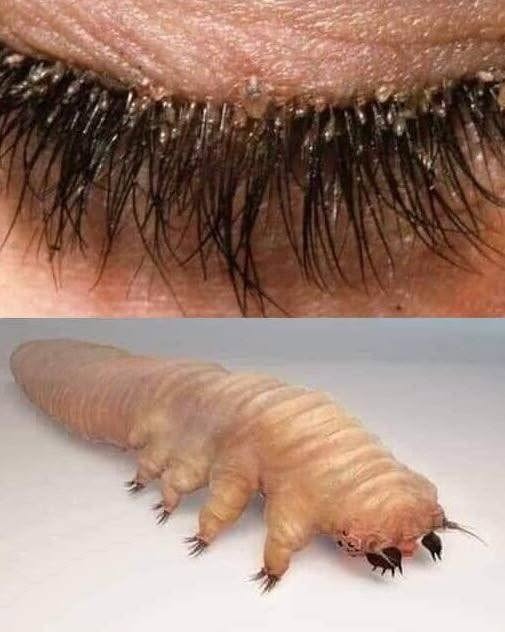
The idea of tiny mites living around your eyelashes may sound alarming, but Demodex mites are actually common microscopic organisms that normally live on human skin and around hair follicles. Most people have them without experiencing any problems.
The concern arises when the number of mites increases and contributes to inflammation around the eyelids. This can lead to a condition known as Demodex blepharitis, which may cause itching, redness, irritation, crusting, and other uncomfortable eye symptoms.
So, how can you tell whether your irritated eyelashes might be related to Demodex?
What Are Eyelash Mites?
“Eyelash mites” usually refers to Demodex folliculorum, one of the two main Demodex species found on humans. These microscopic mites can live inside or around hair follicles, including those associated with the eyelashes.
Another species, Demodex brevis, tends to live deeper around the oil-producing glands associated with hair follicles. Both are microscopic and cannot normally be identified just by looking at your eyelashes.
In normal numbers, Demodex mites generally don’t cause symptoms. Problems are more likely when there is an overgrowth associated with eyelid inflammation.
8 Signs That May Point to Demodex Around the Eyelashes
Having one of these symptoms doesn’t automatically mean you have eyelash mites. Many other eye conditions can cause similar symptoms.
However, several of these signs occurring together may be a reason to have your eyelids examined.
1. Persistent Itchy Eyes
One of the most common symptoms associated with Demodex blepharitis is itching around the eyes.
Some people notice that the itching becomes particularly bothersome in the evening or early morning.
If your eyes repeatedly feel itchy despite avoiding obvious irritants, an eye-care professional can determine whether blepharitis, allergies, dry eye, or another condition is responsible.
2. Crust or “Dandruff” Around the Eyelashes
One of the most recognizable signs of Demodex blepharitis is a waxy, cylindrical buildup around the base of the eyelashes.
This is sometimes called:
- Collarettes
- Cylindrical dandruff
- Lash cuffs
- Cylindrical sleeves
- Lash debris
These formations around the base of the lashes are particularly important because they can help an eye-care professional recognize Demodex-related eyelid inflammation.
3. Red or Inflamed Eyelids
Demodex-related inflammation can make the eyelid margins appear red, irritated, or swollen.
The redness may affect one or both eyes and can occur alongside itching, burning, or crusting.
However, redness is not specific to Demodex. Allergies, dry eye, infections, cosmetics, contact lenses, and other forms of blepharitis can also cause red eyelids.
4. Puffy Eyelids
Swollen or puffy eyelids are another possible sign.
You may notice the puffiness more clearly when you wake up, particularly if you also experience crusting or irritation.
Persistent eyelid swelling should be evaluated rather than automatically attributed to mites.
5. A Gritty or “Something Is in My Eye” Feeling
Some people with Demodex blepharitis describe a foreign-body sensation—as though there is sand, dust, or something stuck in the eye.
You may find yourself blinking frequently or rubbing your eyes because they feel uncomfortable.
6. Burning, Irritation, or Excessive Tearing
Demodex-associated eyelid inflammation can occur alongside dry-eye symptoms.
You may experience:
- Burning
- Watery eyes
- Irritation
- Sensitivity
- Frequent blinking
- General eye discomfort
These symptoms have many possible causes, so they cannot confirm a mite problem by themselves.
7. Eyelashes That Become Sparse or Grow in Odd Directions
Long-standing eyelid inflammation can affect the eyelashes.
Some people may experience eyelash thinning or loss, while others may notice lashes growing in unusual directions.
Lashes growing toward the eye can be particularly irritating because they may repeatedly rub against the surface of the eye.
8. Symptoms That Keep Coming Back
If your eyelid irritation repeatedly returns despite ordinary eyelid care, it may be worth having your eyes examined.
Demodex can be one possible contributor, but recurrent symptoms can also occur with chronic blepharitis, dry eye, meibomian gland dysfunction, allergies, rosacea, or other conditions.
Can You Actually See Eyelash Mites?
Usually, no.
Demodex mites are microscopic. They are far too small to reliably identify with the naked eye.
If you notice tiny flakes around your eyelashes, don’t assume that the flakes themselves are mites. They may instead be the cylindrical debris or “collarettes” associated with Demodex blepharitis.
A microscope or slit-lamp examination is needed to properly evaluate the eyelashes and eyelid margins.
How Doctors Check for Eyelash Mites
An optometrist or ophthalmologist can examine the eyelids using a slit lamp, a specialized microscope that provides a magnified view of the eyelid margins and eyelashes.
The doctor may look for characteristic cylindrical debris around the base of the lashes, along with redness, swelling, abnormal eyelashes, and other signs of eyelid inflammation.
In some situations, eyelashes may be sampled and examined under a microscope to look for Demodex mites.
Importantly, finding Demodex mites alone does not necessarily mean treatment is required. Because these mites are common, doctors consider the symptoms and clinical findings together.
How Are Eyelash Mites Treated?
Treatment depends on whether the mites are actually contributing to symptoms and how severe the eyelid inflammation is.
An eye-care professional may recommend measures such as:
Gentle Eyelid Hygiene
Keeping the eyelids clean can help remove accumulated debris and oils.
Special eyelid cleansers or wipes may be recommended. Follow the instructions provided by your eye-care professional, particularly if your eyes are sensitive.
Warm Compresses
Warm compresses may help loosen debris around the eyelids and support the function of the meibomian glands.
They can be useful as part of eyelid hygiene, although they aren’t a guaranteed way to eliminate Demodex mites.
Prescription Treatment
There are now prescription treatments specifically targeting Demodex blepharitis. For example, lotilaner ophthalmic solution is an FDA-approved prescription treatment in the United States for Demodex blepharitis. Cleveland Clinic notes that it is used twice daily for six weeks.
Your eye doctor can determine whether prescription treatment is appropriate for you.
What About Tea Tree Oil?
Tea tree oil and related ingredients have historically been used in products intended for Demodex-related eyelid problems.
However, do not put undiluted tea tree oil directly into your eyes or on the eyelid margin without professional guidance. Concentrated essential oils can cause significant irritation.
Modern treatment options have changed, and your eye-care professional can recommend an appropriate product or prescription based on your symptoms.
Can You Prevent Eyelash Mites Completely?
Not really—and you don’t need to.
Demodex mites are common members of the microscopic organisms found on human skin. The goal isn’t to eliminate every mite from your body.
Instead, the goal is to maintain healthy eyelid hygiene and seek treatment if an overgrowth is causing inflammation or symptoms.
Simple habits can include:
- Remove eye makeup before sleeping.
- Avoid sharing eye makeup.
- Replace old mascara and eye products according to their recommended use.
- Clean contact lenses properly if you wear them.
- Avoid rubbing irritated eyes.
- Follow your eye doctor’s eyelid-care instructions.
- Wash pillowcases and towels regularly.
These habits can support general eye hygiene, but they don’t guarantee that Demodex will never be present.
When Should You See an Eye Doctor?
Make an appointment with an optometrist or ophthalmologist if you have persistent:
- Eyelid itching
- Redness
- Swelling
- Crusting around the eyelashes
- Burning
- Recurrent irritation
- Eyelash loss
- Foreign-body sensation
- Blurred vision
Because many eye conditions can look similar, professional examination is the safest way to determine what’s actually causing your symptoms.
Seek Urgent Eye Care for Serious Symptoms
Don’t assume sudden or severe eye symptoms are caused by eyelash mites.
Seek prompt medical attention if you experience significant eye pain, sudden vision changes, marked light sensitivity, severe swelling, injury, or other rapidly worsening symptoms.
The Bottom Line
Eyelash mites sound frightening, but Demodex mites are common and usually harmless when present in normal numbers.
The bigger concern is an overgrowth that contributes to eyelid inflammation, known as Demodex blepharitis. Persistent itching, swollen or red eyelids, and especially cylindrical dandruff or collarettes around the base of the eyelashes can be clues.
You generally cannot diagnose eyelash mites by looking at your lashes in a mirror. If symptoms continue, an eye-care professional can examine your eyelids and determine whether Demodex is actually involved.
And remember: itchy or crusty eyelashes don’t automatically mean you have mites. Several common eye conditions can produce the same symptoms, so getting the correct diagnosis is the most important step.
Meta Description
Learn how to spot possible eyelash mites (Demodex), including itchy eyes, eyelid swelling, crusty lashes and cylindrical dandruff, plus diagnosis and treatment options.