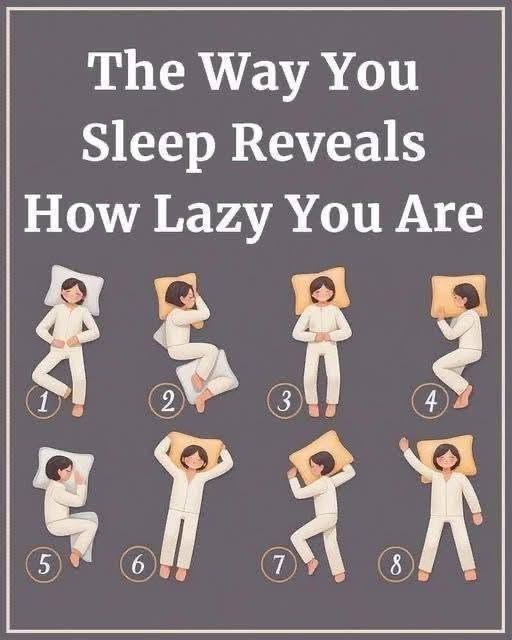
Your sleeping position can be interesting to observe, and certain positions may be associated with comfort, habits, breathing, or physical health. But there is no established scientific test that can determine whether someone is lazy simply by looking at how they sleep.
Still, the different positions are fascinating—and there are some useful things they may tell us about sleep.
Why Do We Have a Favorite Sleeping Position?
Most people don’t consciously choose one sleeping position and stick with it all night.
Instead, we naturally move between positions while sleeping.
Your preferred position may be influenced by:
- Comfort
- Mattress and pillow support
- Body shape
- Joint or muscle discomfort
- Pregnancy
- Breathing patterns
- Temperature
- Personal habit
- Existing sleep problems
You may also fall asleep in one position and wake up in another.
So if your sleeping position changes throughout the night, that’s completely normal.
Sleeping on Your Side
Side sleeping is one of the most common sleeping positions.
Some people naturally prefer sleeping on their left side, while others find the right side more comfortable.
Does It Mean You’re Lazy?
No.
There is no reliable evidence that side sleepers are less motivated or more hardworking than people who sleep in other positions.
However, side sleeping can be comfortable for many people and may be particularly useful in certain circumstances.
For example, side sleeping is commonly recommended during pregnancy, especially later in pregnancy, based on medical guidance.
If you sleep on your side, a pillow between your knees can sometimes help keep your hips and spine in a more comfortable position.
The Fetal Position
The fetal position involves sleeping curled up on your side with your knees drawn toward your chest.
It’s one of the most recognizable sleeping positions.
Some personality articles claim that fetal sleepers are sensitive, emotional, or shy.
Those claims should be treated as entertainment rather than established science.
Curling up may simply feel comfortable and familiar.
Could It Mean You’re “Lazy”?
Again, no.
There is no scientific basis for diagnosing laziness from this sleeping position.
In fact, someone who sleeps in the fetal position could have an extremely busy and active lifestyle.
Your sleeping posture doesn’t measure your motivation.
Sleeping on Your Back
Back sleepers lie face-up with their arms and legs in various positions.
Some people sleep with their arms beside them, while others place their hands near their head or chest.
Does Back Sleeping Reveal Personality?
Popular sleep-personality theories sometimes describe back sleepers as confident or disciplined.
But these claims aren’t established personality science.
There is also a practical consideration: back sleeping can worsen snoring or symptoms of obstructive sleep apnea in some people.
If someone regularly snores loudly, gasps during sleep, or experiences significant daytime sleepiness, the issue deserves attention regardless of their personality.
Sleeping on Your Stomach
Stomach sleeping is another common position, although it can put extra stress on the neck because the head usually needs to be turned to one side.
Some personality-based articles describe stomach sleepers as independent, stubborn, or energetic.
Again, these descriptions are not a reliable way to understand someone’s personality.
What Might Matter More Than Personality?
If stomach sleeping leaves you with morning neck, shoulder, or back discomfort, your sleep position may be worth reconsidering.
A supportive mattress and pillow setup can make a significant difference.
The Starfish Position
The so-called “starfish” position describes someone who sleeps on their back with their arms spread around the pillow or above their head.
Personality articles sometimes associate this position with friendliness or openness.
But there’s no good reason to believe that sleeping like a starfish reveals whether you’re hardworking or lazy.
It may simply mean that you find the position comfortable.
The “Soldier” Position
In this position, a person sleeps on their back with their arms relatively close to their body.
Some popular sleep-personality descriptions associate it with discipline or seriousness.
But once again, there is no scientific personality test hidden in your sleeping posture.
Someone can sleep like a soldier and still love sleeping late on weekends.
What Actually Determines Whether Someone Is “Lazy”?
“Laziness” is also much more complicated than it sounds.
Someone who appears unmotivated may actually be experiencing:
- Poor sleep quality
- Sleep deprivation
- Stress
- Burnout
- Depression
- Anxiety
- Physical illness
- Medication side effects
- An irregular schedule
- Excessive demands or fatigue
This is why labeling someone as lazy based on behavior—or especially based on their sleeping position—can be misleading.
Sometimes what looks like a lack of motivation is actually a sign that someone isn’t getting enough rest.
Your Sleep May Reveal Something More Useful
Although your sleeping position can’t tell you whether you’re lazy, your sleep patterns can provide useful information.
For example, consistently feeling exhausted despite spending enough time in bed may suggest that your sleep quality isn’t ideal.
Likewise, frequent nighttime awakenings, loud snoring, gasping, morning headaches, or significant daytime sleepiness can sometimes point toward an underlying sleep problem.
These signs are far more meaningful than whether you sleep on your back or curled up on your side.
What Your Sleep Position May Actually Tell You
Instead of asking, “Does my sleeping position mean I’m lazy?” consider asking:
Am I comfortable?
If you wake up feeling rested and without significant pain, your preferred position may simply work well for you.
Am I waking up with pain?
Persistent neck, shoulder, hip, or back pain may indicate that your mattress, pillow, or sleeping position needs adjustment.
Am I sleeping well?
Sleep quality matters much more than personality stereotypes.
Do I snore heavily or wake up gasping?
These can be reasons to speak with a healthcare professional, particularly if you’re excessively sleepy during the day.
The Bottom Line
Your favorite sleeping position can be fun to talk about, but it can’t tell you whether you’re lazy.
There is no reliable scientific evidence that sleeping on your side, stomach, or back determines your work ethic, motivation, or personality.
What your sleep can tell you is something potentially much more useful: whether you’re comfortable, getting adequate rest, and possibly experiencing signs of a sleep problem.
So if you sleep curled up like a tiny pretzel, stretched out like a starfish, or completely flat like a soldier, don’t worry about what it says about your work ethic.
The best sleeping position is ultimately the one that helps you sleep comfortably and wake up feeling rested.