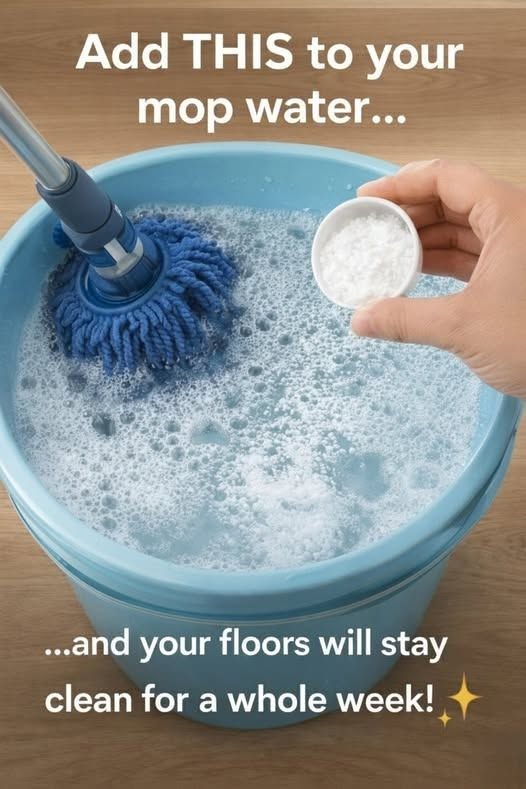
Discover the simple floor-cleaning trick that surprised homeowners with how much dirt and dullness it can remove. Learn how to use it safely and why it may become your new favorite cleaning method.
I Didn’t Believe This Floor Trick Until I Tried It… Now I’ll Never Go Back
Sometimes the simplest cleaning tricks are the ones that make the biggest difference. You can spend money on expensive floor cleaners, special sprays, and complicated cleaning tools, only to discover that a basic household method can leave your floors looking noticeably fresher.
That’s exactly why this floor-cleaning trick has become so popular.
The idea is simple: use a small amount of the right cleaning solution, warm water, and proper technique instead of repeatedly soaking the floor with strong chemicals.
But there’s an important catch: different floors require different cleaning methods. What works beautifully on sealed tile may damage untreated wood, laminate, or natural stone.
The Trick: Less Product, Better Technique
One of the biggest mistakes people make when cleaning floors is using too much cleaner.
More soap doesn’t necessarily mean cleaner floors. Excess product can leave behind a sticky film that attracts dust and makes the surface look dull again surprisingly quickly.
Instead, try this approach:
- Sweep or vacuum the floor thoroughly.
- Fill a bucket with warm—not boiling—water.
- Add a small amount of a floor cleaner appropriate for your flooring.
- Use a well-wrung microfiber mop rather than flooding the floor.
- Work in small sections.
- Allow the surface to dry naturally or wipe away excess moisture.
The real “trick” is often using less solution and removing more residue.
Why It Can Make Such a Difference
Floors accumulate more than visible dirt.
Over time, they can collect:
- Dust
- Cooking grease
- Body oils
- Footprints
- Pet residue
- Cleaning-product buildup
- Fine particles tracked in from outside
If several layers of cleaning-product residue accumulate, the floor can actually appear cloudy or greasy.
A thorough cleaning with the correct product and minimal moisture can remove that buildup without leaving another heavy layer behind.
What About Vinegar?
You’ve probably seen viral cleaning posts recommending vinegar for almost everything.
Vinegar can be useful for some household cleaning tasks, but it’s not universally safe for floors.
Avoid using acidic cleaners such as vinegar on surfaces that can be damaged by acids, particularly natural stone such as marble, limestone, and travertine.
For wood, laminate, and specialty flooring, follow the manufacturer’s cleaning instructions instead.
The Microfiber Difference
Another surprisingly important part of the trick is the mop itself.
Microfiber pads can trap fine particles rather than simply pushing them around. They also allow you to use less water, which is particularly important for flooring that doesn’t tolerate moisture well.
Before mopping, however, remove loose dirt first. Otherwise, you’re essentially turning dust and grit into wet mud and moving it across the floor.
Don’t Forget the Edges
The center of the room usually gets the most attention, while the edges are neglected.
Dust and grime often collect:
- Along baseboards
- Under cabinets
- Around furniture legs
- In corners
- Along transitions between rooms
After cleaning the main floor, wipe these areas with a lightly damp microfiber cloth.
That’s often where the “how did the floor get so clean?” effect comes from.
A Mistake to Avoid
Never mix household cleaning chemicals together.
In particular, don’t combine bleach with vinegar, ammonia, or other cleaners. Some combinations can produce dangerous gases.
Also, don’t assume that a viral cleaning hack is safe simply because thousands of people online recommend it.
The safest rule is:
Know your floor before choosing your cleaner.
For Tile
Ceramic and porcelain tile are generally more forgiving, but grout can require a different approach. Avoid leaving dirty water sitting on the floor, especially when grout is porous.
For Hardwood
Use very little moisture and a cleaner specifically designed for the finish. Never saturate hardwood flooring.
For Laminate
Avoid excessive water. Moisture can seep into seams and cause swelling or damage.
For Natural Stone
Use a stone-safe, pH-appropriate cleaner. Avoid acidic DIY solutions unless the manufacturer specifically says they’re suitable.
The Real Secret
The biggest lesson from this “floor trick” isn’t necessarily a magical ingredient.
It’s the combination of preparation, the right cleaner, minimal moisture, and removing residue instead of adding more of it.
Once you stop flooding the floor with cleaning solution and start treating the flooring according to its material, the difference can be surprisingly noticeable.
And that’s why a simple change in your cleaning routine may make you wonder why you didn’t try it sooner.