Found a mysterious object inside an old dresser? Discover the fascinating possibilities behind tiny vintage boxes, sewing accessories, jewelry containers, and forgotten household items.
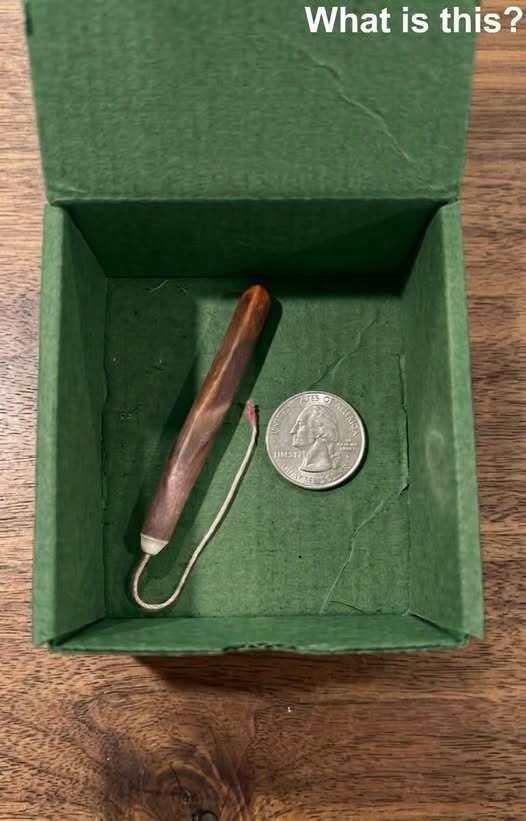
I found something tucked away inside my grandmother’s old dresser, and at first I had absolutely no idea what I was looking at.
It was small enough to fit comfortably beside a coin, which made its purpose even more difficult to figure out. I opened the little box and stared at the object inside for what felt like half an hour.
It looked old, carefully made, and clearly designed for something specific—but what?
That’s the fascinating thing about objects from previous generations. Something that looks completely mysterious today may once have been an ordinary household item.
Could It Be a Sewing or Needlework Accessory?
One possibility is that the object was connected to sewing or needlework.
Older households commonly kept small sewing tools, needles, buttons, thread, pins, hooks, and other “notions” in dedicated boxes and containers. Tiny specialized tools were particularly common because clothing was frequently repaired and altered at home.
Vintage sewing accessories were sometimes stored in beautifully made wooden boxes with individual compartments.
Some old sewing-machine accessory boxes were surprisingly elaborate. Singer, for example, produced compact wooden accessory cases containing specialized attachments, needles, bobbins, screws, and other tools.
Could It Be a Jewelry or Dresser Box?
Another strong possibility is that it belonged on a dressing table.
Small antique dresser and toiletry boxes were used for storing jewelry, personal accessories, perfume-related items, and other small possessions.
Some surviving examples contain velvet-lined compartments, removable trays, mirrors, or concealed drawers.
So if the mysterious object came from a woman’s dresser, its original purpose may have been connected to personal grooming, jewelry, or clothing accessories rather than the kitchen or workshop.
The Size Is an Important Clue
That’s why placing a coin next to an unidentified object is actually very helpful.
Without a known reference point, photographs can make an antique object appear much larger or smaller than it really is.
A coin gives viewers an immediate sense of scale.
The next clues to examine are:
- Does it have moving parts?
- Is it made of metal, wood, ivory, bone, glass, or plastic?
- Does it have a hole or slot?
- Is there a manufacturer’s mark?
- Does it have threads or a screw mechanism?
- Was there velvet, fabric, or padding inside the box?
- Does the object fit into a particular compartment?
- Are there matching pieces elsewhere in the box?
Even a tiny maker’s mark can sometimes identify an antique object.
Don’t Throw Away the Box
The container itself may be just as important as the mysterious object.
Antique boxes were often specifically designed around the things they held. A compartment’s shape can provide a major clue about what originally belonged there.
For example, vintage sewing boxes could have dedicated spaces for needles, thread, buttons, and other small tools.
So before separating the object from the box, photograph the entire interior exactly as you found it.
It Could Even Be a Money-Related Object
Interestingly, small antique boxes sometimes had surprisingly clever purposes.
Miniature furniture-shaped money boxes were made to resemble little chests of drawers. Some had a coin slot hidden inside a drawer, allowing a coin to disappear into the box when the drawer was closed.
That’s a good reminder that antique objects often had functions that aren’t obvious from their appearance.
The Mystery Is Part of the Fun
The most exciting thing about finding an old object in a family dresser is that it may have a story attached to it.
It could have belonged to your grandmother, her mother, or an even earlier generation. Perhaps it was used regularly for sewing, kept with jewelry, or stored away because it was considered valuable or sentimental.
And sometimes the original owner is the only person who could have told you exactly what it was.
How to Identify It
If you’re trying to solve the mystery, take clear photographs of:
- The object from the top.
- The underside.
- Both sides.
- Any moving or removable parts.
- The inside of the box.
- Any markings, numbers, or letters.
- The object next to the coin for scale.
Those details can turn a mystery into an identification surprisingly quickly.
So, what do you think it is? It may be an old sewing tool, dresser accessory, jewelry-related item, or something much more unusual. The smallest details—especially its shape, material, and markings—could reveal its original purpose.