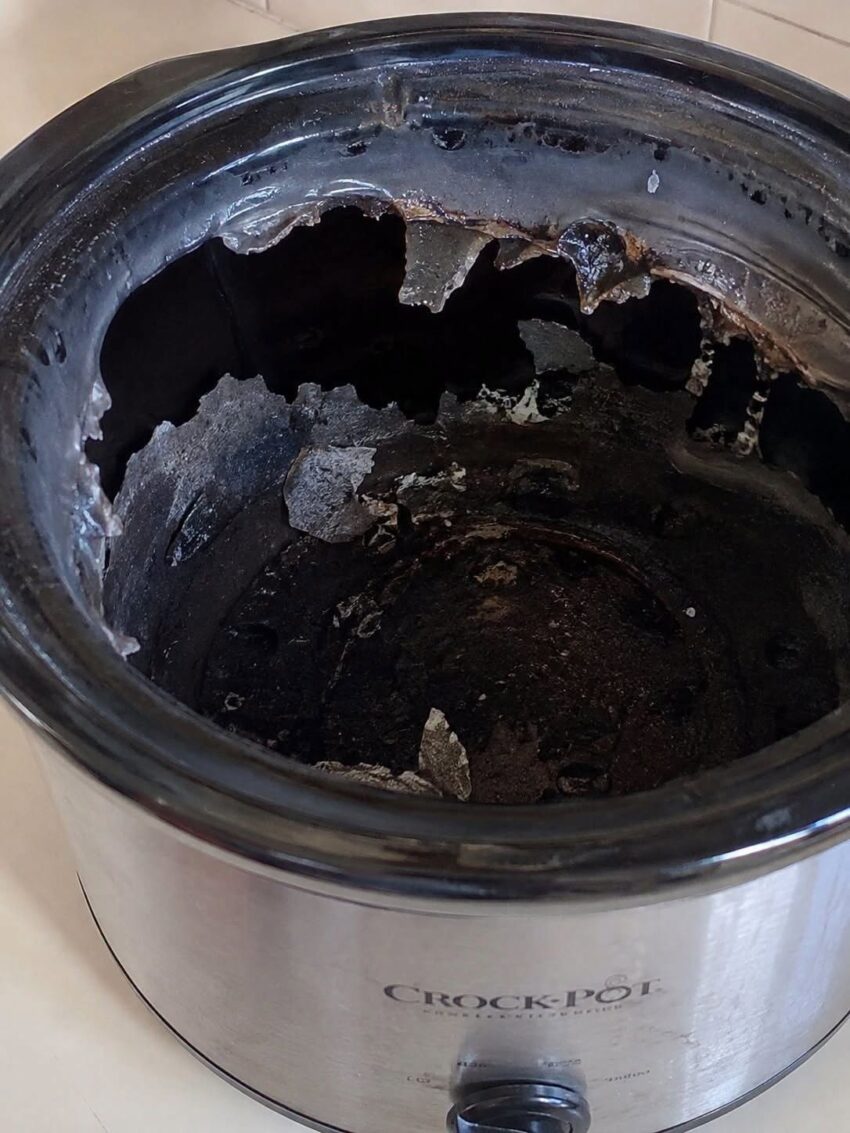
New to slow cookers? Learn what you should and should not put inside one, why certain materials can crack or shatter, and how to use a slow cooker safely.
I bought my first slow cooker last week and was excited to finally try it. Everything seemed straightforward: add the ingredients, put the lid on, choose the temperature, and let it cook slowly.
Then today, my roommate decided to use it for something completely different.
She thought it would be perfectly fine to heat an item inside the slow cooker. A short while later, we discovered that it had cracked and damaged the cooking vessel.
Apparently, she didn’t realize that a slow cooker isn’t designed to heat just anything you can fit inside it.
A Slow Cooker Is Not a General-Purpose Heater
One of the biggest misconceptions about slow cookers is that because the appliance heats gradually, almost any heat-safe object can be placed inside it.
That’s not necessarily true.
The removable crock is designed to hold food and, depending on the manufacturer’s instructions, certain cookware or accessories specifically intended for use with it.
Other materials can react badly to prolonged heating.
Something may appear perfectly safe at room temperature but crack, warp, melt, or break when exposed to heat for an extended period.
Why Can Things Crack or Break?
Temperature changes can create stress inside certain materials.
For example, glass and some ceramics can break when exposed to uneven or sudden temperature changes. Even when a material is described as heat-resistant, that doesn’t automatically mean it’s suitable for every cooking appliance or temperature.
A slow cooker also heats differently from an oven or microwave, so an item that is safe in one appliance isn’t automatically safe in another.
That’s why manufacturers provide specific instructions about what can be placed inside the cooking vessel.
What Should You Put in a Slow Cooker?
The safest approach is to use the slow cooker as intended: food directly in the removable cooking crock, unless the manufacturer’s instructions specifically approve another container or accessory.
Common slow-cooker foods include:
- Soups and stews
- Beans and lentils
- Meat and poultry
- Vegetables
- Casserole-style dishes
- Sauces
- Slow-cooked grains and other suitable recipes
Always follow the instructions supplied with your particular model because slow cookers can differ.
What Should You Avoid?
Never assume that an object is safe simply because it fits inside the crock.
Be especially cautious with:
- Containers not labeled for cooking
- Ordinary glassware
- Plastic containers
- Items with unknown heat resistance
- Materials that can melt or release chemicals when heated
- Damaged or cracked cookware
- Anything prohibited by the manufacturer’s instructions
Don’t use the slow cooker to heat packaged foods in their original packaging unless the packaging specifically says that it is designed for that type of heating.
What If the Crock Has Cracked?
If the ceramic or stoneware cooking crock has cracked, stop using it.
Don’t try to repair it with glue and continue cooking. A damaged crock can potentially fail further during heating and may create a safety hazard.
Likewise, if melted plastic or another unsuitable material has contacted the heating element or left behind residue, unplug the appliance and consult the manufacturer’s cleaning and safety instructions before using it again.
Always Check the Manual
The easiest way to avoid an expensive mistake is to read the manufacturer’s instructions before experimenting.
Look for sections covering:
- Approved cookware
- Temperature limitations
- Cleaning
- Safe materials
- Food preparation
- Dishwasher use
- Replacement parts
If you’re unsure whether a particular container or object can go inside your slow cooker, don’t guess.
The Lesson We Learned
A slow cooker may look like a simple appliance, but the cooking vessel and heating system are designed to work together in a specific way.
Just because something fits inside doesn’t mean it belongs there.
Use the crock for its intended purpose, avoid unapproved materials, and always check the manufacturer’s instructions before trying something unusual.
That little bit of caution can save you from a broken crock—and potentially a much bigger mess.